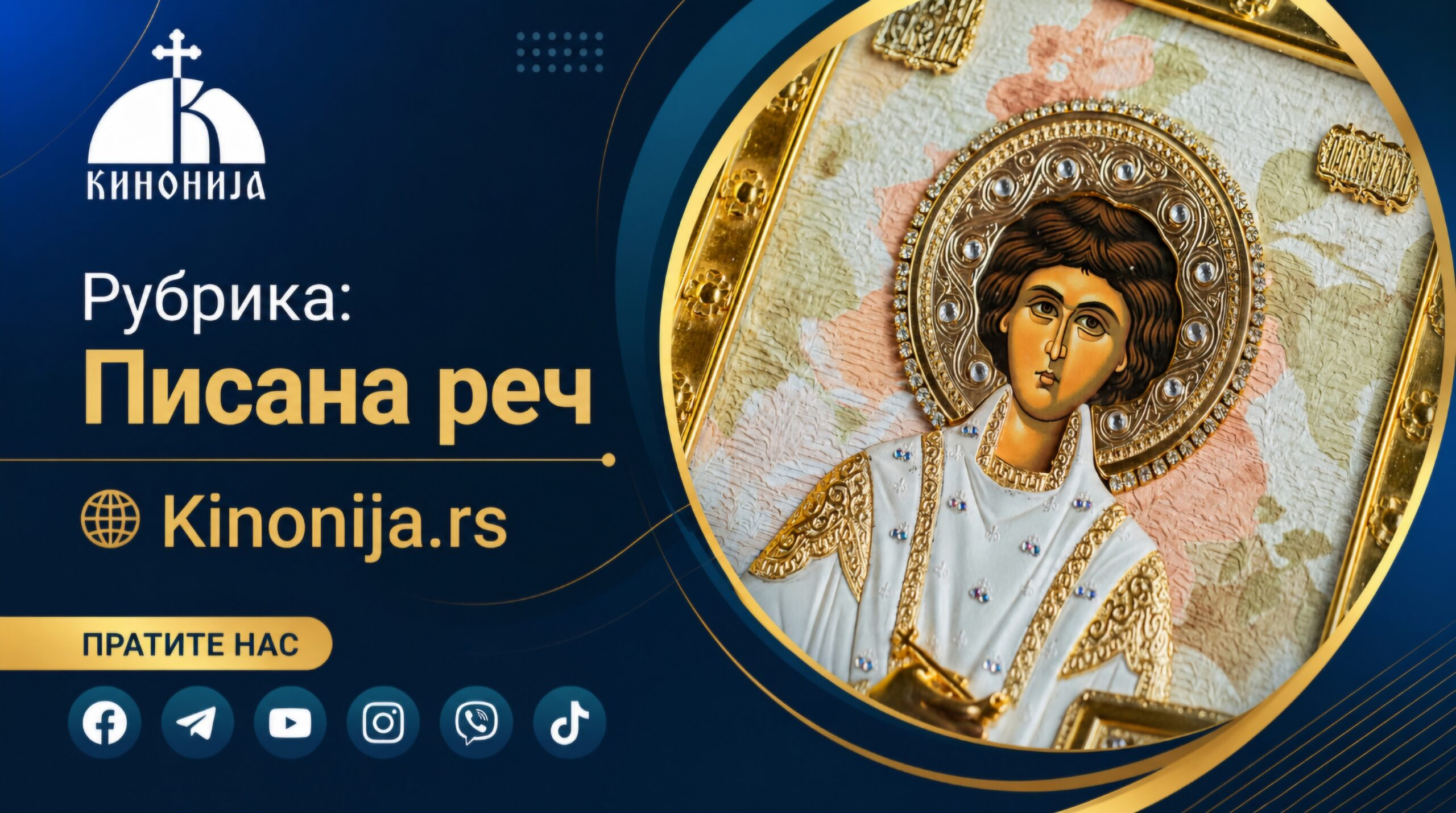
Church tradition has preserved the memory of Saint Panteleimon as an unmercenary healer. They are a special category of saints; in ancient times they were called doctors who treated people without charge. Their selfless service to others aroused great admiration among their contemporaries, so strong and indelible that many centuries later, we continue to honour their holy memory. Just as at the beginning of the fourth century, the time when the Great Martyr Panteleimon lived and was martyred, so also today the human ability to do good for free, without expecting any reward, amazes.
The ability to do good to others simply, without any benefit, and often even to our own detriment, is a supernatural ability that we have inherited from God. Apart from God and man, no one in the created world is inclined to practice it. It is our most divine quality. By this ability, one can judge a person’s closeness to the Creator: He who can do good to others simply, without expecting any benefit or gratitude from them, can be called a child of God. He who, contrary to his own interests, loves his enemies, helps the stubborn, benefits the ungrateful, saves the weak, takes care of traitors, forgives haters and envious people, who wants the salvation of all – he can be considered a child of God. This is how God works, this is how Christ revealed himself. For this reason, the apostles went to proclaim the Gospel and joyfully accepted martyrdom. Because of this ability to freely do good and to care for the salvation of all, the holy healer Panteleimon is liturgically glorified to this day. Everyone flocks to this wonderful saint, whom the Church knows as a healer. Thousands of people—Orthodox Christians and non-Orthodox—Armenians, Catholics, and even Muslims—flock to his hometown of Nicomedia and bring hundreds of sick people who are then healed by the prayers of Saint Panteleimon.
Celebrating the memory of the holy great martyr Panteleimon, we remember how he performed his first miracles, how he converted to faith and how he crowned his faith with martyrdom. From his youth he studied medicine with the best teachers, but the more his naturally kind heart was permeated with the suffering of people, the more he realized the impossibility of helping them overcome their greatest illness – death. Until he met the priest Hermolaus. One day, returning home after talking with him, he saw a dead child on the road, who had been bitten by a poisonous snake. The saint began to pray to the Lord for the resurrection of the dead, and the Lord, foreseeing the young man’s future great service to humanity, fulfilled his request. The child came to life, and the snake, which was writhing nearby, died.
The Great Martyr Panteleimon received a good medical education and worked as a doctor. The emperor said to him: “You are a doctor and have a brilliant career. Deny Christ and offer sacrifice to the gods.” The saint was faced with a choice. What should he choose – faith in the Lord and immortal life or the temporary honours of earthly life? Panteleimon replied: “I believe in the Lord, the Saviour Jesus Christ, who suffered for us.”
The Great Martyr Panteleimon suffered terrible torments in his body, and the humility that the saint showed during these great sufferings testifies to the depth of his love for Christ. Before the torture, the Lord appeared to him in the form of the priest Hermolaus, who had been martyred the day before, as if to remind him of the glory that had been given to His faithful servants. And when the great martyr’s sufferings reached their peak, the Lord appeared to him once more, giving him, instead of his previous name „Panteleion“ („lion of all“), a new name „Panteleimon“ („all-merciful“). Centuries-old church experience, which presents to us the martyrology of the holy martyrs, testifies that before being completely filled with God’s grace, a person must courageously fight against His enemies, like a lion. He who suffers with the Lord mystically compensates with his own sufferings what is lacking in the sufferings of Christ.
Saint Panteleimon sends us a powerful message with his life. With Christ, our sorrows and illnesses gain their full meaning. There comes a time in everyone’s life when illnesses visit us or those close to us. Is it a misfortune or a blessing from God that sanctifies us? This is what we must first ask ourselves when celebrating the memory of the holy great martyr and healer Panteleimon. Illnesses are the time when we can be closest to Christ. If we accept them as God’s visits, they become a source of healing for our souls, and therefore for our bodies – in our future resurrection. The more painful our illnesses are, as the holy great martyr Panteleimon and all the holy martyrs testify, the greater our need for the grace of Christ. Illnesses are an exceptional opportunity that the Lord gives us to become His collaborators in our salvation. It is natural that, when we are sick, we pray to the Lord and His saints for healing and a longer life. But for what purpose? Certainly not so that we would continue to live a godless, sinful life. “O Passion-bearer and Healer Saint Panteleimon, pray to the Merciful God to grant forgiveness of the sins of our souls,” we pray in the troparion of Saint Panteleimon. We seek healing, so that we may have the strength to serve human suffering, so that we may use the rest of our lives for repentance and preparation for the worthy acceptance of our incurable illness on earth – death. The Church never prays only for health, but always for health and salvation. God’s mercy is incomprehensible to the human mind. Sorrows and illnesses are given to us for our sins. But when we accept them with patience and gratitude, they become, by the grace of God, our martyrdom for the faith. May the Lord grant us the strength to persevere on our life’s journey, remaining faithful emulators of the example of the Holy Great Martyr Panteleimon.
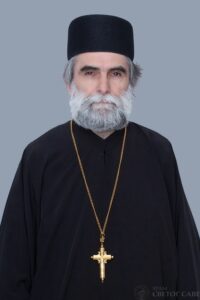
WRITTEN BY: Catechist Branislav Ilić, editor of the portal “Kinonia”
*The text was published on the portal “Kinonia” in the section “From the editor’s pen”, on August 9, 2026.