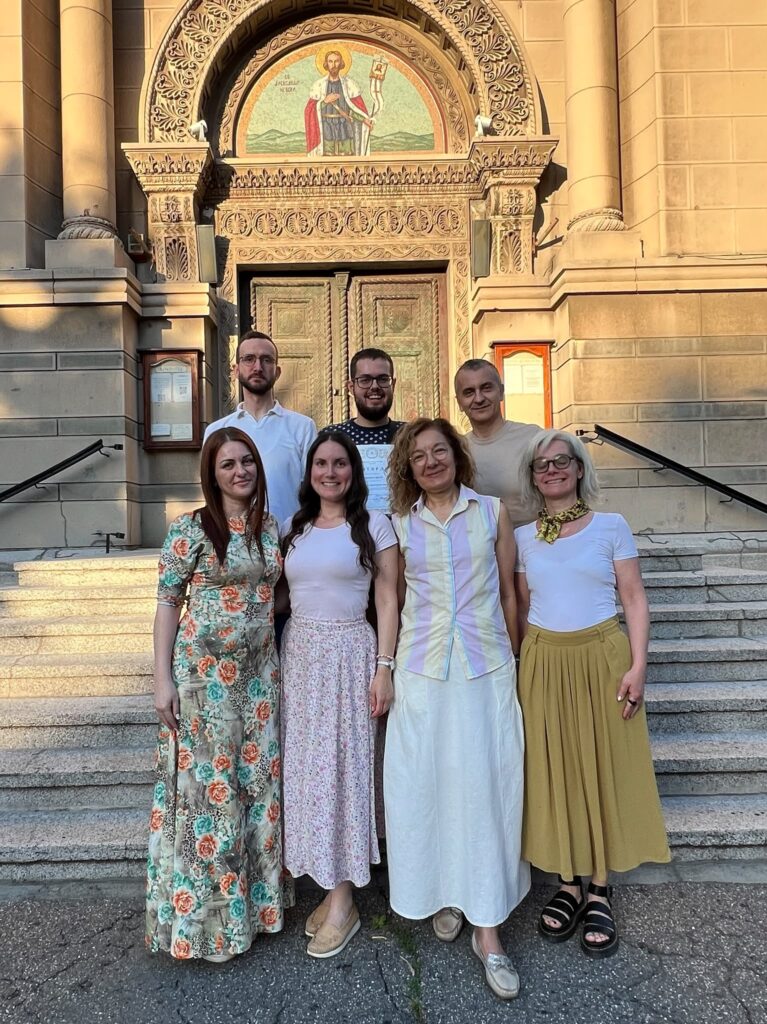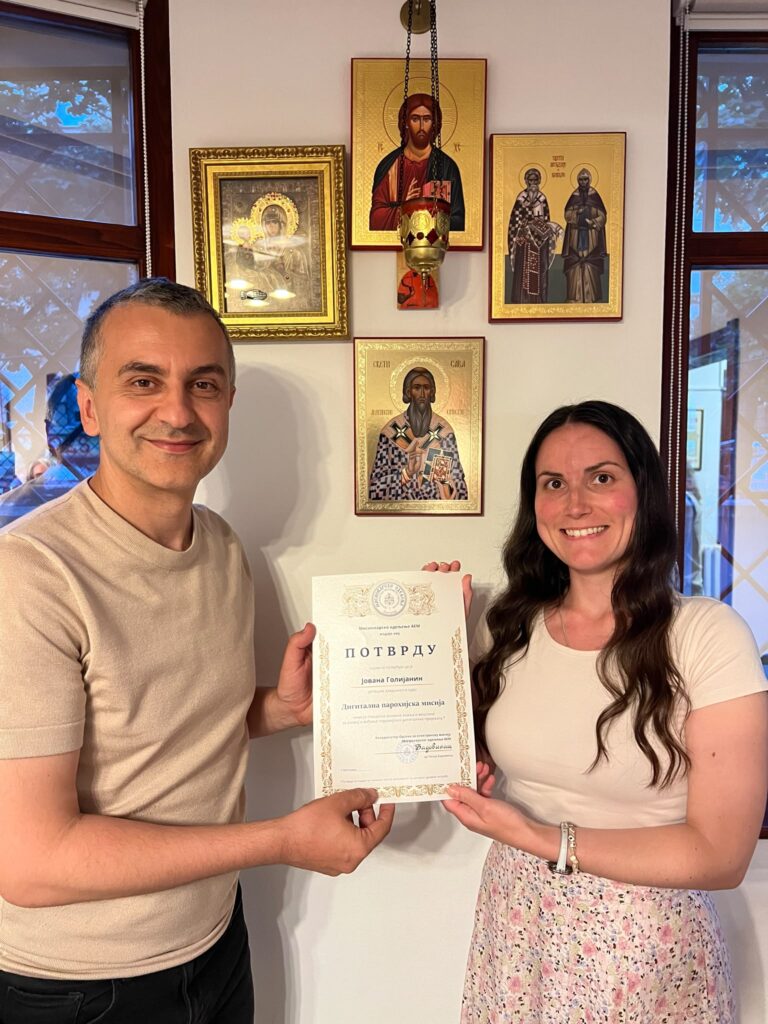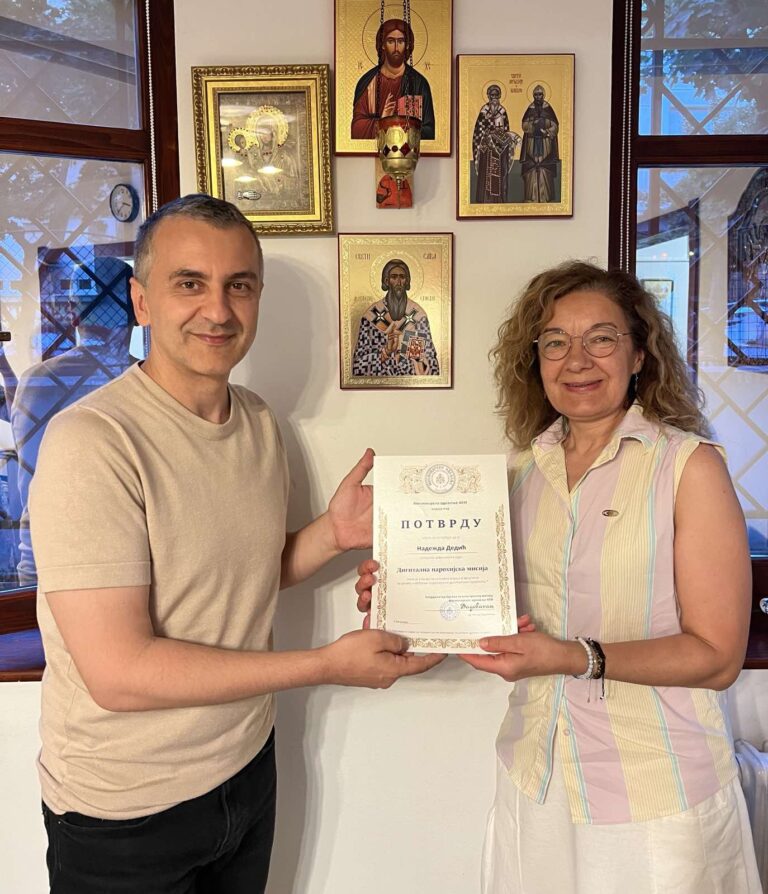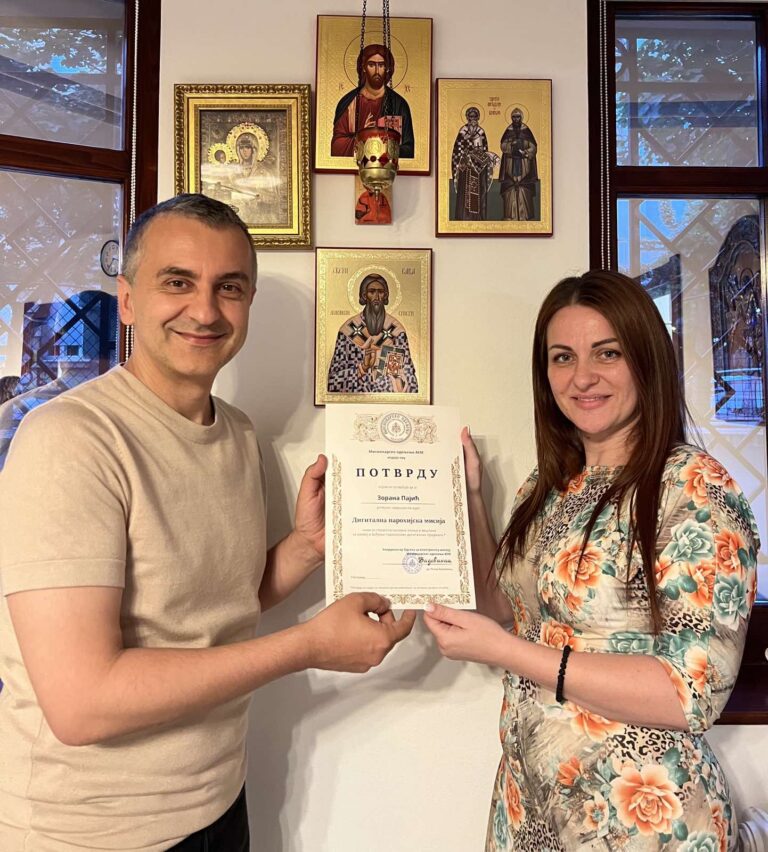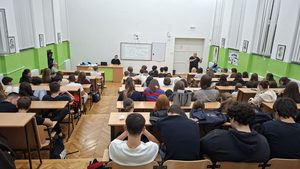

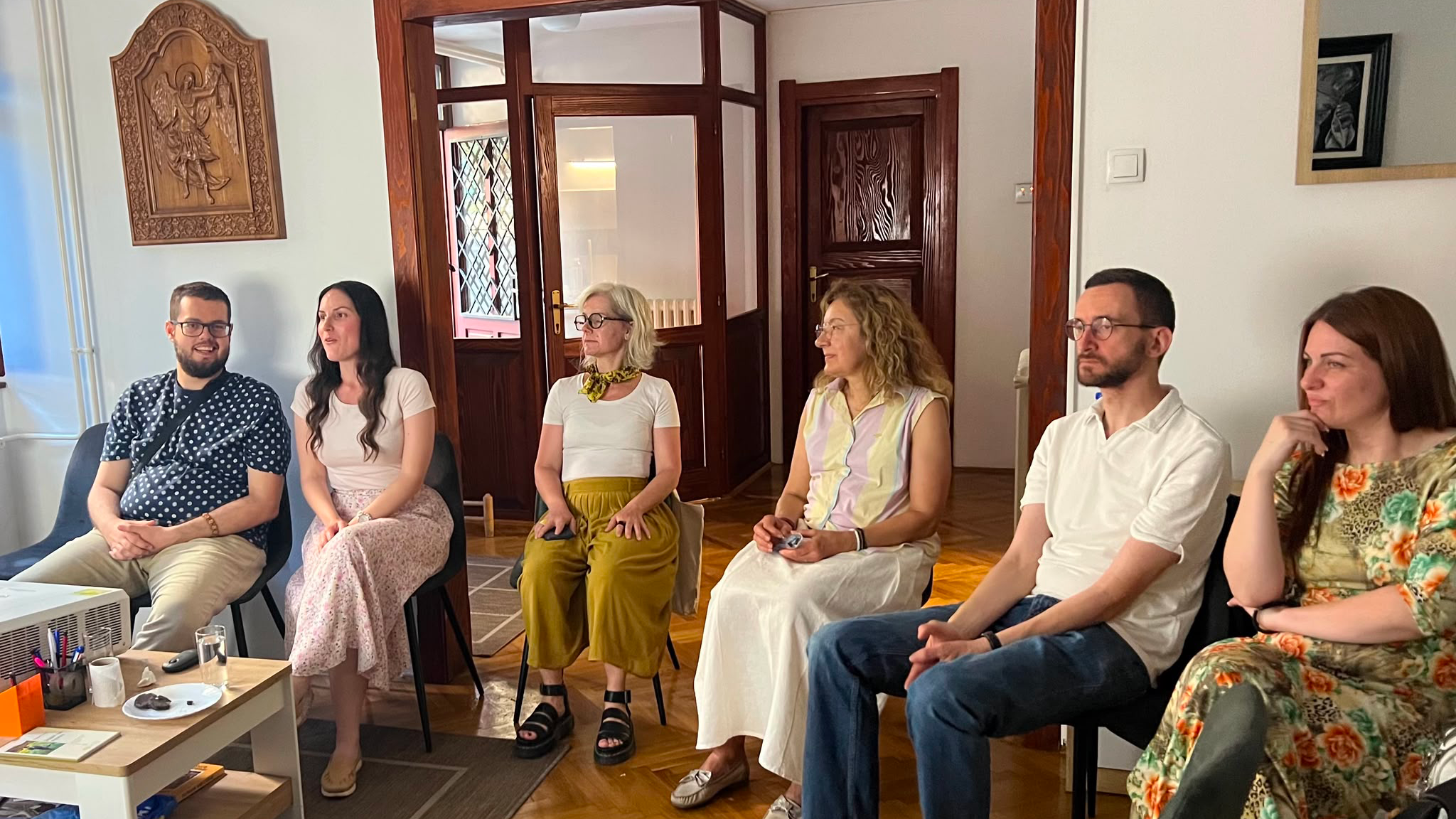
On 17 June 2026, at 6:00 p.m., the concluding session of the second cycle of the Digital Parish Mission course was held on the premises of the Missionary Department of the Archdiocese of Belgrade-Karlovci. The session was dedicated to the presentation of projects that participants had developed as part of their practical training. The particular value of this gathering lay in the fact that the participants presented concrete initiatives conceived in response to the real needs of their parish communities. The aim of the course is not merely the acquisition of theoretical knowledge, but also the empowerment of participants to independently initiate and develop digital missionary activities within their own parishes.
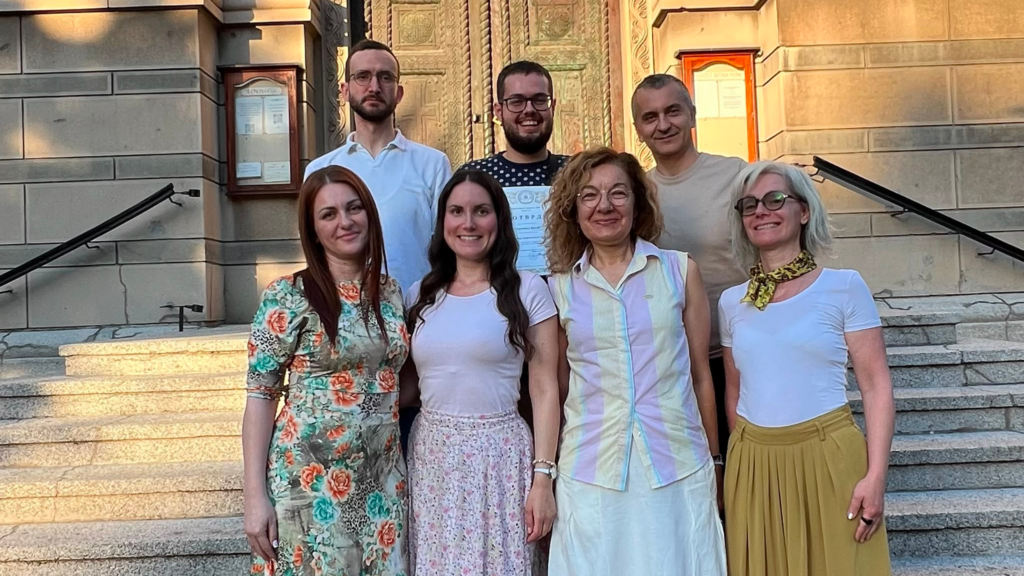
One of the projects was presented by Tanja Stojanović, who outlined an initiative for launching a podcast. The project attracted considerable interest among those present, as it represents a contemporary and accessible means of bringing spiritual topics, conversations with clergy, and the testimonies of believers to a wider audience. Through their suggestions and observations, the participants contributed to the further development of the concept, expressing hope that the project will soon be brought to fruition.
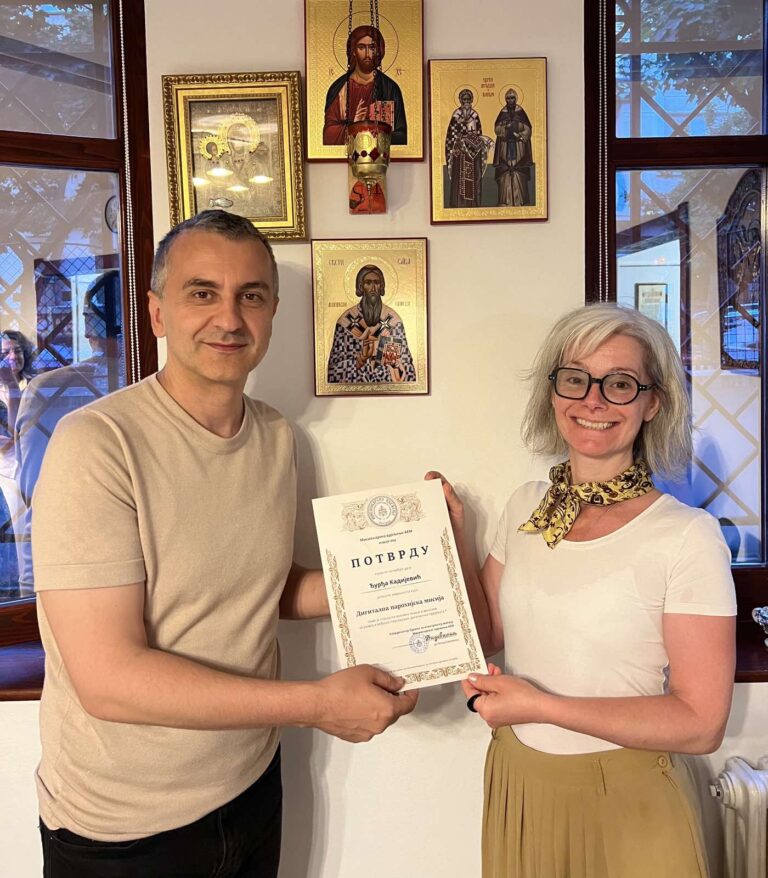
A joint project was also presented by Nadežda Dedić and Đurđa Kadijević, who proposed the creation of a new webpage within their parish website, along with the establishment and management of a Facebook page intended to provide regular information to parishioners regarding liturgical services, spiritual events, and the life of the parish community.
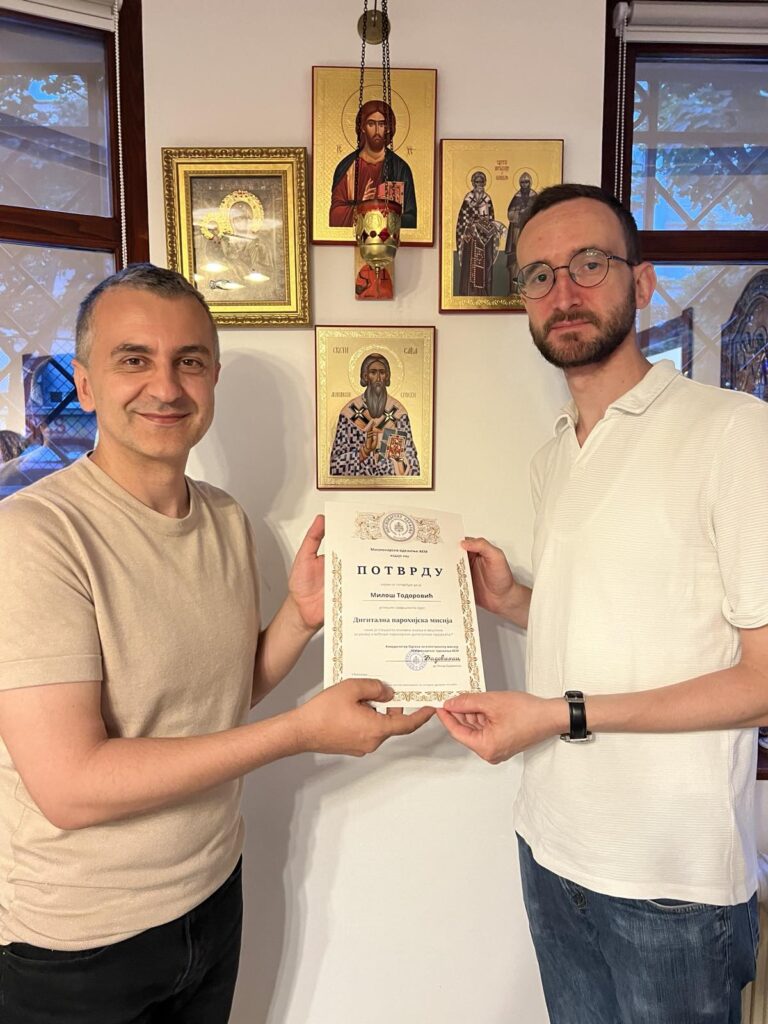
During the gathering, Miloš Todorović presented a project entitled “The Digitization of Church Registers and Other Archival Materials,” highlighting the importance of preserving the Church’s archival heritage through contemporary digital technologies. The project demonstrated the process of digitization and its significance for safeguarding original archival materials, facilitating more efficient data retrieval, and improving accessibility for researchers. It also included references to examples of good practice from archives in Serbia and abroad.
Another noteworthy project was presented by Jovana Golijanin and Strahinja Vukić, who introduced the concept of a website entitled “Uncreated Light,” dedicated to the presentation of original Orthodox video and animated content. The project envisions a modern website design aimed at making high-quality Orthodox content accessible to a broader audience.
The presentations were followed by questions, discussions, and suggestions from all course participants, demonstrating that they are thinking not only about the technical aspects of digital communication but also about its missionary purpose. It is precisely through such gatherings that the exchange of experience is encouraged and a network of digital collaborators is gradually formed, enabling participants to support the life and mission of parish communities through their knowledge and expertise.
The Digital Parish Mission course, organized by the Section for Electronic Mission of the Missionary Department of the Archdiocese of Belgrade–Karlovci, will continue through future meetings, during which participants will further develop their projects and prepare them for final presentation, with the goal of ensuring that each idea finds practical application in parish life.
We invite all interested faithful, parish collaborators, students, young people, and everyone who wishes to contribute their knowledge and skills to the mission of the Church in the digital sphere to join the next cycle of the free Digital Parish Mission course organized by the Missionary Department of the Archdiocese of Belgrade–Karlovci. The course is intended for all those who wish to learn how to employ digital tools in the service of the parish community in a responsible, professional, and missionary-oriented manner.
All interested individuals may now register by email at misionarsko.odeljenje@gmail.com.
We kindly encourage you to apply and become part of a growing network of parish collaborators engaged in the field of electronic mission, whose dedication and efforts help extend the mission of the Church into the digital realm.