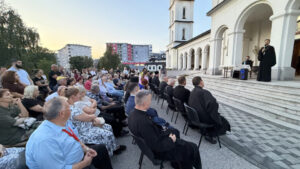
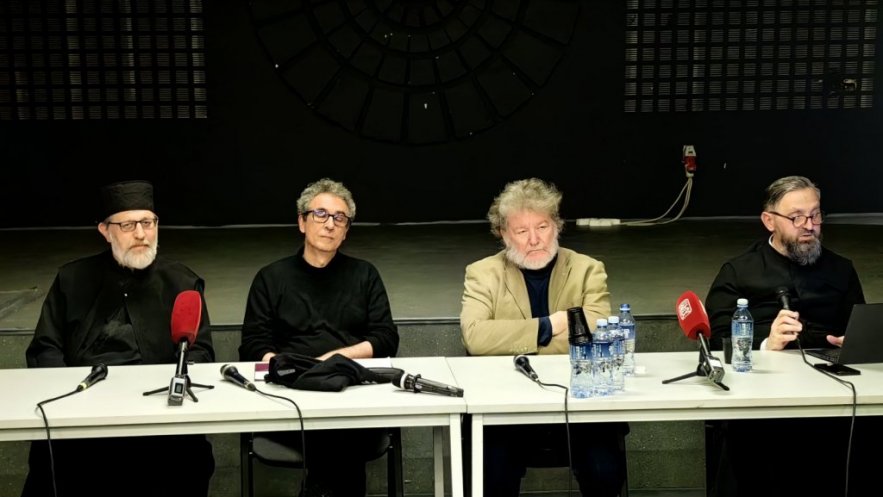
Organized by the Dialogue in the Public Sphere Section of the Missionary Department of the Archdiocese of Belgrade-Karlovci, a discussion panel entitled “Freedom as an Idol and Freedom as a Gift – Theological and Social Aspects of the Concept of Freedom” was held at the Belgrade Youth Centre, bringing together distinguished representatives of the academic and theological community with the aim of opening a dialogue on one of the key concepts of contemporary society.
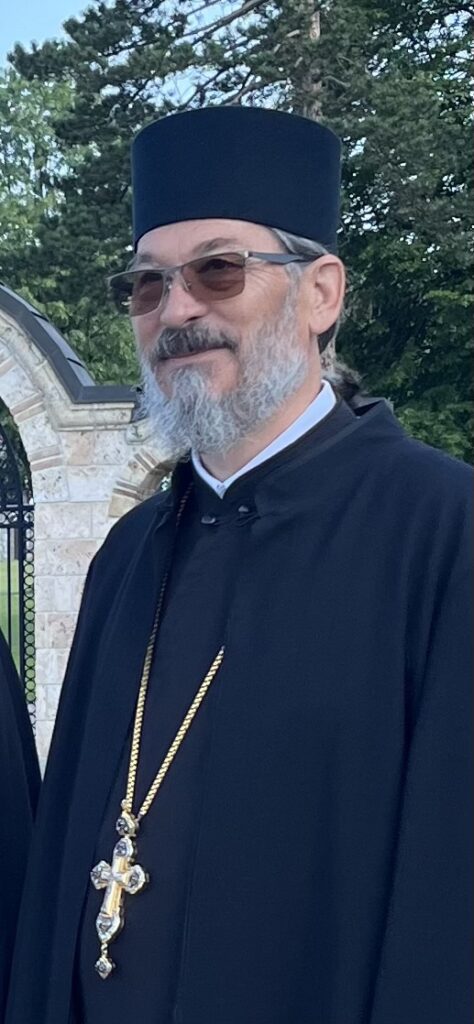
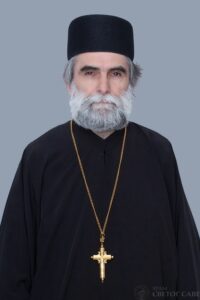
The panel featured Presbyter Prof. Dr Aleksandar Đakovac of the Faculty of Orthodox Theology, University of Belgrade; Prof. Dr Slobodan Antonić of the Faculty of Philosophy, University of Belgrade; and Prof. Dr Predrag Krstić of the Faculty of Media and Communications, Singidunum University. The moderator was Presbyter Dr Aleksandar Milojkov, Coordinator of the Dialogue in the Public Sphere Section of the Missionary Department of the Archdiocese of Belgrade-Karlovci.
During the discussion, various concepts of freedom were examined, ranging from classical philosophical interpretations to contemporary liberal approaches, which most often understand freedom as individual autonomy and the right to self-determination. Particular attention was given to the issue of whether freedom can be reduced to the mere possibility of choice, or whether it implies a deeper ontological dimension that includes relationship, responsibility, and community, as well as to the dilemma of whether the other person represents a limit to our freedom or its actual realization.
Proceeding from the biblical thought of the Apostle Paul—“All things are lawful for me, but not all things are beneficial… I will not be dominated by anything”—the participants pointed to the distinction between freedom as mere permissibility and freedom as an inner lack of self-mastery, emphasizing that freedom entails not only the possibility of choice, but also the capacity of the human person not to be governed by his own impulses. In this context, the contemporary idea of authenticity, understood as “being what I am,” was also examined, along with its limits, particularly in light of the inner complexity and dividedness of the human person.
A particular segment of the discussion was devoted to freedom as choice, with the emphasis that choice in itself cannot serve as a sufficient criterion of freedom unless it is grounded in truth and goodness. It was noted that, in the absence of a standard that confers value upon choice, freedom risks being reduced to a formal possibility devoid of real content and meaning, thus raising the question of whether the contemporary human being, despite having a greater number of options, truly lives in greater freedom.
In this light, a critique of the absolutization of freedom was also considered, highlighting that the understanding of freedom as unlimited self-will may lead to new forms of dependence and inner bondage. It was particularly emphasized that a will lacking an inner guiding criterion easily turns into self-centeredness, in which the other person ceases to be a gift and becomes an obstacle, inevitably leading to the retreating of the person into himself.
In contrast, from the Christian perspective, freedom is seen as a gift that is realized in relationship of love and communion, whereby freedom is not understood as mere independence, but as the capacity for self-transcendence and orientation towards the other. In this context, reference was also made to the theological insight that perfect freedom does not consist in oscillation between good and evil, but in inner integrity and harmony with the good.
The panel concluded by raising questions that remain a challenge for the contemporary human person: whether freedom can exist without truth, whether an increase in choice necessarily entails an increase in freedom, and whether freedom is realized in self-affirmation or in relationship with others. As a key dilemma, the issue of whether freedom is love or self-love was highlighted—that is, whether the human person is truly free when he lives for himself or when he is capable of living for and with the other.
The event, which was covered by Television Hram, will be uploaded upon publication.
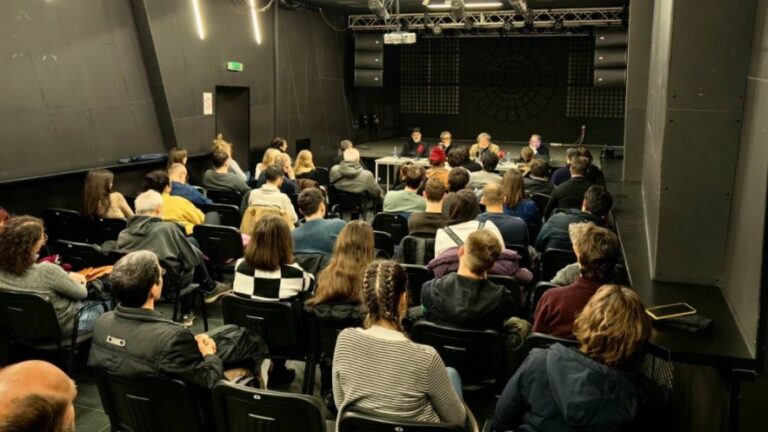
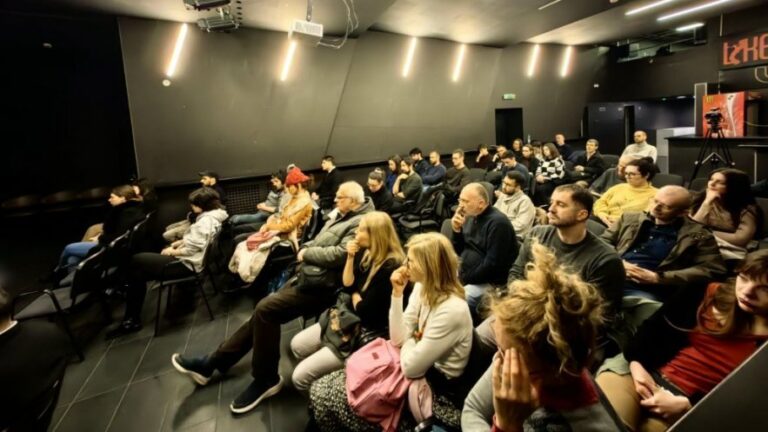
Photographs: Television Hram