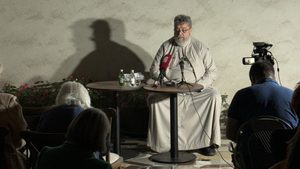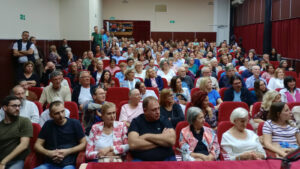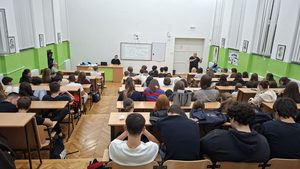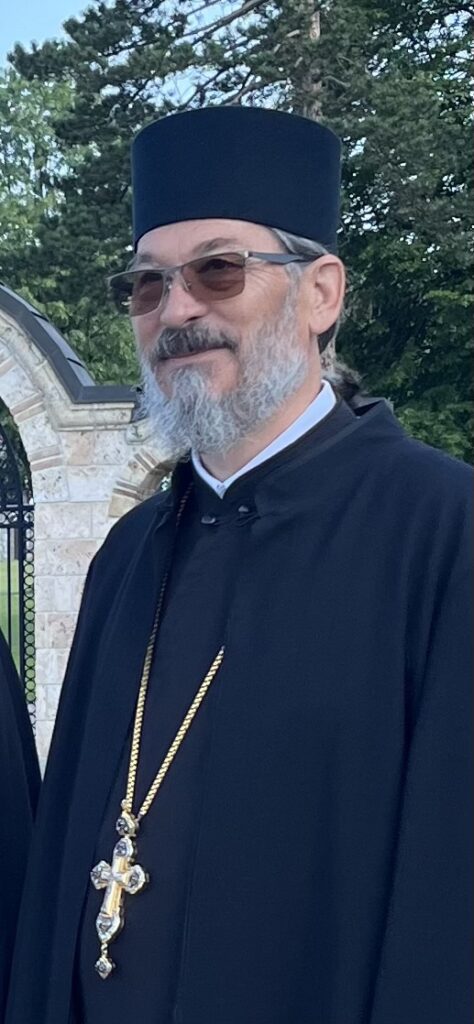
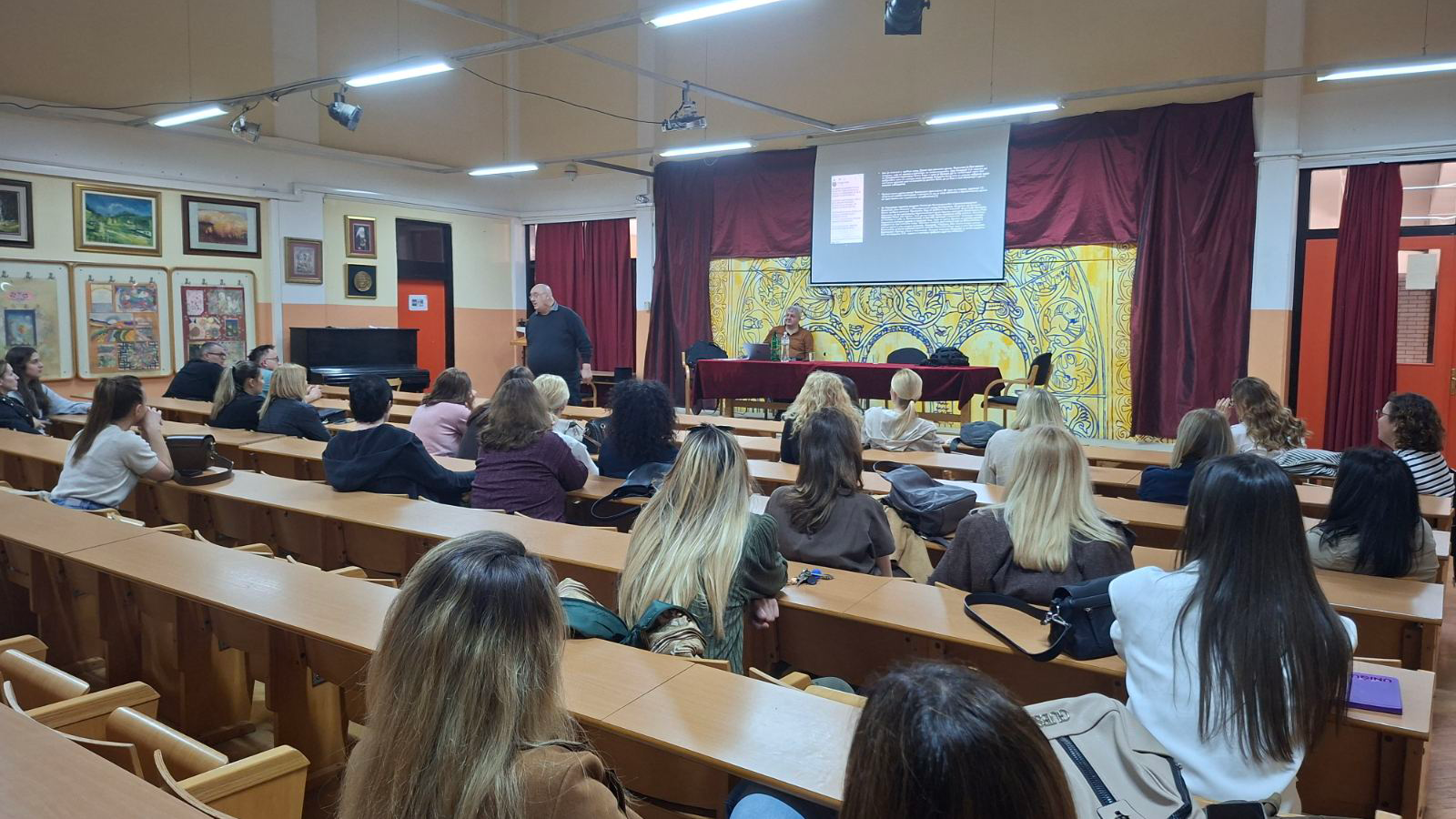
At the Primary School “Milan Đ. Milićević,” on April 6, 2026, within the “School of Parenting” project of the Missionary Department of the Archdiocese of Belgrade-Karlovci and the Board for Religious Education of the same Archdiocese, a lecture was held with the aim of demonstrating that the issue of sectarian activity is no longer a marginal phenomenon, but rather a serious and growing social challenge.
Due to the considerable interest observed at the previous lecture held at the “Patriarch Pavle” Gymnasium, the topic “Spirituality at a Click: How Young People Become Targets of Cults” was presented once again. The lecture gathered approximately forty parents who, as it became evident, were prepared to follow the presentations attentively for nearly three hours, while also actively contributing their own observations to the deepening of a topic that concerns the immediate and timely confrontation with the challenges of the contemporary environment in which their children are growing up.
The lecturers, Zoran Luković and Slobodan Spasić, emphasized that contemporary cults no longer operate on the margins, but instead enter directly into homes through computers, mobile phones, social networks, and seemingly harmless digital content, which in recent times has been further “amplified” through the use of artificial intelligence.
The religion scholar Zoran Luković placed particular emphasis on new methods of covert activity—from subtle manipulative techniques to the misuse of algorithms and online communities—pointing out that the boundary between “alternative spirituality” and manipulation is often deliberately blurred. He warned that behind attractive messages about self-improvement, energies, and “quick spiritual solutions,” there often lie structures that systematically recruit and control individuals.
A particularly strong impression upon those present was made by the presentation of Slobodan Spasić, who, through his reasoned, clear, and audience-adapted style, succeeded in bringing complex psychological processes closer to every listener. With a pronounced lecturing persuasiveness and the ability to maintain the audience’s attention, he enriched his presentation with concrete, real-life examples recognizable to every parent. His approach was not merely informative, but deeply engaging—demonstrating how, step by step, through emotional crises and the need for belonging, young people are drawn into closed systems of influence. It was especially emphasized that entry into a cult is not a sudden act, but a gradual process in which personal freedom is lost incrementally.
The interactive segment that followed was perhaps the most eloquent: numerous questions from parents revealed a genuine concern and a need for clear and reliable answers. The discussion showed that awareness of the problem exists, but that much more knowledge about the subject, as well as systemic support, are necessary.
This lecture was not merely informative in character—it represented a stern warning. In a time when spirituality is increasingly “consumed” at the click of a button, the responsibility of parents, as well as of the wider community, becomes crucial.
PHOTOS: Photo archive of the “Milan Đ. Milićević” Elementary School