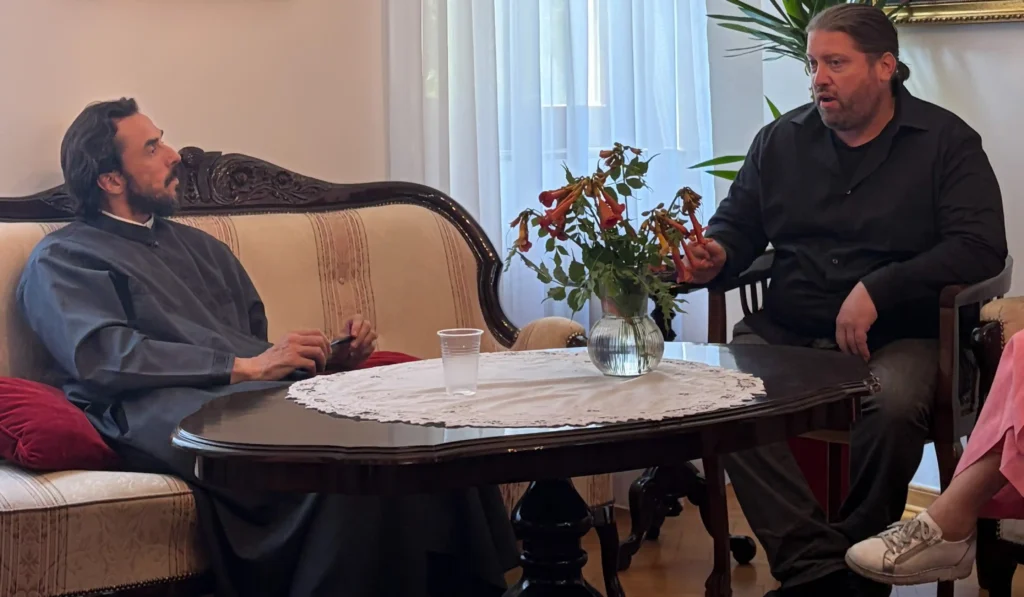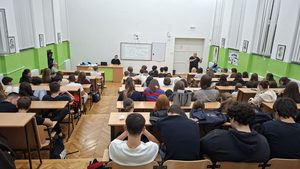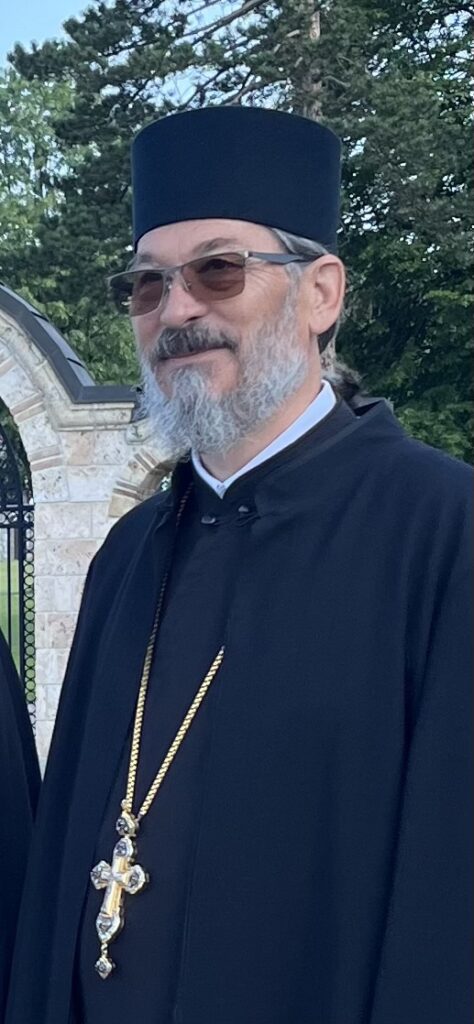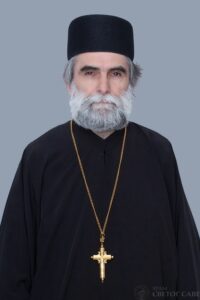
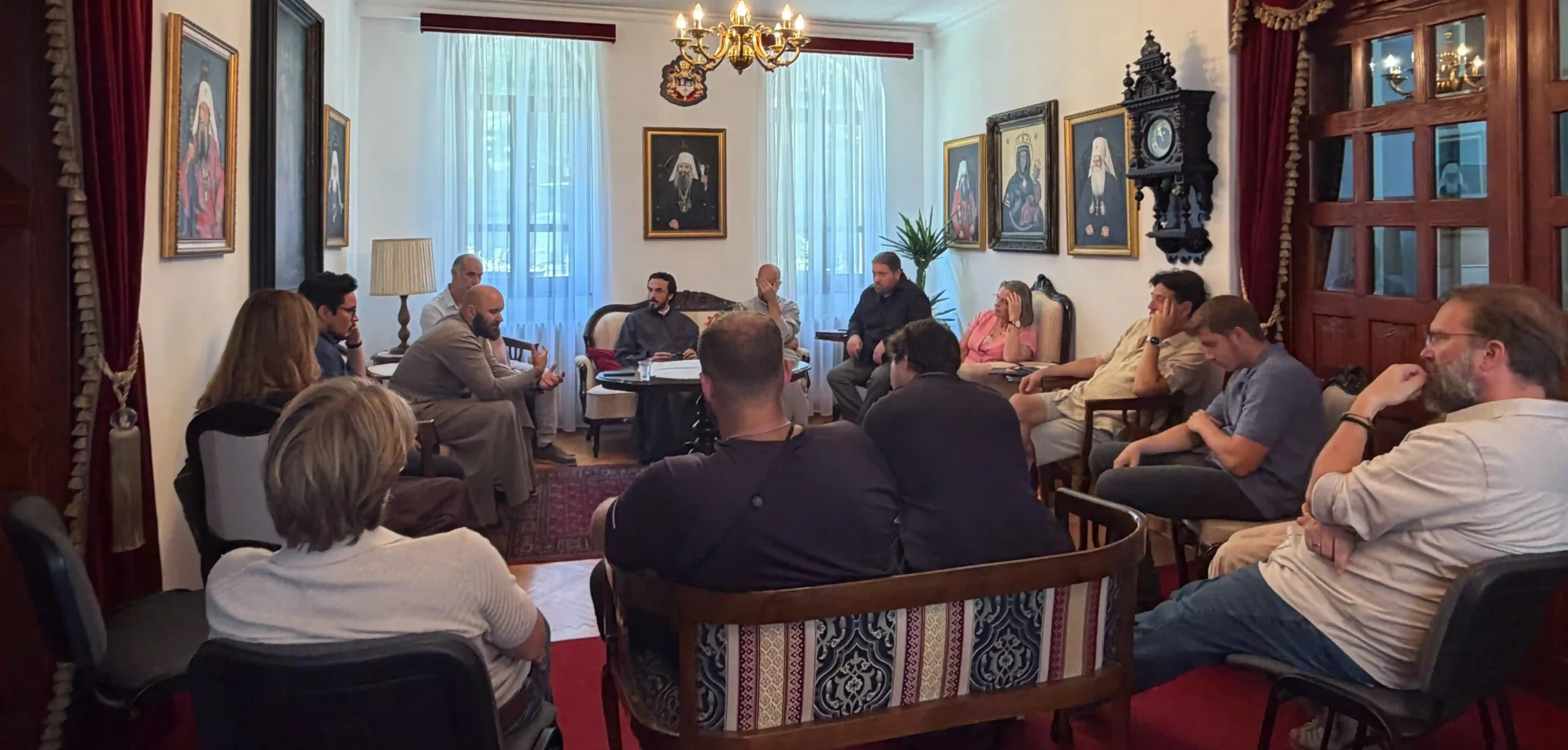
On Vidovdan, in the Year of Our Lord 2026, following the Divine Liturgy, a lively discussion in English entitled “The Significance of Vidovdan in the Age of Artificial Intelligence” was held in the parish hall of the Church of St. Alexander Nevsky. The event was organized by the Section for External Mission of the Missionary Department of the Archdiocese of Belgrade–Karlovci as part of the NevskyTalks project. This gathering marked a new, significantly changed NevskyTalks format: introductory presentations have been shortened, the number of keynote speakers has been increased, and the primary emphasis has shifted towards dialogue and active engagement with those in attendance. The main keynote speaker was Presbyter Dr Oliver Subotić, Head of the Missionary Department, whose presentation was followed by contributions from Deacon Dr Đorđe Petrović, Professor of Dogmatic Theology at the St. Sava Theological Seminary in Belgrade, and Presbyter Aleksandar Sekulić, Military Chaplain in the Serbian Armed Forces.
Fr Oliver Subotić reflected upon three different perspectives on Vidovdan, depending on whether emphasis is placed upon its historical, national, or spiritual dimension, the latter being the essential one. It is within this spiritual dimension that the enduring significance of Vidovdan is revealed through the values embodied in the Kosovo Covenant, which provide guidance for confronting the challenges posed by so-called artificial intelligence. In this context, Fr Oliver emphasized one of the defining characteristics of the Vidovdan ethos: that challenges, regardless of their magnitude, are never to be avoided but confronted directly, just as Prince Lazar and his Christian army faced a vastly superior invading force. In contrast to this Vidovdan ethos, he identified the ethos of capitulation before technology and the acceptance of technological determinism—an approach which, he argued, can in no way constitute a genuinely Christian response.
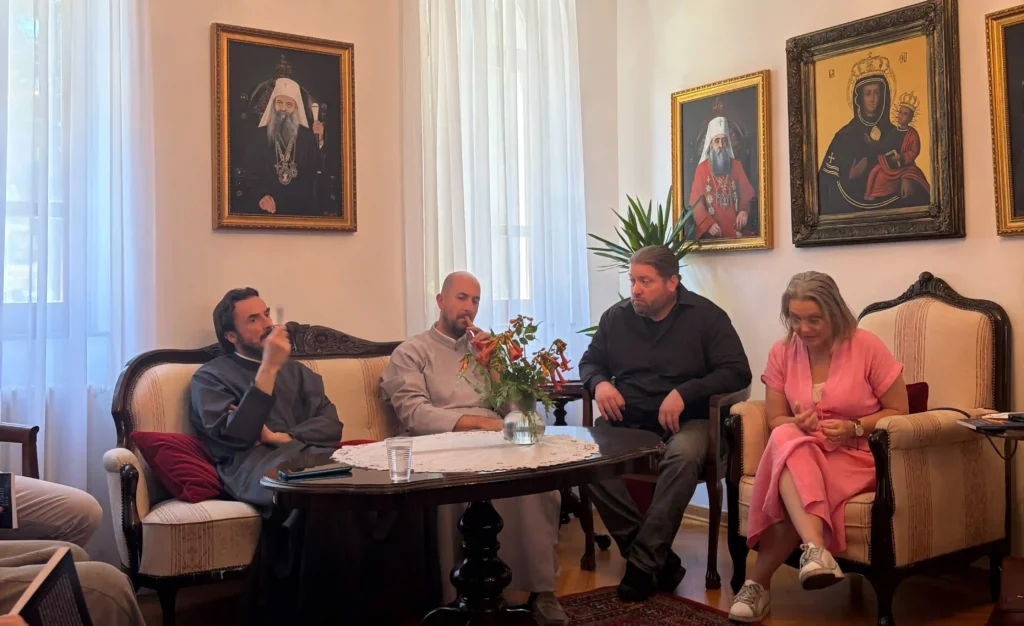
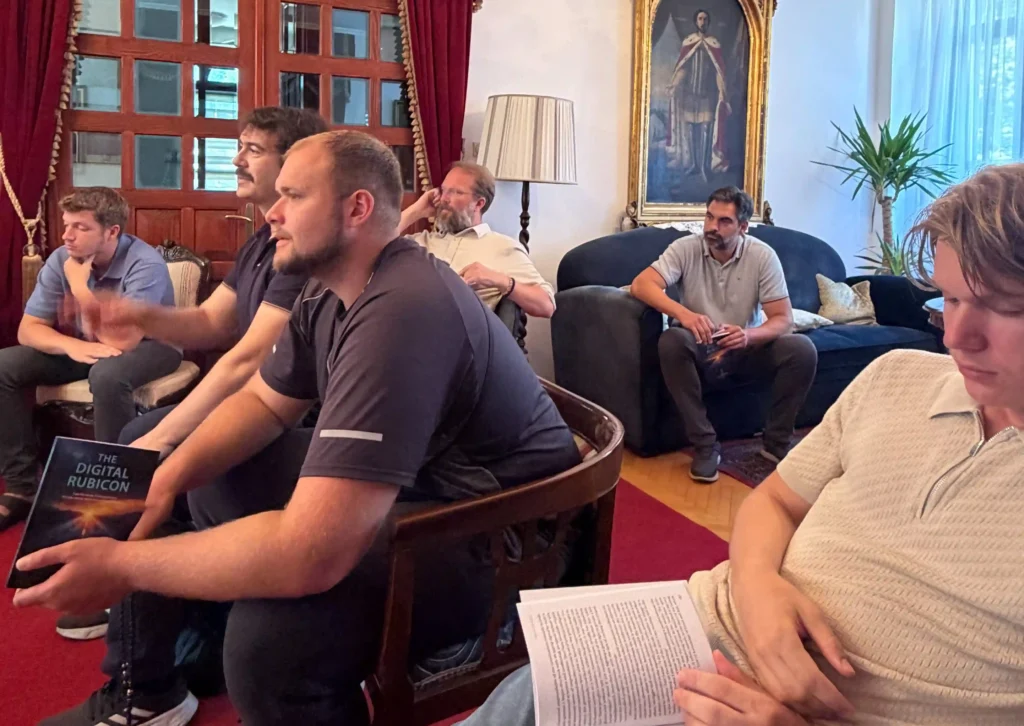
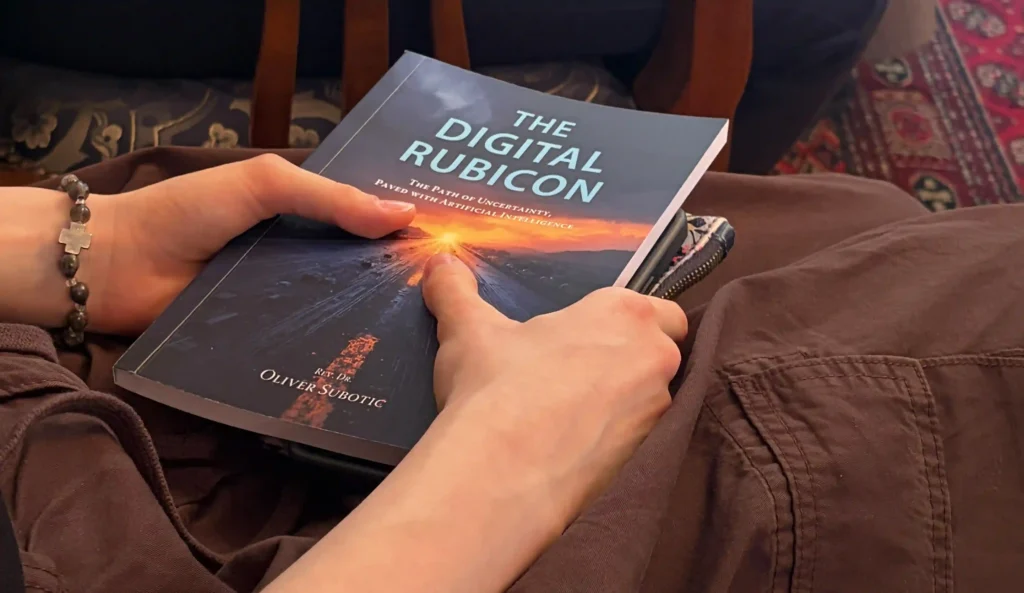
Recognizing that the issue of so-called artificial intelligence represents one of the greatest challenges in the history of human society, Fr Oliver proposed three practical directions for action inspired by the Vidovdan ethos. The first concerns support for the initiatives of internationally renowned intellectuals seeking effective ways to place this field under meaningful human control. In this regard, he stressed the importance of confronting the present challenge synergistically, noting that from the time of Prince Lazar until today there has remained a constant call to support all those who courageously face the defining challenges of their own age. The second dimension of the Christian response concerns the microsocial sphere, namely the family. More specifically, it involves raising children through the cultivation of strong character and an ascetical approach to technology, whereby human beings learn to master technology rather than become its servants. The third direction of action concerns the inner life of the human person. According to Fr Oliver, humanity is increasingly threatened by the occupation of its inner spiritual space by technology, a challenge that calls for the strengthening of the noetic dimension of the person through the practice of noetic prayer, the Prayer of the Heart. In conclusion, Fr Oliver read a brief passage from his recently published book The Digital Rubicon, highlighting the values of freedom, justice, and truth that characterize the Vidovdan ethos and which constitute universal values for all humanity.
Professor Đorđe Petrović then offered several reflections on Fr Oliver’s presentation, after which Fr Aleksandar Sekulić continued the discussion in the same spirit, exploring the deeper historical roots that preceded the Kosovo Covenant and emphasizing the broader context of the pre-Kosovo period.
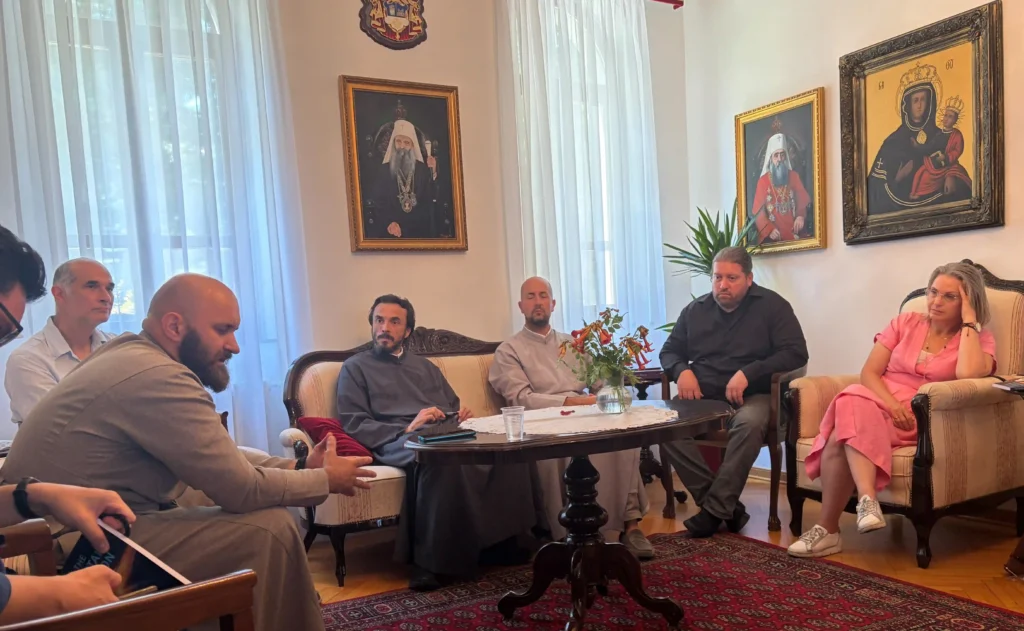
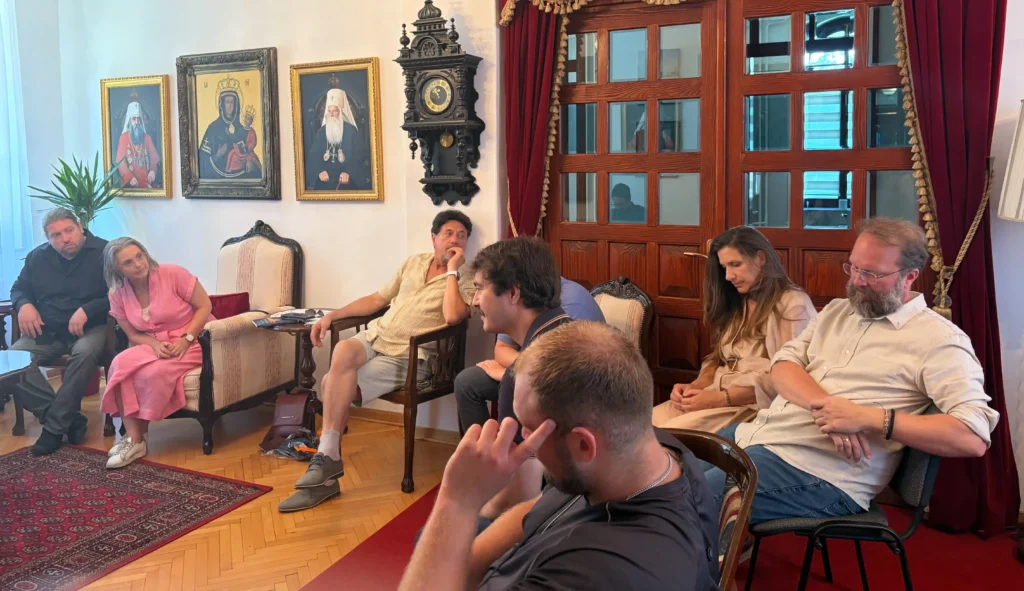
The formal presentations were followed by a lively dialogue with members of the NevskyTalks community, the majority of whom were from the United States. As is often the case, the gathering also welcomed several new participants, this time from Australia and the United States. The event was especially honoured by the presence of Dr Christopher Lockwood, an American Orthodox theologian, who actively participated in the discussion, offering insightful observations and valuable perspectives on the subject. In an informal atmosphere marked by thoughtful exchange, the conversation continued well beyond the approximately one-hour period ordinarily allotted for these gatherings.
All participants received complimentary copies of The Digital Rubicon, recently published by the Serbian Academic Initiative for the Safe Use of Artificial Intelligence. The volume is the English translation of Fr Oliver Subotić’s Serbian-language book on artificial intelligence, originally published three years ago.
With God’s help, additional innovations and further improvements to the existing formats of the English-language missionary lectures and discussions organized within the NevskyTalks project are planned for the coming autumn. The wider public and the Church community will be informed of these developments in due course.