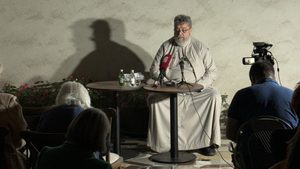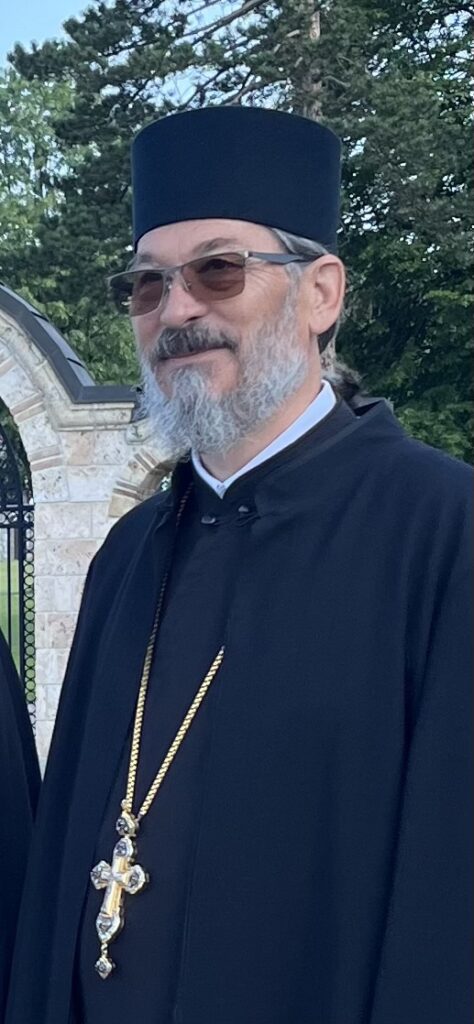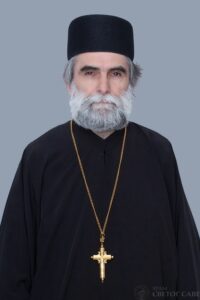

The guest of the new edition of the Hram (Temple) programme, broadcast on Radio Belgrade 2 on Sunday, 28 December 2025, was catechist Branislav Ilić, editor of the missionary portal Kinonia and a permanent expert associate of the Section for Electronic Mission of the Missionary Department of the Archdiocese of Belgrade–Karlovci. Branislav spoke on the topic “Water – a Symbol of Life (the Sanctifying Role of Water).” The author and host of the programme was Dušanka Zeković.
The oldest biblical testimony concerning water is found already in the second verse of the Book of Genesis. God’s creative activity, through several stages of creation, was manifested precisely over water. According to contemporary scientific knowledge, nearly three quarters of the Earth’s total surface is covered by water. Approximately 97 percent of the total amount of water on the planet is found in oceans and seas. In the introductory part of the programme, catechist Branislav recalled that human life, as well as plant and animal life, is inconceivable without water. In his own words, the body of an adult person consists of about 70 percent of water, and the intake of water is of vital importance for human survival, since water facilitates the transport of nutrients and oxygen to the cells and their absorption, regulates body temperature, and converts the food into energy. The introductory reflections on water as an integral component of life were further enriched by his remarks on the therapeutic properties of water, noting that since ancient times three methods of using water for therapeutic purposes have been known: hydrotherapy, balneotherapy, and thalassotherapy.
Speaking about the Old Testament testimonies in which water is mentioned, the guest emphasized that among such events particular attention should be given to the creation of the world, the Flood, the crossing of the Israelites through the Red Sea, the miracle of turning bitter water into sweet water, and the crossing of the sons of Israel over the Jordan. Catechist Branislav pointed out that, in addition to these events, one should not overlook the fact that certain prophets of God, both in their lives and in the prophecies they proclaimed, affirmed the significance of water in sacred history, at the same time foreshadowing the nearness of the revelation and fulfillment of the New Testament Mystery of living water.
With regards to New Testament testimonies concerning the use of water, the interlocutor of Dušanka Zeković emphasized that, on the one hand, certain Old Testament motifs related to the role of water are adopted in the New Testament writings, such as the testimony concerning the creation of the earth “out of water and through water” by the word of God, while on the other hand there is a clear emphasis on the New Testament aspects of the use and role of water in the economy of salvation. In this segment of the conversation, particular attention was devoted to John’s baptism of repentance, the Baptism of the Lord in the Jordan, the healing of the paralytic at the Pool of Bethesda, Christ’s conversation with the Samaritan woman at Jacob’s well, and the healing of the man blind from birth.
In the programme, special attention was devoted to the theme of the use of water in the sacramental life of the Church, with particular emphasis on the Holy Mystery of Baptism, since the Mystery of the new birth is accomplished by water and the Spirit, that is, through the action of divine grace in the baptismal water. In this segment of the conversation, catechist Branislav Ilić grounded his exposition in patristic testimonies concerning the significance of water as matter in the Holy Mystery of illumination (Baptism). It was concluded that water, as a natural element of life and purification, in the Holy Mystery of Baptism becomes an element of birth and life in Christ, as well as an element of purification from sin, renewal, and sanctification of fallen human nature.
In addition to the fact that the baptism of new members of the Church was performed in water, from the very first centuries of Christian history water was also used for the sanctification of Christians in their everyday lives. In this spirit, in the concluding part of the programme catechist Branislav Ilić spoke about the rites of the Lesser and the Great Blessing of Waters, pointing to the content of the prayers in which we find the meaning and significance of the sanctifying role of water, since the litanies and prayers of the rites of the Lesser and the Great Blessing of Waters unambiguously indicate that the fundamental purpose of these sacred acts is the sanctification of the human person. Speaking of the Great Blessing of Waters, which is performed once a year, catechist Branislav emphasized that one of the oldest testimonies concerning the custom of blessing water on the Feast of Theophany is found in a homily of St. John Chrysostom on that feast. Chrysostom provided a valuable account regarding the use of water, stating that at midnight on the eve of this feast all those present take the water that is blessed on that occasion and keep it throughout the entire year.
Sanctified water thus becomes for the faithful a gift and a source of sanctification, since through the use of sanctified water (by drinking, sprinkling, or anointing) the faithful partake of the gracious energies of God and are sanctified. In this spirit, at the end of the programme catechist Branislav Ilić addressed the listeners of Radio Belgrade with an instruction on the proper use of sanctified water, emphasizing that sanctified water should never be understood in a magical sense, but always and exclusively as a sacramental and grace-filled source of sanctification.
Source: Kinonia Portal