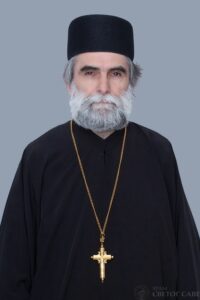

“The greatest challenge in a person’s life is to understand that this announced and later fulfilled joy unlike any other earthly joy; rather, it represents the very essence of life and our faith. Every worldly joy and celebration are limited by time and space, but the joy of Christmas is an event that endures, giving meaning to all our relationships and our entire life, here and now. This joy has been revealed, it has arrived, and it has already been given to us, in the words of Christ: “No one will take your joy from you’ (Jn. 16:22).”
The birth of Christ reveals to us the Mystery of God’s boundless love. Only God, who is Love (1 Jn.4:8), could humble Himself and be born as a true Man, as the God-Man, without ceasing to be the true God and the Saviour from sin, the source of evil, corruption, and death. In the Nicene Creed, we confess that the incarnation occurred for us men and for our salvation, as Saint Irenaeus of Lyon explains: “The Son of God became the Son of Man so that in the end, man could become a son of God.”
Christmas is a special time when the Church fervently and joyfully proclaims this Good News with the words:
“Today, God has come to earth, and man has ascended to heaven. Glory and thanksgiving to the One born on earth, who has divinized earthly nature.”
By His birth, Christ brings the richness of deification, bringing indescribable joy to all people and all creation. The Church calls everyone to share in this joy, exclaiming: “Sing to the Lord, all the earth!”
The Union of Divine and Human Nature
Speaking of the unity of divine and human nature in the Person of Christ, Saint Gregory the theologian expresses his awe:
“How wondrous is this union of God with man! What a marvellous mystery! The One who is, is now created. The One who enriches others becomes poor. The One who is full empties Himself. He empties Himself of His glory so that I may partake of His fullness.”
Christ’s self-emptying (Phil. 2:6-8) is an act of divine love for humanity. If God had not come to man, man could not have come to God. Without Christ’s self-emptying, human deification would have been impossible.
Christmas: More Than a Tradition
When considering Christmas customs, we must remember that celebrating the Nativity of Christ is not merely a tradition, a habit, or a time of giving and receiving gifts. Christmas is the gift above all gifts, the day when something truly new under the sun was revealed – the day when eternal divine youth entered the existence of heaven and earth, filling our limited and transient human nature with eternal renewal.
In our Serbian Orthodox tradition, Christmas is rich with customs that reflect the historical identity of our people. It has always been a family feast, celebrating the warmth of the home and hearth. Many blessed and sacred customs accompany its observance, yet without active participation in the liturgical celebration, these customs are meaningless.
The great Church Father, Saint Cyprian of Carthage, reminds us:
“A custom without faith is an old delusion.”
Thus, our liturgical ethos gives meaning to customs – they are only means, never an end in themselves.
It is wrong for Christmas Eve to be celebrated in a semi-pagan and half-drunken atmosphere, on streets and squares, rather than welcoming the Divine Infant in the warm domestic setting that reflects the humble cave where He was born, swaddled, and laid in a manger.
The Meaning of Christmas: A Life-Changing Event
The significance of Christmas is not exhausted in mere historical remembrance – it is a living and transformative event for every generation and every person.
Our beautiful customs are an integral part of the feast’s character, but we must reach the core around which these customs are woven. Otherwise, they risk becoming empty mechanical rituals, without true understanding. Too often, customs can overshadow the life-giving message of the Feast itself;
The birth of the Son of God should awaken repentance in every person and lead them to a genuine Christian life (Mark 1:15). This means a commitment to virtue, ensuring that faith does not remain an empty ideology, but becomes a living and transformative force.
Orthodoxy is a way of life. It is a life lived according to the Gospel, through which people should recognize us (Matt. 5:16). By living virtuously and sacramentally, a person becomes Christ-like, so that their words and actions find fulfillment in the Person of Christ.
For this reason, our call to a virtuous life should begin on the very day when the Son of God becomes Man and when our salvation begins (Jn. 1:14).
Christmas is the beginning of our education in virtue.
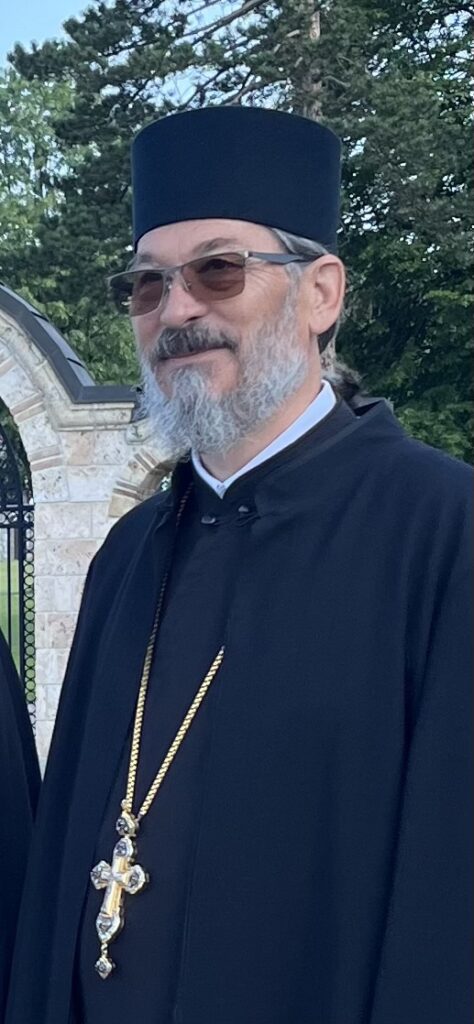
This text is an excerpt from a Christmas interview published on the “Riznica” portal on January 6, 2025.
Written by: Catechist Branislav Ilić, Editor of the “Kinonia” Portal