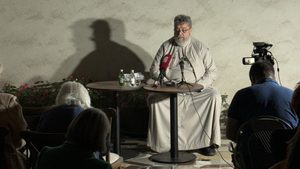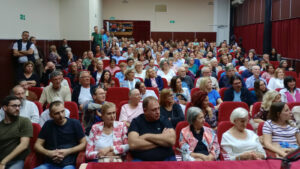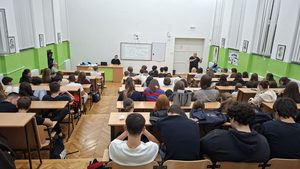
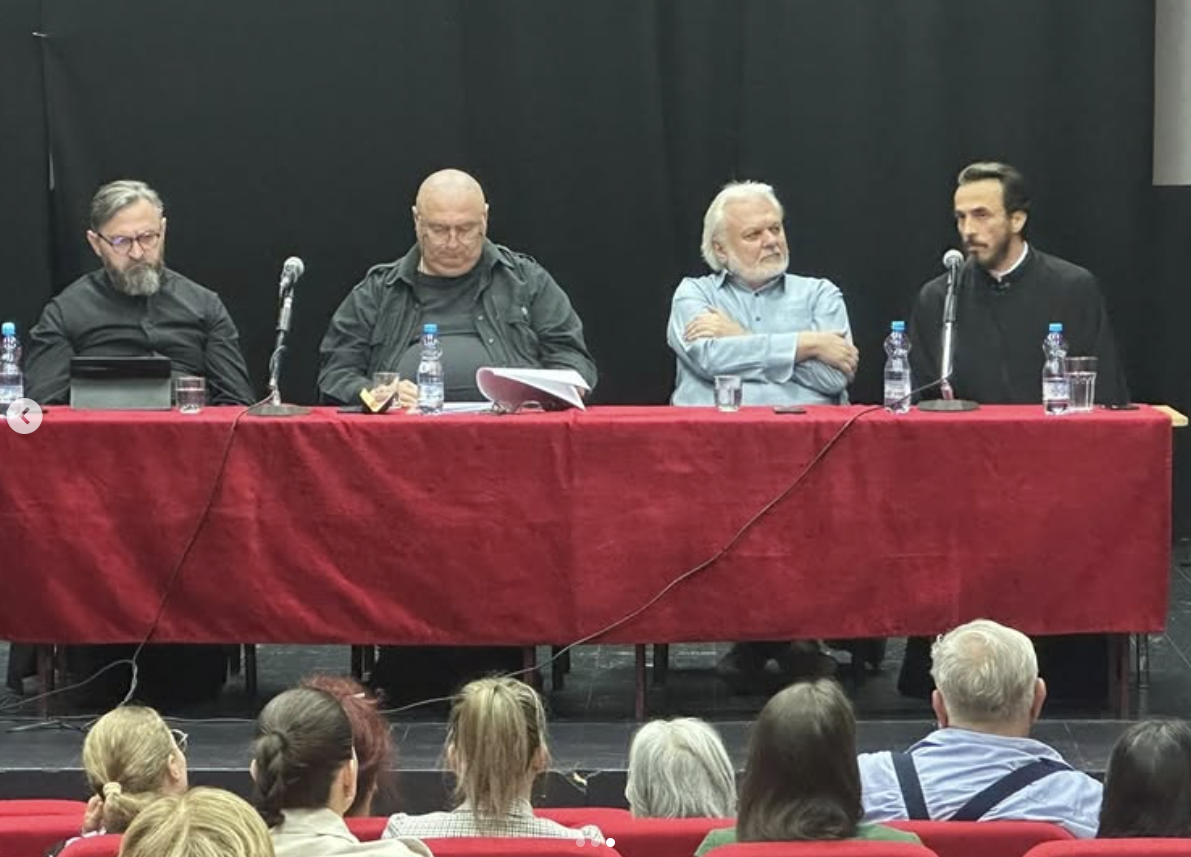
As part of the new series of dialogue forums entitled Orthodoxy and Psychology, a panel discussion on the topic “The Spiritual and the Psychological – What Is the Difference?” was held on 22 May 2026 in the hall of the Čukarica Cultural Centre.
The panel participants were:
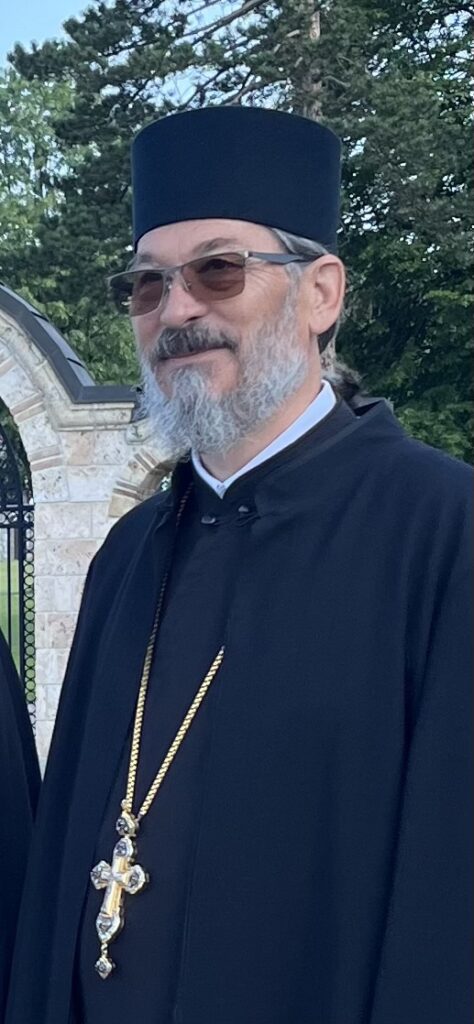
• Presbyter Dr Oliver Subotić, Head of the Missionary Department of the Archdiocese of Belgrade-Karlovci;
• Presbyter Dr Aleksandar Milojkov, Coordinator of the Section for Dialogue in the Public Sphere of the Missionary Department;
• Slobodan Spasić, doctoral candidate and psychologist.
The discussion was moderated by Viktor Vicanović, psychologist and permanent expert associate of the Missionary Department.
The conversation explored the relationship between the spiritual and the psychological from the perspectives of Orthodox theology and contemporary psychology, seeking to highlight both their distinctions and the possibilities for their encounter in the understanding of the human person.
Particular attention was devoted to:
• the Orthodox understanding of the soul, spirit, and body;
• the biblical and patristic teaching on the human person as the image of God;
• the relationship between spiritual life and the psychological condition of the individual;
• the question of spiritual laws and the influence of the passions upon human personality;
• the upbringing of children in contemporary society;
• as well as the question of whether it is possible to speak of an Orthodox psychology, that is, of a space in which Orthodox anthropology, the spiritual experience of the Church, and contemporary psychological knowledge may meet and interact.
The participants emphasized the importance of distinguishing spiritual problems from psychological difficulties, while also highlighting the need for responsible cooperation between the Church’s pastoral experience and contemporary psychology, without confusing their respective roles and areas of competence. Particular attention was also given to the Apostolic teaching that the human body is “a temple of the Holy Spirit” (1 Cor. 6:19), underscoring that Christianity does not regard the body as something insignificant or opposed to spirituality, but rather as an integral component of the human person and of humanity’s relationship with God.
The audience actively participated in the discussion through numerous questions and comments, demonstrating a strong interest in topics at the intersection of Orthodox spirituality and the psychological experience of contemporary human beings.