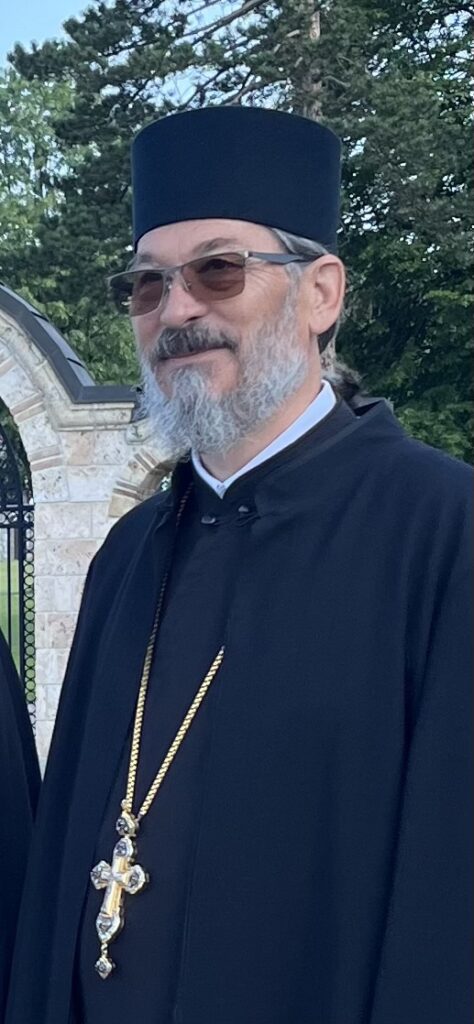

WRITTEN By: Bishop David (Ninov) of Dremvits
Luke 4:16-22, The Indiction.
It is clear that today marks a new beginning in some sense. On the 14th, according to the new calendar, or the 1st of September according to the church calendar, we remember the phrase: “The beginning of the indiction.” While we know that this marks the start of the ecclesiastical new year, we also ask ourselves a more profound question: What exactly do these words mean?
Indiction is a Latin term that means an allocation, a decree made by Roman emperors to determine the amount of tax that Roman citizens needed to pay for maintaining the army. This allocation was set for fifteen years, since every fifteen years the old soldiers were replaced by the new ones.
Over time, the word indiction ceased to refer only to the decree and began to signify a fifteen-year period. Thus, people began to measure time by indictions: the first indiction, the second indiction, or for example, the second year of the seventh indiction. St. Constantine the Emperor was the first to officially designate the indiction as the system for measuring time, beginning on the 1st of September in the year 313, at the time of harvest completion, and it was known as Constantine’s Indiction.
The Church adopted this system of measuring years by indictions. Thus, the ecclesiastical year began on September 1st with a Patriarchal Divine Liturgy and special prayers for the Lord to bless the new year-just as it does today. Over time, two types of indictions emerged: the old Roman (Byzantine) indiction, which was prominent in Byzantium, and the papal indiction, which commenced on January 1st, and was kept in the West. This is the reason why, in our calendars to this day, September 1st is marked as the start of the ecclesiastical year, while January 1st is accepted as the worldly new year.
In today’s bleak world, these concepts of time may seem meaningless. Indeed time, in its cyclical nature, reflects the completeness of the world, but it simultaneously serves as evidence of humanity’s enslavement and mortality. Time draws everything that exists towards death. Even those who criticise the Church have no answer to the problem of death. For worldly people, death represents the absolute end.
But for us Orthodox Christians, today marks Christ’s Day of Ressurection-the first day of a new era, a new life that has sprung forth from Christ’s tomb, a time where death has been defeated. Christianity begins with a new perception of time, which is no longer bound to death. Death has been conquered, and the era of Ressurection has begun. Is not the Liturgy, with which we begin the Indiction, a timeless experience, which transcends time limitations? Doesn’t the Liturgy that we serve together represent the joy of eternal life in our earthly life? Does it not represent the victory over death? Of course it does!
May Christ our Lord grant that we all be gathered together at the Heavenly Liturgy in the Unending Jerusalem, in the Kingdom of the Father and the Son and the Holy Spirit, forever and ever.The author is a contributor to the missionary portal Kinonija.