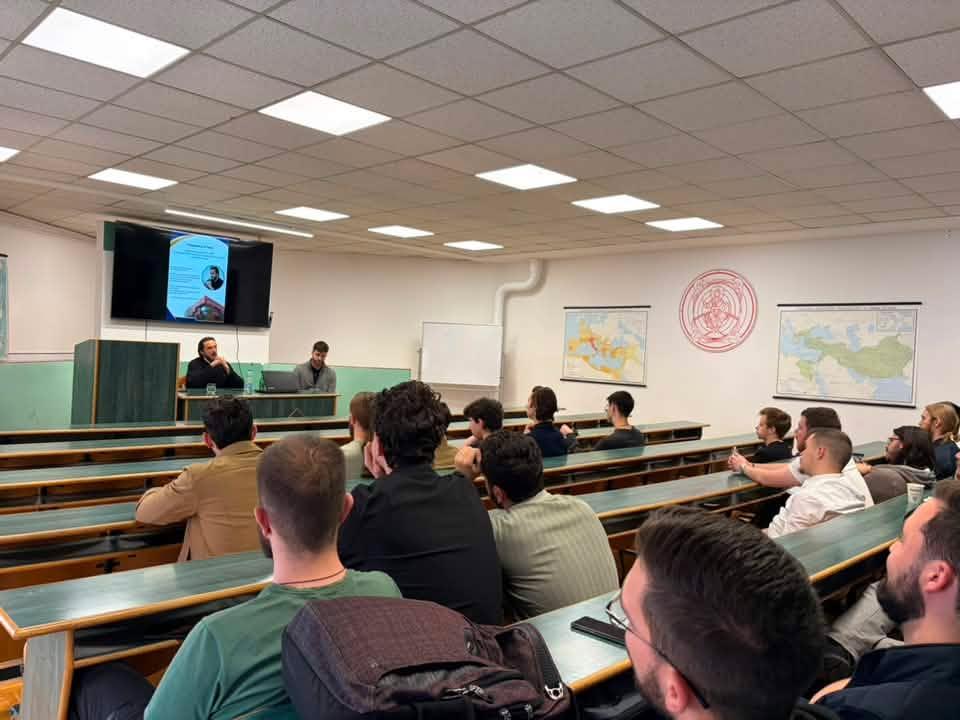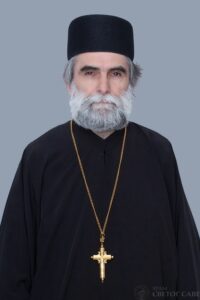


On Wednesday, May 13, at 10:15 a.m., in the small amphitheatre of the Faculty of Orthodox Theology in Belgrade, a lecture was held as part of the cooperation between this institution and the Missionary Department of the Archdiocese of Belgrade-Karlovci. Organized by the Department of Liturgics, the lecture bore the title: “The Holy Mystery of Confession and AI: On the (Mis)understanding of Theological and Technological Concepts in the Contemporary Age.” The lecturer was Presbyter Dr. Oliver Subotić, while the moderator was Vojislav Bašica, teaching assistant at the aforementioned department.
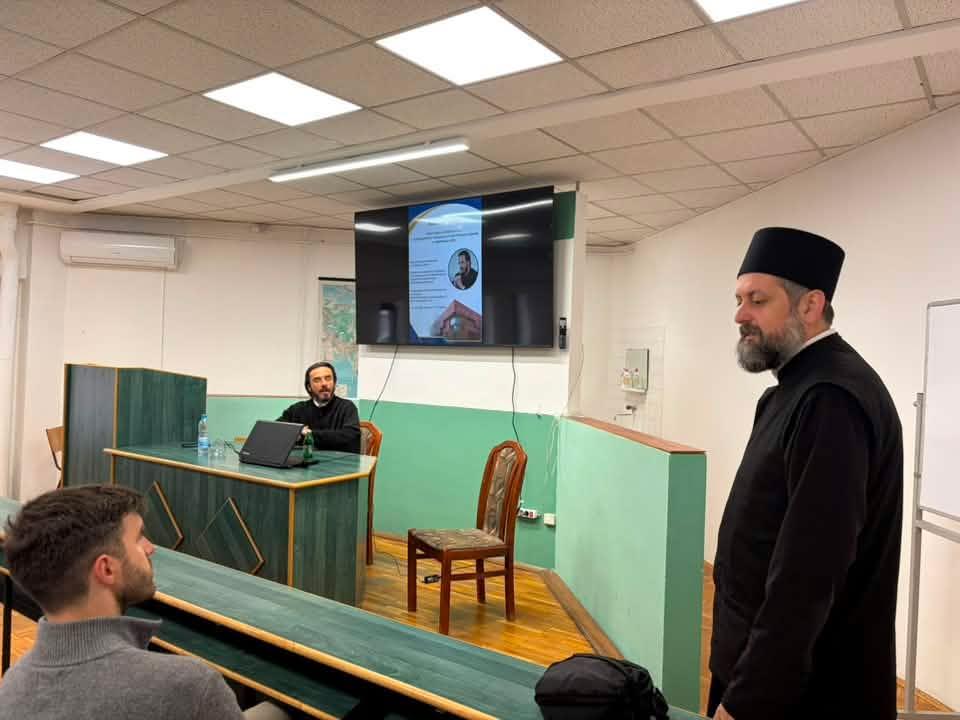
In the introductory lecture, which lasted approximately forty-five minutes, the speaker presented various approaches to and perceptions of the Holy Mystery of Confession among the faithful within parish practice. He reflected upon the formalistic-ritualistic, legalistic, and moralistic understandings of this Holy Mystery, emphasizing that such approaches are both erroneous and superficial, before finally explaining the authentic, integral, and therapeutic understanding of the Holy Mystery of Confession. Drawing from his pastoral experience, Fr. Oliver noted that, in the practice of Church life, only a small number of people still possess a proper understanding of the concept of confession, and that intensive pastoral work by the clergy is greatly needed in this area.
In the second part of the lecture, Fr. Oliver addressed various perceptions of the concept of so-called artificial intelligence, explaining the genesis of the term and why, in his opinion, it is not entirely adequate, even though it is universally used as a terminus technicus. He pointed out the fundamental difference between machine learning and classical algorithmic software, explained the nature of the Turing Test, outlined the key phases in the development of AI, and particularly reflected on historical milestones that marked turning points in humanity’s relationship with this technology — from the famous Kasparov vs. Deep Blue match to the recent debate competition between a machine and a world-renowned expert in the field of debating.
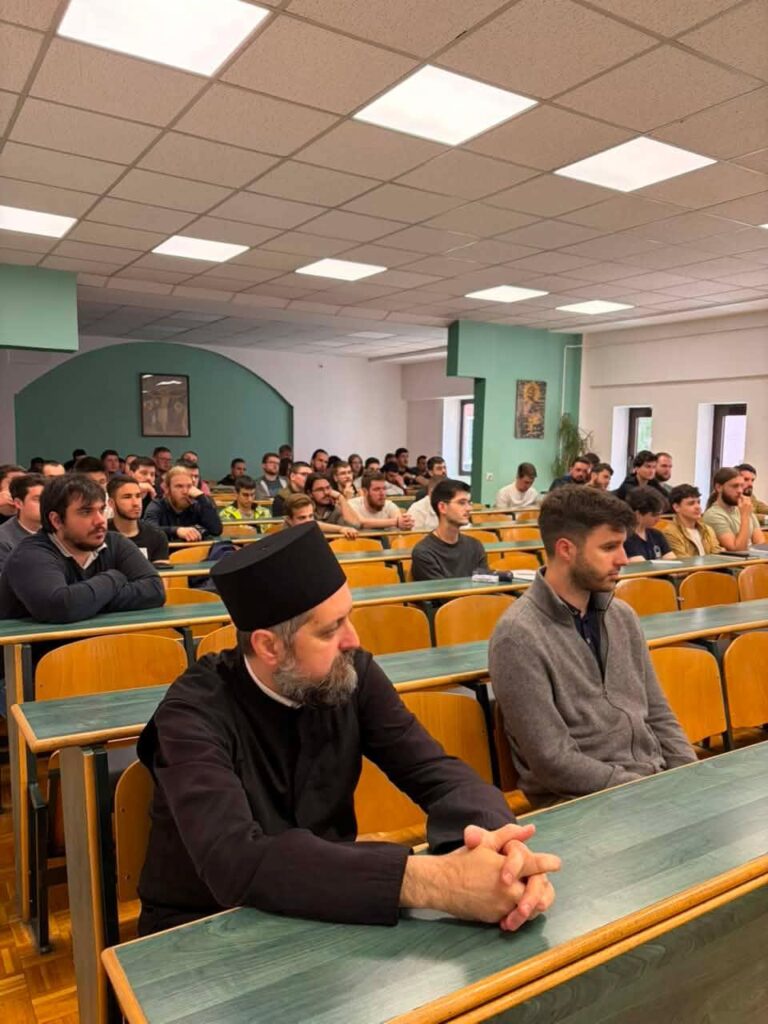
In the third and final part of the lecture, Fr. Oliver explained why misguided tendencies regarding confession arise in the contemporary age, stemming equally from the first three erroneous perceptions of confession and from a mistaken perception of the concept of AI itself. Among the key factors contributing to the phenomenon of AI being used as a substitute for confession, the lecturer cited, in addition to the aforementioned issues, the frequent anthropomorphization of the term “artificial intelligence,” the problem of suggestibility and the illusion that a living being stands behind the screen, the widespread use of Replika-like chatbots, as well as the fundamental misunderstanding of the fact that contemporary AI models, although exceptionally proficient in syntax, possess absolutely no understanding of the semantics of the outputs they generate, and therefore cannot be compared to human intelligence.
The lecturer supported his views with concrete examples in order to make the lecture both more comprehensible and more engaging for the students. Following the introductory presentation, a dialogue with the students ensued, during which they posed various questions, while the lecturer sought to provide adequate, well-argued, and detailed answers.
At the conclusion of the lecture, the Dean of the Faculty, Protopresbyter Prof. Dr. Srboljub Ubiparipović, also joined the gathering. Through his brief address, he rounded off the lecture and announced the continuation of cooperation between the two institutions.