
- What do we understand by the terms “sect” and “cult”?
These terms have multiple meanings and are not easy to define precisely. In their narrower sense (which is how these expressions are most commonly understood by the general public), these nouns are frequently used synonymously in the Serbian language to denote a particular form of new religious or spiritual challenge. In Latin, there are two possible verbs from which the noun “sect” may be derived: secare – “to separate” and sequi – “to follow”. Experts on the phenomenon of sects frequently emphasise that the word “separation” may indicate a possible form of the phenomenon, whereas fanatical “followership” is a concept that more accurately reflects its essential nature (in Croatian, for example, the word “sect” is translated as sljedba, meaning “following”). Furthermore, the noun “cult” is not an entirely appropriate term for designating this phenomenon in the Serbian language, since it is a word which, like “ritual”, ought to possess a positive connotation in the theological sense. For this reason, professional circles generally employ the phrase cultic and manipulative activity, which more clearly points to the social pathology manifested in the totalitarian and destructive nature of a particular system of thought, belief and action. The Serbian Law on Religious Communities distinguishes between “traditional” and “non-traditional” religious communities (whose legal rights are, in practice, virtually equal), which is undoubtedly a more appropriate classification than the division into “small” and “large religious communities” adopted by theorists inclined towards neo-Marxist theories. Finally, sects are not exclusively “religious” or “spiritual” phenomena. This issue may be understood more clearly through specific professional and methodological criteria used to identify particular forms of socially dangerous activity. These criteria have been defined in the official documents of certain international organisations, as well as in the legislation of numerous countries, including France, Belgium, Germany, Austria and the Russian Federation.
- According to the official data available to the Ministry of the Interior of the Republic of Serbia, how many sects are there in Serbia?
The Ministry of the Interior of the Republic of Serbia possesses no official data concerning the number of “sects” in Serbia. From the Ministry’s perspective, the principal problem is the absence of a legal definition of the term “sect” in domestic legislation. Nevertheless, according to certain international criteria, particularly the resolutions of the Council of Europe and reports of the European Parliament, it is indirectly possible to speak of identifying manifestations of cultic and manipulative activity and, potentially, organisations or groups which, on the basis of these criteria, may possess a “cultic and manipulative character”. The organisational unit within the Criminal Police Directorate of the Ministry of the Interior of the Republic of Serbia responsible for matters relating to cultic and manipulative activity does not maintain any official records of formal or informal groups that meet some of these criteria, since there is currently no legal basis for keeping such records. As the noun “sect” carries an extremely negative connotation in public discourse, it should be used with considerable caution in order to avoid the potential stigmatisation of confessional religious communities (which is, in fact, the term employed in the legislation currently in force for “new religious movements”).
- Is the number of members of sects increasing from year to year?
When a particular social phenomenon is as ill-defined as this one, it is extremely difficult to monitor its fluctuations. The number of organisations and groups of a cultic character varies, but not to any significant extent. There have been no dramatic increases in either their presence or their activities. Nevertheless, continuous efforts are being made to strengthen the capacities of institutions to identify and monitor the activities of individuals and groups that engage in some form of cultic and manipulative activity. Naturally, as with every form of social pathology, the absence of legal sanctions and the insufficient number of qualified professionals capable of adequately identifying such phenomena and monitoring such processes are factors that adversely affect the possibility of combating them. It is impossible to determine even approximately the number of organisations of a cultic character and their members without extensive multidisciplinary research, which no one in the Republic of Serbia has conducted to date. In this regard, strategic and interdepartmental cooperation between state institutions and relevant social actors is essential, both in identifying and responding to these phenomena and in the processes of deradicalisation, resocialisation and providing assistance to victims of cultic and manipulative activity.
- From the standpoint of public security, are human rights jeopardised if a particular group is designated as “sectarian”?
As previously emphasised, the term “sect” has no definition in our legislation. From the standpoint of public security, the issue of cultic and manipulative activity is considered within the context of constitutional and statutory responsibilities, primarily in terms of supporting the rule of law in a democratic society, ensuring security and protecting the rights and freedoms of all citizens, with particular emphasis on the protection of vulnerable categories of the population, such as national and confessional minorities, children, minors, persons with developmental disabilities, the elderly, the infirm, persons with disabilities and others. Consequently, there is no legal mechanism by which any group could formally be designated as a “sect” – particularly not solely on the basis of its doctrine. Where objective and precise assessments indicate the presence of elements of illegal activity, action is taken exclusively within the existing regulatory framework. In certain cases, the competent ministries have adopted decisions to remove particular groups from the register because their conduct was not in accordance with the statutes registered with the competent state authority. Thus, from the standpoint of public security, the term “sect” represents an informal “umbrella” designation for groups whose activities may display a certain number of indicators of social danger recognised in both domestic and foreign legal frameworks. Groups that openly express radical or extremist ideas, or openly support violence, violations of the law or terrorism, naturally become a matter of interest to the security services in every democratic society, and their activities are legitimately monitored, primarily with the aim of preventing serious criminal offences, terrorist attacks and similar acts. Moreover, the regulations currently in force require the security system to devote particular attention to such groups and their members.
- Does the Republic of Serbia have effective mechanisms for combating cultic and manipulative activity and, if so, what are they?
The Republic of Serbia currently has no laws that directly criminalise manifestations of cultic and manipulative activity (unlike France or Belgium – countries whose legislation protects citizens, particularly vulnerable categories such as children, the elderly, the infirm, persons with disabilities and others, from such phenomena). Nevertheless, several legislative provisions indirectly, yet substantively, criminalise such phenomena – for example, the criminal offence of quackery, as well as legislation concerning health protection, consumer protection and family law. As early as 1992, the Council of Europe recognised instances of the abuse of human rights (particularly the right to freedom of religion) and drew the attention of its member states to the need for professional monitoring of this field. To this end, the European Federation (FECRIS) was also established. In its capacity as a pan-European non-governmental organisation, it monitors this field and submits reports to the Council of Europe, the United Nations, the OSCE and other international and national institutions and organisations. Experts from Serbia have participated in these activities for decades and, to the extent permitted by their capacities, have shared their experience with state institutions and relevant social actors. Furthermore, a considerable number of educational activities have been organised, while experts have also been afforded numerous opportunities to address this issue through the media. As a result of these activities, public awareness of the presence and problems associated with cultic and manipulative activity has been increasing gradually but steadily. Finally, despite the absence of specific legislative provisions, over the past several decades, several dozen cases falling within the sphere of cultic and manipulative activity have been successfully prosecuted before domestic courts through the application of legislation prohibiting quackery and similar provisions.
- Does the Ministry of the Interior combat the adverse consequences of the activities of sects and, if so, in what manner?
The Ministry of the Interior of the Republic of Serbia monitors developments in this field in accordance with its statutory responsibilities and objective capabilities. The focal point of this work is the Section for Combating Sects within the Criminal Police Directorate of the Ministry of the Interior. In accordance with the available resources and capacities, information and available data relating to this field are collected and subjected to analytical processing. Further coordination is also planned with other organisational units of the Ministry, other state and academic institutions, traditional religious communities and the media, with particular emphasis on prevention. Further development of interdepartmental cooperation is envisaged, as is the provision of specialist training for police officers, with the aim of strengthening capacities for accurate and legally grounded assessments of, and responses to, abuses of citizens’ trust, misrepresentation and similar conduct.
- Have citizens lodged complaints concerning sects, how many reports have been submitted in recent years, and has their number increased recently?
Complaints from citizens who believe that they or members of their families have been affected by cultic and manipulative activity are regularly submitted to the Ministry of the Interior of the Republic of Serbia. However, this does not mean that citizens are always correct or that their assessment of the situation is accurate. It is often the case that the situations described contain no elements indicative of cultic activity or any other illegal activity that would be relevant from the standpoint of the statutory responsibilities governing the field of public security. The possible establishment of a separate register of such reports submitted by citizens would require the integrated and legally regulated monitoring of this issue in accordance with a clearly defined methodology. The number of such phenomena in Serbia has generally remained stable, with no dramatic increase or decrease over the past three decades. As a rule, extended periods of relative “calm” alternate with occasional outbreaks of incidents that attract public attention, even when they have no connection with cultic activity. We are aware of cases that were connected with cultic and manipulative activity but were not characterised as such in public; likewise, according to the relevant methodological criteria, certain cases publicly associated with “sects” did not, in fact, fall within this field.
- Which sect do citizens most frequently complain about?
First and foremost, it is important to emphasise that citizens are not expected to determine for themselves whether they are genuinely victims of cultic and manipulative activity. Such assessments are made by qualified professionals on the basis of the citizens’ statements. Not every fraudulent or manipulative act forms part of a cultic milieu, although this does not mean that it is not unlawful. No official statistics are maintained on this matter; nevertheless, certain pseudo-Christian groups that proselytise in the streets, go “from door to door”, or offer free foreign-language courses remain the most publicly visible. In public discourse, particularly in the electronic media, the greatest attention is generally attracted by phenomena associated with “Satanism”. However, public perceptions frequently give rise to unacceptable generalisations, a tendency towards sensationalism and the spreading of panic, as a result of which the term “sect” is indiscriminately transformed into a synonym for “Satanism”.
There have been instances in which, following an incident characterised by the media as “sectarian” or “Satanic” (without the application of the necessary methodological criteria that would provide a professional basis for such a classification), places of worship belonging to traditional Protestant religious communities have been damaged. Thus, as a consequence of excessive, distasteful and unacceptable media sensationalism, citizens’ most frequent complaints probably concern “Satanism”; unfortunately, such complaints are generally devoid of any methodological foundation. We would therefore emphasise once again that the process of identifying manifestations of cultic and manipulative activity should be entrusted to qualified professionals. Citizens and the media perform a valuable service to society when they report and accurately communicate or present the specific facts known to them; however, it is counterproductive for them to make their own assessments or draw their own conclusions regarding what is or is not a “sect”.
- Which sects are the most dangerous?
The very manner in which this question is formulated points to the essence of the problem inherent in the use of the noun “sect”. Its meaning is insufficiently precise and incapable of expressing the genuine nuances of the highly complex problem of cultic and manipulative activity. It is not merely unnecessary, but profoundly wrong and harmful, to stigmatise any formal or even informal “religious group” or non-traditional community as a “sect”, or to discriminate against it in any manner on the basis of its beliefs. The state’s concern is not a particular system of values or beliefs, which is protected by international human-rights conventions, as well as by the Constitution and laws of the Republic of Serbia. The only exceptions are doctrines that explicitly advocate the violent alteration of the constitutional order or genocide, or which promote or incite illegal activities. However, the majority of organisations of a cultic character do not officially espouse such doctrines, and it is precisely therein that the complexity and social danger posed by such groups and individuals lie. From a security and legal perspective, the state’s concern encompasses every form of abuse of freedom of conscience and religion committed for the purpose of manipulating or exploiting citizens’ ignorance or vulnerability, particularly that of vulnerable groups such as children, the elderly, the infirm, persons with disabilities and others. Most organisations of a cultic character conceal themselves behind noble ideas concerning the development of society and the individual, as well as similar concepts. Unmasking such patterns is an exceptionally complex and sensitive process.
Organisations of a cultic character invariably target an individual’s vulnerabilities – and it is clear that not all people possess the same vulnerabilities. Thus, for each person, the “most dangerous” cultic group is the one that has identified and exploited his or her particular vulnerability. Healthy individuals, for example, are rarely susceptible to some form of pseudo-therapy; however, those who are ill, elderly or infirm, as well as members of other vulnerable categories, naturally possess vulnerabilities that malicious individuals or groups may exploit by offering some “salvific” therapeutic technique. Such a technique may ultimately prove to have caused a deterioration in health or even loss of life, while very frequently also inflicting substantial financial or material losses upon the victim and his or her family or friends. In another example, an unemployed person may become the victim of a commercial cult and, under the pressure of severe financial hardship, embrace the hope of earning a large amount of money quickly, only to find himself or herself, at the end of that journey, in an even worse situation than before joining, having also drawn family members, friends and acquaintances into it. The danger of cultic activity lies precisely in every form of abuse that seeks to conceal itself behind one of the human and civil rights protected by the Constitution and laws. Consequently, every organisation of a cultic character that perpetrates such abuses is “dangerous” to its victims and the members of their families.
- According to certain information, most sects are harmless, although some may be so dangerous that they require their followers to commit suicide or murder. Which sects are these, and how many followers do they have in Serbia?
Such ideas are generally associated with esoteric, occult or Satanist groups. The number of members and the actual degree of social danger posed by such groups, which are predominantly informal, are exceptionally difficult to determine, particularly because they are surrounded by more public mystification than any other type of group. More specifically, the criminal offence of “incitement to suicide and aiding in suicide” is defined in our Criminal Code. This statutory provision provides certain guidelines for criminalising manipulation of this kind, which, when directed against “vulnerable categories” (children or persons lacking mental capacity), may even be treated as the criminal offence of “aggravated murder”. However, such circumstances are exceptionally difficult to prove during investigative proceedings. To date, not a single criminal offence of incitement to suicide has been successfully prosecuted before a court, although there have been cases in which such indications existed. This field is dominated by sensationalism, and considerable caution is therefore required when seeking an answer to this question. In fact, murders and suicides among their members are generally not in the interests of most organisations of a cultic character, since such events attract unwanted public attention. Cases of murder or suicide within groups of a cultic character are most commonly the consequence of some form of “collapse” of the programme: the idea of an impending end of the world; a criminal investigation against the leaders of the sect; sexual or other scandals that create divisions among followers and lead them to abandon the organisation; or the loss of financial or other resources. Most such groups and organisations are not formed with the aim of self-destruction, but rather out of a desire to separate themselves from the world, manipulate power dynamics, and exercise personal and social influence. The true danger arises when the leaders’ plans are frustrated in some manner, when they lose their authority as a result of unfulfilled promises or unrealised prophecies, or when their reason simply gives way.
- Certain criminal offences, murders and suicides in Serbia have been publicly characterised as “ritualistic”. How many such cases have actually occurred over the past several decades?
For a criminal offence to contain a “ritual element”, it must satisfy methodological criteria that experts from various fields are still attempting to define. In previous years, the media have indeed presented various interpretations in which certain criminal offences were characterised as “ritualistic”. Nevertheless, such classifications were frequently unsupported by expert assessments and are therefore difficult to accept as relevant. Conversely, criminal offences that genuinely contained “ritual elements” have sometimes not been presented as such to the public. Within the field of public security, no official records are maintained of criminal offences containing “ritual elements”, primarily because our legal system neither recognises nor explicitly defines such elements, nor does it provide formal methodological frameworks and guidelines for establishing their presence. If, however, the international criteria defined and agreed upon by experts to date were applied informally, thereby making it possible to identify certain “ritual elements” in a criminal offence, the number of such offences in the Republic of Serbia would be exceptionally small. According to international professional criteria, the most common manifestation of the “ritualistic” could be identified in certain cases involving the killing of animals and the desecration of places of worship and cemeteries (although, even in these cases, the predominant motive is the acquisition of unlawful material gain). Several cases of murder and suicide containing clear ritual and ceremonial elements have also been recorded. However, these cases did not form part of any system or organised group; rather, they belong to the cultic milieu as the actions of individuals who generally suffer from psychological problems manifested through pseudo-spirituality and personal improvisation.
1.Who can the citizens contact , if they suspect that certain sects are trying to influence some of their family members?
The organisational units of the Ministry of the Interior of the Republic of Serbia may receive criminal complaints or reports of misdemeanours concerning specific acts committed against individual or collective interests and freedoms, where such acts are criminalised under the laws and other regulations of the Republic of Serbia. As part of the organisational restructuring of the Ministry of the Interior of the Republic of Serbia in 2023, an organisational unit was established within the Criminal Police Directorate whose responsibilities include monitoring, identifying, prosecuting and reporting on manifestations of cultic and manipulative activity that are considered relevant from a security perspective. Specialised training programmes are envisaged for police officers engaged in this field, enabling them to respond as effectively as possible to these specific security challenges. Furthermore, an Apologetics Section has been established within the Missionary Department of the Archdiocese of Belgrade–Karlovci of the Serbian Orthodox Church, whose primary role is to contribute to strengthening the capacities of the Serbian Orthodox Church to address the problems associated with cultic and manipulative activity. The Section provides designated appointment times during which citizens may schedule consultations and receive guidance from professionals specialising in this field. In addition, individuals and organisations operating within the non-governmental sector and specialised detective agencies may also provide professional advisory assistance to citizens who believe that they or members of their families are victims of such phenomena. To date, no specific legislative provisions defining the monitoring of the field of cultic and manipulative activity have been proposed or adopted in the Republic of Serbia. Nevertheless, certain state institutions, such as the Belgrade City Assembly and the Ministry of Education, have on several occasions organised specialised professional training in this field. The safest course of action when encountering manifestations of cultic and manipulative activity, or individuals or organisations whose activities possess a cultic and manipulative character, is first and foremost to seek professional legal or psychological assistance and support.
- Can the police take action if someone reports that Satanic rituals are being performed on particular premises?
Police officers are legally required to investigate every report they receive from citizens. Their response in any particular case will depend upon the circumstances themselves. If no regulations are being violated during an activity reported as a “Satanic” ritual, the police have no grounds for coercive action. However, if facts are identified that directly or indirectly indicate that a criminal offence has been committed or that a particular person is the perpetrator of a criminal offence, police officers are authorised to secure the scene until an authorised official of the competent authority arrives, examine the scene in order to locate or preserve traces and objects that may serve as evidence in criminal proceedings, and gather information relating to the criminal offence. This applies particularly to circumstances in which the “sacrifice” of a human being forms part of a “Satanic” ritual, or which involve incitement to suicide and aiding in suicide, as well as circumstances that may indicate the criminal offence of killing or mistreating animals, vandalism, destruction of property or similar acts.
- Can the police take action if someone publicly promotes the activities of Satanic sects and organisations, and is such conduct permitted under our law?
Every form of belief in the Republic of Serbia is protected by the Constitution. However, an individual’s freedom of belief must not conflict with any other guaranteed rights, particularly the rights of vulnerable social categories such as children, minors, the elderly, the infirm or persons with developmental disabilities. Numerous cases have been recorded throughout the world in which the practice of certain esoteric or “Satanic” teachings has placed people, property or other values in immediate danger. Consequently, where circumstances indicating such forms of endangerment are established, police officers are required to respond and, where necessary, exercise their police powers in accordance with the law.
- Can the police take action if someone openly displays Satanic symbols, such as a pentagram, an inverted cross or similar symbols (for example, in their own home)?
The Constitution of the Republic of Serbia guarantees the inviolability of the home and provides for an exception only where it is necessary to apprehend immediately the perpetrator of a criminal offence or to eliminate a direct and serious danger to people or property, in the manner prescribed by law. The use of Satanic symbols and insignia is not expressly prohibited under our legislation. Nevertheless, such manifestations should always be regarded as particularly significant indicators of potential social danger. The Constitution of the Republic of Serbia explicitly prohibits the activities of secret and paramilitary organisations, while Satanic and esoteric groups are generally not formally registered (even where they are registered as companies or non-governmental organisations, their activities are frequently inconsistent with their publicly proclaimed objectives or registered statutes). The absence of formal registration does not mean that such groups do not exist or organise themselves. On the contrary, their “legal invisibility” and increasing orientation towards recruitment via the internet place some of them among the greatest threats of the technotronic age – on a par with terrorist and similar organisations that do not hesitate to resort to violence in order to achieve their objectives.
- Can individuals engage in cultic activity?
Rigid and largely outdated academic discourses assumed that a “sect” was exclusively a religious or spiritual group, generally one that had separated from a larger body. However, individuals may also engage in cultic and manipulative activity while simultaneously being victims of manipulation themselves. The growing importance and scope of cyberspace have exposed a considerable portion of humanity, particularly young people, to various forms of “virtual” challenges without any effective protection for IT users. Among these innumerable challenges are dubious business offers, gambling, prostitution and paedophilia, as well as the possibility of recruitment into extremist, radical, terrorist and cultic groups. Countless cases involving problems associated with cybercrime have already been recorded. Of particular relevance to the present subject are instances in which young people arrange “suicide pacts” through social media, or in which psychologically unstable individuals, under the influence of occult or esoteric teachings, endanger their own lives and those of others. Within professional circles, such phenomena are sometimes described as “self-initiated gurus” (self-initiated gurus). Throughout the world, there are increasing instances of violence perpetrated by antisocial individuals who spend more time in the virtual world than in the material one and consequently undergo radical changes in their systems of values. Unfortunately, because of this social isolation, it is exceptionally difficult to identify in a timely manner disturbing developments such as the radicalisation of these individuals’ value systems. The number of cases involving self-initiated and self-radicalised individuals who commit the most serious criminal offences without any formal connection to an organisation or group is increasing from year to year. Among the numerous examples of this phenomenon, particular mention may be made of Anders Breivik, the Norwegian mass murderer, as well as an entire series of followers of the principles espoused by the radical Satanist community O9A.
- Is there domestic legislation governing assemblies held by “sectarian” communities?
The holding of public assemblies is regulated by the Law on Public Assembly. Restrictions on the right to public assembly are defined as follows: “The competent authority shall temporarily prohibit the holding of a public assembly aimed at the violent alteration of the order established by the Constitution, the undermining of the territorial integrity and independence of the Republic of Serbia, the violation of the constitutionally guaranteed freedoms and rights of individuals and citizens, or the incitement and encouragement of national, racial or religious intolerance and hatred.” It is evident from the foregoing that the law does not identify specific organisations whose public assemblies are prohibited, but instead establishes criteria relating to activities that are planned or taking place at any public assembly. The legislation of the Republic of Serbia does not currently contain a legal definition of the terms “sect” or “sectarian community”. International legal frameworks likewise avoid defining specific “sectarian groups” (which, in any event, frequently change their names and forms of registration), focusing instead on the criminalisation of cultic and manipulative activity by individuals and groups. This approach successfully avoids allegations that anyone’s constitutionally guaranteed rights have been violated and directs attention towards the specific harmful or dangerous activities of individuals and groups, irrespective of their form of registration or number of members. Where evidence exists that the activities of a “sectarian” or any other group contain elements criminalised under the aforementioned law, its public assembly may be prohibited or terminated.
- Is there domestic legislation aimed at preventing the activities of fortune-tellers, practitioners of witchcraft, “prophets”, “clairvoyants” and similar phenomena?
The activities of “practitioners of witchcraft”, “clairvoyants” and similar practitioners are explicitly classified as a misdemeanour under the Law on Public Order and Peace: “Whoever engages in witchcraft, fortune-telling, dream interpretation or similar deception in a manner that disturbs citizens or disrupts public order and peace shall be punished by a fine of between 10,000 and 50,000 dinars, or by community service for a period of between 40 and 120 hours.” However, a far more significant question is why citizens have the impression that this law (or, for example, the provisions of the Criminal Code prohibiting unlicensed therapeutic and pharmaceutical practices) is not being enforced to a sufficient extent, given that such “services” are advertised freely and aggressively in the public sphere. Over the past several decades, criminal complaints or reports of misdemeanours have been filed against a certain number of individuals engaged in these and similar activities. Results in this field would probably be considerably better if the function of the organisational unit of the Ministry of the Interior of the Republic of Serbia responsible for matters relating to cultic and manipulative activity were strengthened (units of this kind exist in various forms within most police or security services in European countries, the United States, Israel, the Russian Federation…).
- What initiatives exist at the international level for monitoring the phenomenon of sects?
The most significant initiative is undoubtedly Recommendation No. 1178: “Sects and New Religious Movements”, adopted by the Council of Europe at its twenty-third sitting, held on 5 February 1992. In its six concluding points, this institution devotes particular attention to protecting children and other vulnerable categories of the population from spiritual practices that could endanger an individual’s life and health. Member states were therefore advised to enact legislation that would provide additional safeguards for the human rights and freedoms of members of sects, particularly minors and vulnerable persons. Seven years later, at its sitting of 22 June 1999, the Council of Europe adopted another, considerably more strongly worded document, Recommendation No. 1412, entitled “Illegal Activities of Sects”. This document provided member states with a more specific recommendation to establish state institutions capable of professionally and adequately monitoring abuses of the right to freedom of religion, behind which certain sects conceal gross violations of the human rights of their members and families, as well as various criminal offences. On 19 September 2001, the Committee of Ministers accepted the majority of these recommendations and undertook to continue their implementation. However, the Committee of Ministers did not fully endorse the recommendation to support the establishment of national information centres, since the financial resources required for such an undertaking were unavailable, although it left open the possibility that funding for this activity could be secured through the Council of Europe.
The non-governmental organisation FECRIS was established in Paris on 30 June 1994. It soon developed into a pan-European Federation which, under Recommendation No. 1697 of 18 March 2005, was recognised as a consultative non-governmental organisation of the Council of Europe. Since 2009, FECRIS has also held special consultative status with the Economic and Social Council (ECOSOC) of the United Nations (UN). Finally, on 27 January 2011, at the Conference of INGOs, the Council of Europe once again called upon its member states to ensure that their governments, in accordance with Recommendation No. 1178 and Recommendation No. 1412, establish national bodies that would professionally monitor and provide information concerning cultic activity.
The President of FECRIS, Tom Sackville, addressed the OSCE in 2010 and 2011, not only on behalf of the Federation but also on behalf of victims of sects and their families. The United States is also home to the International Cultic Studies Association (ICSA), which began its work as the American Family Foundation. Initially, it brought together members of the families of cult victims and, over time, an increasing number of experts from academia, predominantly psychologists, sociologists and legal scholars. In December 2004, the organisation changed its name and began to advocate an academic approach to cult-related issues. Today, it brings together the world’s most highly regarded experts in this field.
- What problems do you identify in monitoring the issue of sects, and is there any particular form of cultic activity in Serbia that you would single out as especially problematic?
The problems are as complex as the field itself. Numerous misconceptions concerning sects are present in public discourse. First and foremost, the inaccurate claim that this is exclusively a matter of “personal religious choice” is frequently repeated, although it is erroneous on several levels. The phenomenon of cultic activity need not be associated exclusively with religion, or even with spirituality in the broader sense. This specific pathology is equally present in certain “alternative” medical practices and in the commercial sphere, as well as in various forms of content available via the internet, which expose even those who are not formally members of a particular “group” to cultic and manipulative activity. Their activities in cyberspace may be singled out as the most problematic form of cultic activity (social networks, audio and video communication applications, forums, and even chat sections within certain online video games and applications). In this manner, vulnerable categories such as children, persons with disabilities, persons with developmental disabilities, the elderly, the infirm and others may easily become victims of malicious and manipulative individuals or groups. This form of manipulation usually remains “invisible” until it produces serious consequences, such as the crimes committed by Anders Breivik or Kosta Kecmanović in Serbia. In the case of this type of perpetrator, or “lone wolf”, subsequent investigations reveal an exceptionally high level of activity and presence on internet services, particularly on public or private social networks. Ideas and systems of values know no borders. They spread freely, as they should in democratic societies; however, contemporary democratic systems cannot guarantee that the majority of people will choose to promote ideas founded upon a desire for the development of human society and the individual. On the contrary, the vulnerabilities of a democratic society that affirms freedom of conscience and consciousness are exposed to exploitation by sinister ideologies for which the development of society and human freedom constitute the greatest enemies.
Today, this may equally assume the form of religious radicalism and fanaticism, neo-fascism or radical anarchism – beneath the appearance of different ideas, the same methods are usually concealed, with the aim of establishing some form of totalitarian society. Consequently, appeals to “religious freedom” must not serve as a justification for any form of extremism that uses such freedoms solely in order to acquire the power to abolish them. All future activities aimed at exposing social pathologies and criminals who brazenly abuse democratic freedoms, while themselves displaying extreme intolerance, greed and discrimination against their followers and their families, should therefore be planned accordingly.
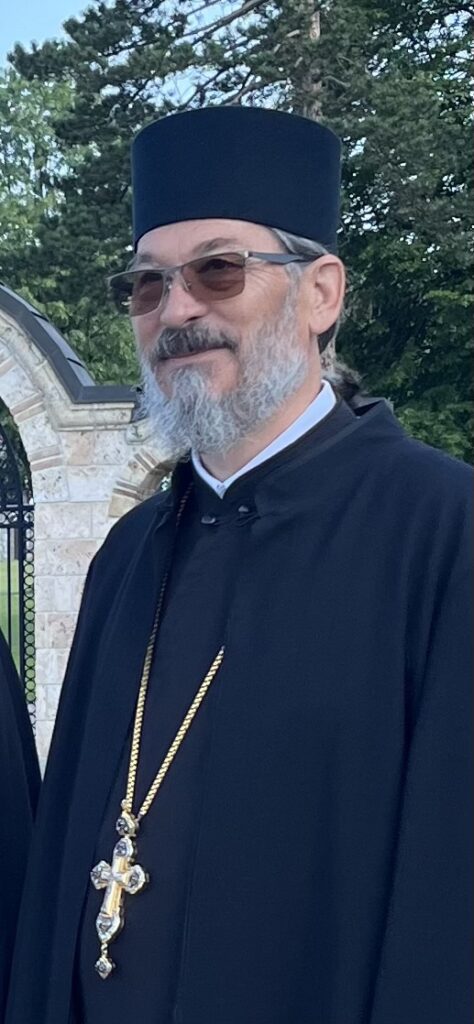
Andrej Protić
Excerpt from a dissertation in preparation
Cover photograph: Pixabay