
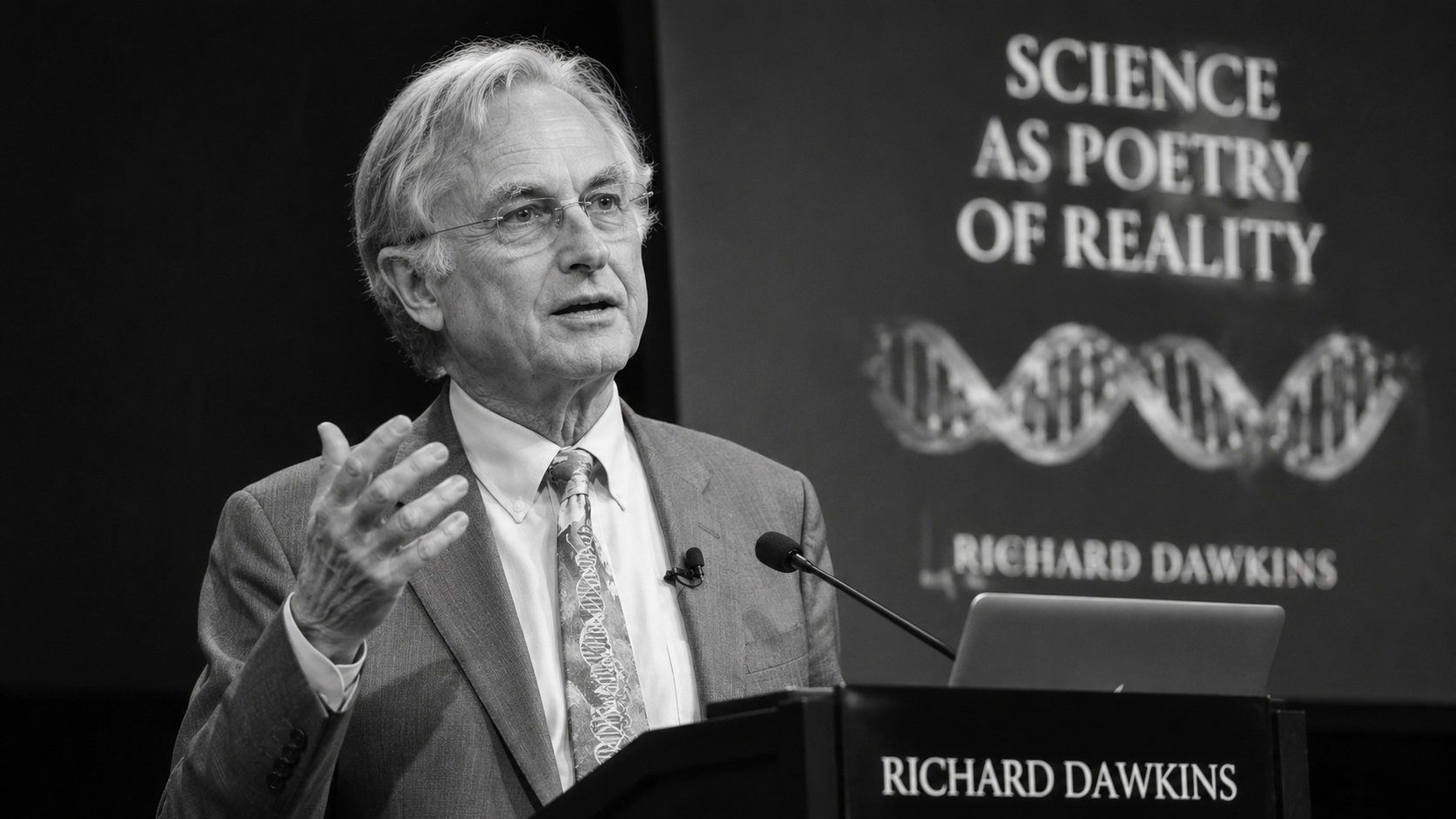
The fundamental flaw in Richard Dawkins’ method of relating the physical and the metaphysical is encapsulated in his assertion: “The existence or non-existence of a supernatural creative intelligence is unequivocally a scientific question, even if it is one that has not, or not yet, been settled in practice.” (From his book The God Delusion).
How can the supernatural, if it exists, be a subject for natural science? The scientific method does not allow for stepping beyond the natural. Therefore, how can science say anything, either positively or negatively, about the supernatural while remaining science?
Dawkins distinguishes between two kinds of scientific agnosticism: “Temporary Scientific Agnosticism” (we do not know yet) and “Permanent Scientific Agnosticism” (we can never know). He rejects the latter, arguing that it should not exist at all. His rationale draws from scientific agnosticism within natural science, specifically astronomy. There was a time when it was believed we could never investigate the chemical composition of stars (an example of supposed permanent agnosticism). Today, that agnosticism has fallen, proving to be temporary.
However, Dawkins seems oblivious to the fact that he is providing an example from nature, not the supernatural. It does not thus follow that because agnosticism regarding the natural world has been overcome (revealed as temporary rather than permanent), agnosticism about the supernatural will also fall – that one day, the scientific method will yield a definitive answer about the existence of the divine. The supernatural is inaccessible to science, precisely because it is supernatural, metaphysical, and beyond nature (not because it is merely distant, like the stars, a problem that was resolved by overcoming temporary agnosticism).
Between the natural and the supernatural, the created and the uncreated, the world and God, there exists an ontological chasm. Thus, science cannot assert anything about the supernatural – neither its existence, nor its non-existence – while maintaining the integrity of the scientific method. The only legitimate scientific position is to acknowledge the existence of permanent agnosticism.
I will conclude with a quote from Stephen Hawking, which best illustrates this point:
“Even if there were events before the Big Bang, we could not use them to predict subsequent events, because predictability would fail at the moment of the Big Bang. Therefore, since we only know of events after the Big Bang, we cannot determine what happened before it. As far as we are concerned, events before the Big Bang cannot be part of a scientific model of the universe. We can omit them from the model and say that the Big Bang is the beginning of time. This means that science should not deal with questions such as who created the conditions for the Big Bang.” (From A Brief History of Time).
Deacon Dr Aleksandar Milojkov