
Introduction: The Anchor of Truth amid the Storms of Deception
1. An Allegorical Journey towards Meaning
Throughout the centuries, the Church of Christ has sailed as the “Ark of Salvation,” guided by the power of the Holy Spirit towards Him who is the Truth and the Life. The symbol of the anchor—which also evokes the symbol of the Cross—reveals in a particularly profound way the role of the Church’s apologetic mission within this Ark. The anchor descends into the darkest depths, into regions deprived of light and joy, precisely so that the vessel may remain steadfast amidst the storms. The flukes at the base of the anchor, pointing upward towards the surface, towards the Ark, towards the Creator, testify that even that which descends into darkness never loses its orientation towards the Light. Lux in tenebris lucet—“The light shines in the darkness” (John 1:5).
The Apologetics Section of the Missionary Department of the Archdiocese of Belgrade–Karlovci understands its mission precisely through this image: to descend into the complex and often dark realms of both ancient and contemporary spiritual deception, so that the light of truth may dispel the darkness that threatens to enslave and ultimately consume every human person.
2. The Will as the Creator’s “Vertiginous Gift”
The Church of Christ cannot remain indifferent to the errors and deceptions that enslave the human mind through manipulation. At the very heart of Christian anthropology stands the defence of the freedom of the human will, understood as the highest and most inviolable gift bestowed upon every person by the Most High.
The Book of Job reveals a profound theological truth: God may permit the adversary to deprive a person of possessions, children, and even physical health—but never of the freedom of the will. This kenotic self-limitation of the Creator—His voluntary respect for the freedom of the being into whom He has breathed the breath of life—constitutes one of the foundational principles of the Christian understanding of the human person. God does not usurp our freedom, even when the creature fashioned in His own image and likeness rejects Him.
In the words of the late Bishop Danilo of Buda, freedom of the will is a “vertiginous gift”—the most precious, yet also the most perilous, gift that the Creator could bestow upon His creation. For this very reason, any attempt to violate or manipulate the human will constitutes an assault upon the divine image (imago Dei) within the human person.
At this point we arrive at a fascinating crossroads of spiritual worldviews. Aleister Crowley, the founder of the occult religious system known as Thelema, formulated what he regarded as its fundamental spiritual principle precisely upon the concept of the will: “Do what thou wilt shall be the whole of the Law.” At the opposite end of the same conceptual axis stand the words of the Holy Apostle Paul: “All things are lawful for me, but not all things are beneficial” (1 Cor. 6:12).
Thus, both systems begin with the will as the foundation of their respective spiritual visions; yet they differ radically in the direction towards which that will is oriented. Crowley seeks to liberate the will in the service of autonomous self-assertion and self-centred desire. Saint Paul, by contrast, seeks to transfigure the will through responsibility—responsibility before God, towards oneself, and towards one’s neighbour.
Indeed, we have been granted genuine freedom of the will. Yet this very freedom also possesses the potential to blind us and lead us onto countless paths of deception, ultimately towards the abyss of spiritual and existential ruin. The lives of the Apostle Paul and Aleister Crowley themselves bear eloquent witness to the radically different fruits produced by their respective credos.
Christ’s words, “You shall know the truth, and the truth shall set you free” (John 8:32), stand as an unassailable bulwark against every form of manipulation. Manipulation invariably promises freedom, only for that apparent freedom gradually to degenerate into dependence and ultimately into bondage. By contrast, the Lord Jesus Christ offers a “yoke” which, in His own words, is light, founded upon only two commandments: love of God and love of one’s neighbour. This law transcends the rigid prescriptions of every merely human moral system and calls the human person to grow beyond fallen nature into a freedom that, in all circumstances, chooses the way of Christ. Every rejection of this “vertiginous” freedom is, in reality, an expression of self-centredness—a disposition that, in the final analysis, is never truly “beneficial” to us. Admittedly, the deceptive paths of illusion and seductive promises often appear more attractive than the path of sincere self-denial and the renunciation of disordered desires and material passions. Yet it is precisely this latter path that safeguards the authentic freedom of the human person.
Every form of cultic or manipulative activity—whether religious, commercial, therapeutic, or educational—is, at its core, aligned with Crowley’s principle rather than that of Saint Paul. The discernment of manipulation does not necessarily begin with an examination of a particular system of ideas or beliefs. On the contrary, manipulation almost invariably conceals itself behind ideas that appear noble, benevolent, and deeply attractive. A sound assessment therefore requires precisely what Saint Paul describes as that which is “beneficial” for the human person: namely, an examination of what becomes of an individual’s freedom, dignity, and capacity for self-determination within the context of participation in any given community or movement.
3. Contemporary Landscapes: The Ancient Enemy in New Garments
The Church’s apologetic mission is by no means a modern undertaking; it is as ancient as Christianity itself. In the second century, Saint Justin Martyr defended the Christian faith before the imperial tribunal and ultimately sealed his witness with his own blood. Throughout the centuries, the Orthodox Church has withstood successive waves of heresy, the challenges posed by Islam, pressures from Roman Catholicism and Judaism, as well as the brutal persecutions of militant atheism. In every age, the external form of the challenge has changed, yet its essential character has remained remarkably constant: a false promise of security, belonging, and privileged knowledge offered to human beings wandering in search of lost meaning.
This profound human longing for security, belonging, and acceptance is not a weakness to be concealed; rather, it is an authentic expression of humanity’s yearning for refuge—a search for the true Home from which we have come. It is in this light that the words of the Holy Apostle and Evangelist John acquire their full significance: “The whole world lies under the power of the evil one” (1 John 5:19). Many claim to offer signposts leading towards that lost Home, yet what they actually provide are merely substitutes—counterfeit paths designed not to liberate, but to subject human beings to their own errors and deceptions.
False security, false belonging, false community—this has always been the perennial offer extended by the “masters of manipulation” in every age and under every guise.
What distinguishes our own era is the speed with which such influences spread and the reduced visibility of the dangers they pose. During the nineteenth and twentieth centuries, various occultists, esoteric movements, neo-pagan groups, syncretistic currents, and militant atheistic ideologies gradually consolidated their influence. From this intellectual and spiritual milieu there emerged the modern patterns that contemporary scholarship identifies as cultic and manipulative phenomena. These are organisations, informal groups, or charismatic individuals who systematically exploit fundamental human needs in order to manipulate and dominate others for a variety of purposes—most commonly personal gain, financial profit, or the acquisition of power.
The defining characteristic of our age is that the gateways to these influences have never been more accessible to the general public. Today, access to nothing more than the screen of a mobile phone is sufficient for an immeasurable array of ideologies, pseudo-spiritual teachings, and deceptive promises to reach potential adherents. The promise remains fundamentally the same as it was in the Garden of Eden: “You will be like gods.” Tragically, the consequences remain much the same as well.
The screens of contemporary smartphones have long since ceased to be mere instruments of communication. They have become, in many respects, “digital portals”—genuine windows into alternative worlds and potential spaces of recruitment, persuasion, and manipulation within a realm of freedom that no external regulation can ultimately govern except the will of the user—or perhaps more accurately, the consumer. Social media platforms, audio-visual streaming services, encrypted messaging groups, and other digital communities are capable of reproducing the same mechanisms of psychological attachment, progressive isolation, and gradual surrender of personal autonomy that once required physical presence within a controversial religious or ideological community. Indeed, it is now entirely possible for an individual to come under profound cultic influence without ever meeting a single member of the group in person—or even the individual who initiated the process of manipulation. Never before has the danger been so pervasive, the range of available influences so vast, and their presence so difficult to discern. This reality is not a cause for panic, but it is unquestionably a call to vigilance and to a level of discernment proportionate to the challenges of our time.
Contemporary researchers further observe that organisations, informal groups, and individuals engaged in cultic or manipulative activity are no longer confined to the sphere of religion or spirituality. Many now operate in the form of multinational corporations, humanitarian or non-governmental organisations, psychotherapy groups, coaching movements, or educational initiatives, while deliberately avoiding transparent discussion of their origins, historical development, previous controversies, or the often questionable and unverifiable nature of their professional qualifications, licences, or institutional credentials. As a rule, their frequent claims of extraordinary success are rarely subject to serious, independent, or scholarly verification.
The range of their promises is virtually limitless: from enhancing self-confidence, cognitive abilities, and spiritual enlightenment, to achieving rapid financial prosperity, or offering supposedly “miraculous” therapeutic methods unknown to evidence-based medicine.
There are, however, even more extreme manifestations of these phenomena. A striking example is provided by the Japanese pseudo-Buddhist cult AUM Shinrikyo, responsible for the sarin gas terrorist attack on the Tokyo subway in 1995. Members of this organisation once visited the Nikola Tesla Museum in Belgrade, where they conducted a meditation session as purported “admirers of Tesla’s legacy.” The museum’s director at the time welcomed them under the impression that they were merely a group of Japanese artists. It is remarkable—and deeply unsettling—that even an organisation responsible for a terrorist attack in which dozens of people lost their lives and hundreds suffered lasting injuries has managed to continue its existence and activities within an apparently legal framework, operating under the humanitarian foundation ALEPH, despite the fact that the principal leaders of the organisation were convicted and lawfully executed.
4. Methodological Considerations
For decades, scholars from a wide range of disciplines—including psychology, sociology, law, and security studies—have sought to establish reliable criteria for identifying cultic and manipulative activity. The American psychiatrist Robert Jay Lifton, through his research into the methods of thought reform employed on American prisoners of war during the Korean War, laid the foundations for the modern understanding of such phenomena. Lifton identified eight systematic patterns of manipulation, including the control of information, demands for ideological “purity,” the erosion of personal privacy, and the gradual elimination of an individual’s capacity for independent judgment.
Building upon this foundation, the American expert Steven Hassan later synthesized these insights into a practical analytical framework known as the BITE Model, which identifies four principal domains of control exercised by manipulative groups over their members: behaviour, information, thought, and emotion.
The essential conclusion emerging from these studies is that manipulation is recognised primarily by its behavioural pattern, rather than by the particular ideology or belief system it publicly professes. This insight is of fundamental importance for all people, and especially for Orthodox Christians. Most contemporary organisations exhibiting cultic characteristics no longer seek to separate individuals outright from their religious, national, or cultural communities. On the contrary, they typically present themselves as offering new insights or transformative experiences that will make a person a “better individual” and even a “better believer.” In practice, however, the opposite usually occurs. The individual gradually—and under the illusion of acting entirely of his or her own free will—begins to sever emotional and social ties with family members, friends, and the wider community, particularly with those who express reservations regarding these newly adopted beliefs or value systems. This gradual process, built upon the illusion of freedom, has been aptly described by Professor Janja Lalich as “bounded choice.”
Accordingly, the questions and practical guidance presented in the following sections of this work are intended to be neither a police manual nor a theological treatise. Rather, they represent an attempt to place into the hands of every reader—whether believer, parent, priest, catechist, educator, or concerned citizen—a practical compass for recognising the warning signs of manipulation within the five principal areas of contemporary life in which cultic and manipulative activity most commonly manifests itself today: therapeutic, commercial and business, spiritual and religious, educational and communicational, and social and humanitarian contexts.
The Lord Jesus Christ instructed His disciples to be “wise as serpents and innocent as doves” (Matt. 10:16). Innocence is our virtue; wisdom is our shield. The questions that follow are not intended to replace wisdom, but rather to give it practical expression.
5. Freedom, Not Fear
The purpose of this text is not to cultivate fear or suspicion, but to safeguard the freedom and dignity of every human person. Its aim is not to encourage fear of others, but to develop the capacity to distinguish living water from poisoned water. It is not a call to defensive isolation at all costs, but an invitation to embrace that form of wisdom which the Apostle Paul places at the summit of the hierarchy of human values: beyond moral prescriptions, beyond personal ethics, there stands Love as the highest reality of human existence. For the person rooted in this Love, external codes and rules become guides rather than burdens. Conversely, the one who is not rooted in this Love remains vulnerable to every promise that offers relief from what appears to be the burden of genuine freedom and responsibility.
It is precisely at this point—where human vulnerability encounters promises that appear too attractive to be true—that the Church has always stood as a vigilant guardian. Her purpose is not to forbid the pursuit of knowledge, but to illuminate the crucial distinction between authentic freedom and the counterfeit freedom that gradually—or sometimes rapidly—degenerates into bondage.
The Church’s Apologetic Mission
The Lord Jesus Christ declared that “in My Father’s house are many dwelling places” (John 14:2). Applied to the life of the Church, these words may be understood as referring to the diverse ministries and vocations through which the gifts of each person find their fullest expression. Some are called to the liturgical ministry, others to preaching, others to charitable service, still others to missionary work, artistic creativity, scholarship, or countless other forms of ecclesial service. Christians discover their identity through their particular vocations and contribute to the mission of the Church according to the unique gifts and talents entrusted to them by God.
In the earliest centuries of the Church, false teachers rarely appeared as obvious enemies of Christianity. On the contrary, Gnostic groups claiming the Christian name attracted followers through their learning and esoteric spirituality, adapting their message to the intellectual climate of the age. At times, they even suffered persecution alongside orthodox Christians, remaining sincerely convinced of the truth of their own errors until the very end. This constitutes an important historical lesson: the sincerity of those who embrace a belief does not, in itself, authenticate the truth of what is believed. It was precisely for this reason that the Church gradually recognized the necessity of cultivating a distinct apologetic vocation—a ministry entrusted to those called to “discern the spirits” (cf. 1 John 4:1) and to expose falsehood wherever it appears.
Saint Justin Martyr stands as one of the earliest and most exemplary witnesses to this vocation. Having pursued philosophy with remarkable intellectual rigour, yet finding within it no satisfactory answer to the deepest questions of human existence, Justin confronted both pagan and Jewish misconceptions concerning Christianity in a manner reminiscent of Socrates and Plato, ultimately sealing his testimony with martyrdom. History has preserved his celebrated affirmation concerning the intellectual heritage of antiquity: “Whatever has been rightly said among all people belongs to us Christians.” Through this conviction, Saint Justin boldly maintained that the divine Logos, who was later incarnate among humanity as Emmanuel, the God-Man, had already been active among all nations before the Incarnation, sowing seeds of truth and preparing humanity for His coming and salvific mission.
Christian apologetics did not perish with the martyrdom of Saint Justin. On the contrary, it has remained an enduring flame, ever prepared to confront the illusions born of darkness and ignorance. Throughout the centuries it has continually adapted its language, methods, and intellectual instruments to the challenges of each historical era, while never abandoning its essential purpose: to descend into the dark realms of spiritual deception so that, through the light of truth, it might dispel the errors and false paths that seek to enslave the human soul and will. Today, in an age in which manipulation travels at the speed of light through digital networks and social media platforms, this mission has become more indispensable than ever before.
For this reason, we conclude this introductory chapter with the words of the Holy Apostle Paul, whose exhortation defines the nature of this mission with remarkable clarity:
“Put on the whole armour of God, that you may be able to stand against the wiles of the devil. For we wrestle not against flesh and blood, but against principalities, against powers, against the rulers of the darkness of this world, against spiritual forces of wickedness in the heavenly places. Therefore take up the whole armour of God, that you may be able to withstand in the evil day, and having done all, to stand firm. Stand therefore, having girded your waist with truth, having put on the breastplate of righteousness, and having shod your feet with the readiness of the gospel of peace. Above all, taking the shield of faith, with which you will be able to extinguish all the flaming darts of the evil one. Take also the helmet of salvation, and the sword of the Spirit, which is the word of God.” (Ephesians 6:11–17)
And to those believers who might nevertheless be tempted to yield to the seductive voice of deception, the Apostle offers this enduring admonition:
“For freedom Christ has set us free; stand firm therefore, and do not submit again to a yoke of slavery.” (Galatians 5:1)
May this apostolic wisdom always remain our anchor as we encounter the many trials that accompany humanity’s arduous voyage towards the Truth.
End of the Introduction
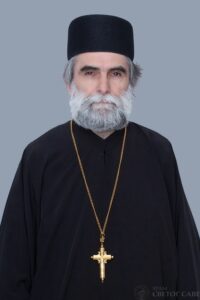
Andrej Protić
Excerpt from the author’s doctoral dissertation