
Verses 14 and 15 stand before us:
“And in them the prophecy of Isaiah is fulfilled, which says: ‘By hearing you will hear and shall not understand, and seeing you will see and shall not perceive. For the heart of this people has grown dull. Their ears are hard of hearing, and their eyes they have closed, lest they should see with their eyes and hear with their ears, lest they should understand with their hearts and turn, so that I should heal them.’”
Saint John Chrysostom explains here that the Lord appeals to the prophet precisely so that people might correctly understand His words, and not think that He rebukes and reproaches them merely because they disagree with Him. Chrysostom writes as follows: “Lest anyone should regard the words of Jesus merely as a reproach and say that He rebukes them only out of hostility, Christ cites the words of the prophet who confirms the same thing: ‘And in them,’ says Jesus, ‘the prophecy of Isaiah is fulfilled, which says: By hearing you will hear and shall not understand, and seeing you will see and shall not perceive.’ Do you see how the prophet also convicts them with the very same precision of expression? And He did not say, ‘they will not see,’ but ‘you will see and shall not perceive.’ Nor did He say, ‘they will not hear,’ but ‘you will hear and shall not understand.’ Thus, they themselves are the cause of their failure to comprehend, for they closed their ears, shut their eyes, and hardened their hearts. Not only did they fail to hear, but they heard with difficulty. And all this they did, says the Lord, lest they should turn and I should heal them, thereby revealing their obstinacy in evil and their deliberate turning away from God. Jesus says this in order to draw them, awaken them, and show them that if they should turn, the Lord would heal them. It is similar to when among us someone says: ‘He did not wish to see me? Very well; had he only honoured me with his visit, I would at once have shown him mercy,’ thereby indicating the path towards reconciliation. Likewise, the Lord says here: ‘lest they should turn and I should heal them,’ showing that they indeed can turn and be saved, if they repent. Had Jesus not desired that they listen to Him and be saved, He would have remained silent rather than teaching them in parables. Yet by speaking to them in parables, He awakens them. Scripture says: ‘God does not desire the death of the sinner, but that he should turn and live’ (Ezek. 18).”
Blessed Theophylact draws attention to the meaning of these words and emphasizes that God is not the cause of anyone’s spiritual blindness. Theophylact writes: “Do you see what this prophecy says? You do not understand, not because I have hardened your hearts, but because your hearts have hardened themselves (through sin), although previously they were sensitive and soft, for whatever has become hardened must once have been soft. And when their hearts became hardened, they shut their eyes. The prophet does not say that God closed their eyes, but that they themselves did so, by their own free will. ‘And this,’ he says, ‘they did lest they should turn and I should heal them.’ Thus, through their evil will they endeavored to remain unhealed and unrepentant.”
Verses 16 and 17:
“But blessed are your eyes for they see, and your ears for they hear; for assuredly, I say to you, that many prophets and righteous men desired to see what you see, and did not see it, and to hear what you hear, and did not hear it.”
Blessed Jerome of Stridon here points out that Christ’s words should not be understood literally, but according to a spiritual law: “Had we not heard the words concerning those who were called to understand the Saviour’s saying, ‘He who has ears to hear, let him hear,’ we might think that in the words ‘blessed are your eyes and your ears,’ bodily eyes and ears are intended. It seems to me that blessed are those eyes capable of beholding the mysteries of Christ, and to which Jesus commands that they be lifted up on high to behold the fields already white for harvest (Jn. 4:35); and blessed are those ears of which Isaiah speaks: ‘The Lord God has opened my ears’ (Isa. 50:5).”
John Chrysostom continues and interprets these words in the following manner: “That sin does not arise from nature, nor from necessity or compulsion, listen to what Christ says to the apostles: ‘But blessed are your eyes for they see, and your ears for they hear’—understanding by this not material sight and hearing, but spiritual perception. The apostles too were Jews and had been raised under the same Law; nevertheless, the prophecy did them no harm because within them there existed a strong root of goodness, namely reason and free will. Do you now see that the words ‘to you it has been given’ do not signify necessity? For why would they be called blessed if the good deed did not depend upon themselves? Do not tell me that Jesus did not teach the people plainly. The Jews, just like the disciples, could have approached Him and asked questions. Yet they did not wish to do so because of their laziness and negligence. And why do I say they did not wish to? They even acted against Him: not only did they fail to believe, not only did they fail to listen, but they warred against the Lord and turned away from His teaching, for which reason the Lord accuses them through the words of the prophet Isaiah: ‘their ears are hard of hearing.’ But the disciples were not such, and therefore they were deemed worthy of being called blessed. … Do you see how Christ once again unites the Old Testament with the New, showing that not only did the righteous men of the Old Testament know of the future, but they longed for it intensely? Yet they could not have desired it had they worshiped some alien god opposed to the true One.” Chrysostom emphasizes this final thought—that the God of the Old Testament does not differ from the God of the New Testament—because in his own time, as in ours today, the delusion was widespread that the harsh Yahweh of the Old Testament differs from the God of mercy and forgiveness revealed in the New Testament. As though the Lord Jesus Christ were not the very same God who commanded Noah to build the Ark, led Israel out of Egypt, punished Pharaoh, brought the Israelites into Babylon, and performed all those divine acts of which we read in the Old Testament.
Blessed Theophylact demonstrates here that the Lord Jesus places the apostles above the prophets of the Old Testament in spiritual dignity. He writes thus concerning this matter: “He places the apostles above the prophets because they saw Christ bodily, whereas the prophets perceived Him only intellectually, and because the prophets were not deemed worthy of such great mysteries and such knowledge as the apostles received. Thus, in two respects the apostles surpass the prophets: first, because they beheld Christ with bodily eyes, and second, because they were taught a more spiritual understanding of the divine mysteries.”
Here are the verses in which the Lord Jesus Himself explains the parable to the apostles:
“Therefore hear the parable of the sower: When anyone hears the word of the Kingdom and does not understand it, the evil one comes and snatches away what was sown in his heart. This is he who received seed by the wayside. But he who received the seed on stony places, this is he who hears the word and immediately receives it with joy; yet he has no root in himself, but endures only for a while. For when tribulation or persecution arises because of the word, immediately he stumbles. Now he who received seed among the thorns is he who hears the word, and the cares of this world and the deceitfulness of riches choke the word, and it becomes unfruitful. But he who received seed on the good ground is he who hears the word and understands it, who indeed bears fruit and produces: some a hundredfold, some sixty, some thirty.”
Blessed Jerome writes here concerning the distinction that exists among the faithful, namely the distinction in their inner spiritual condition: “The evil one steals away the good seed. Together with this, notice that the seed is sown in the heart, and that there exists a difference in the spiritual soil among believers. ‘When tribulation or persecution arises because of the word, immediately he stumbles.’ Pay attention to the words ‘immediately he stumbles.’ From this it follows that there is a certain distinction between those who are compelled to deny Christ through many punishments and torments, and those who, under the force of the very first persecution, immediately stumble and fall. … It seems to me that even what was literally spoken to Adam—‘Thorns and thistles it shall bring forth for you, and you shall eat the herb of the field’ (Gen. 3:18)—mystically signifies that everyone who surrenders himself to worldly desires and the cares of this world will eat the heavenly and true Bread amidst thorns. Moreover, Jesus added the marvellous words: ‘the deceitfulness of riches chokes the word.’ Truly, riches are deceitful: they promise one thing yet accomplish another. The possession of riches is deceptive, for it passes now here, now there … and abandons those who possessed it, coming instead to those who did not have it. Therefore the Lord says that the rich enter the Kingdom of Heaven with difficulty, because riches choke the word of God and weaken the power of virtue.”
Saint John Chrysostom continues this thought and writes about the danger concealed within wealth when one does not know how to govern it properly: “The deceitfulness of riches, says Jesus. He very fittingly attributes deception to riches, for riches truly are deception. What benefit lies in an abundance of wealth, in such excess of money? ‘But acquiring it,’ people say, ‘brings many pleasures!’ What pleasure? What do they mean by pleasure? Does it not instead produce sudden sorrows and countless troubles? And I do not even speak of the punishment that threatens on account of it; even in this present life such a pursuit can bring no genuine pleasure, for it is accompanied by daily anxieties and afflictions. The sea is not so violently stirred by waves as the soul is agitated by thoughts and passions; it harbours hostility towards everyone, both friends and strangers alike. And if someone should lose even a small portion of his wealth, then you will truly see that life becomes unbearable for such people. What tears are worthy of those who strive to do everything contrary to their own benefit and desire to gather riches at the expense of their soul!”
Blessed Theophylact here describes the proper manner of governing material possessions: “Wealth, when distributed to the poor, does not choke the word but rather helps it grow even more. Thorns are worldly cares and pleasures, for they inflame the fire of lust and eternal torment. Just as thorns are sharp, pierce the body, and are removed only with difficulty, so it is also with pleasures. If they gain mastery over the soul and enter into it, they are uprooted only with great struggle… Do you see how there is order within the parable? First, we must hear and understand the word (of God), lest we become like those by the wayside; then we must firmly preserve what we have heard; and finally, we must not become lovers of money, for what benefit is there if I hear and preserve the word of God, yet choke it through avarice?” We may observe here that the saint also points out the order within Christ’s teaching—that in the words of Jesus there exists a precise consistency, one might say, without skipping steps upon the spiritual ladder leading towards God.
As a concluding reflection of this homily, we may also cite the interpretation of Saint Nikolai of Ohrid, who speaks here about the importance of this parable for our personal spiritual life and about guarding our soul from every evil influence that comes from men and demons: “When we make a roadway through our own heart, then along that road pass crowds of people and demons alike. The divine seed is then trampled and destroyed, while the multitude both crushes the divine seed and sows its own seed of evil. Such a dismantled heart, open to everyone, resembles an adulterous woman who betrays her husband, making of herself a foul rubbish heap and a barren highway upon which the birds of prey of the air—that is, the demons—most gladly descend. No human soul is dearer to them than the one that has made itself into an open road. Upon rock and among thorns the seed at least sprouts, but upon the road it cannot even begin to grow because of travellers and passersby; their feet immediately crush it, and the demons carry it away. The divine seed flourishes and bears fruit only in a virginal soul, one that is not an open highway but a fenced and protected field. If one parable were to be explained by another, then the parable of the seed by the roadside would best be explained by the image of the harlot. Why does the devil take away the divine word from the hearts of men? The Lord explains it with the words: ‘lest they believe and be saved.’ From this it is clear that faith in the word of God is the foundation of our salvation. He who does not preserve the word of God in his heart for a long time—and exclusively the word of God—cannot have his heart warmed by faith, and consequently his soul cannot be saved. Before the heart is warmed by the word of God, the devil hastens to steal and remove the word of God from the heart. Blessed is he who guards the word of God within his heart as the greatest treasure, allowing neither men nor demons to trample and scatter this holy crop.”
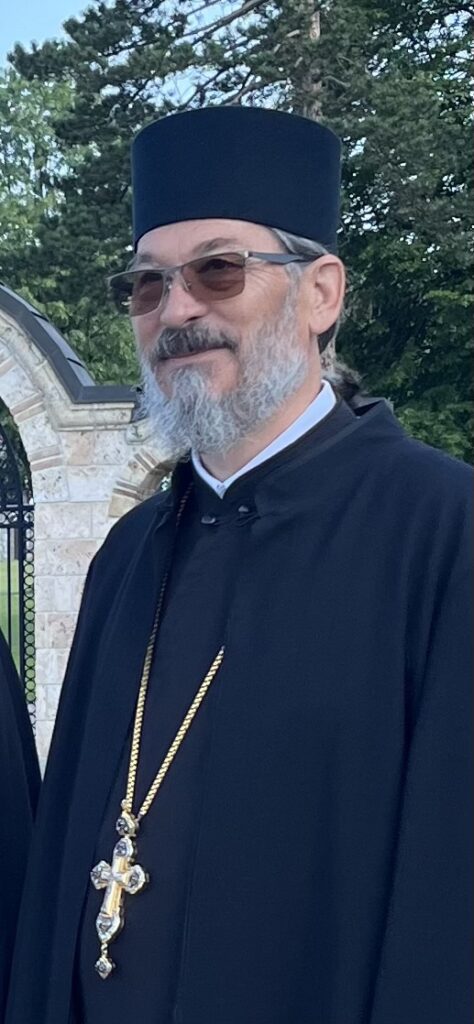
Adapted for the contemporary reader based on the interpretations of the Holy Fathers by: Stanoje Stanković