This text was published on the Kinonia portal, in the column “From the Editor’s Pen,” on June 15, 2025.
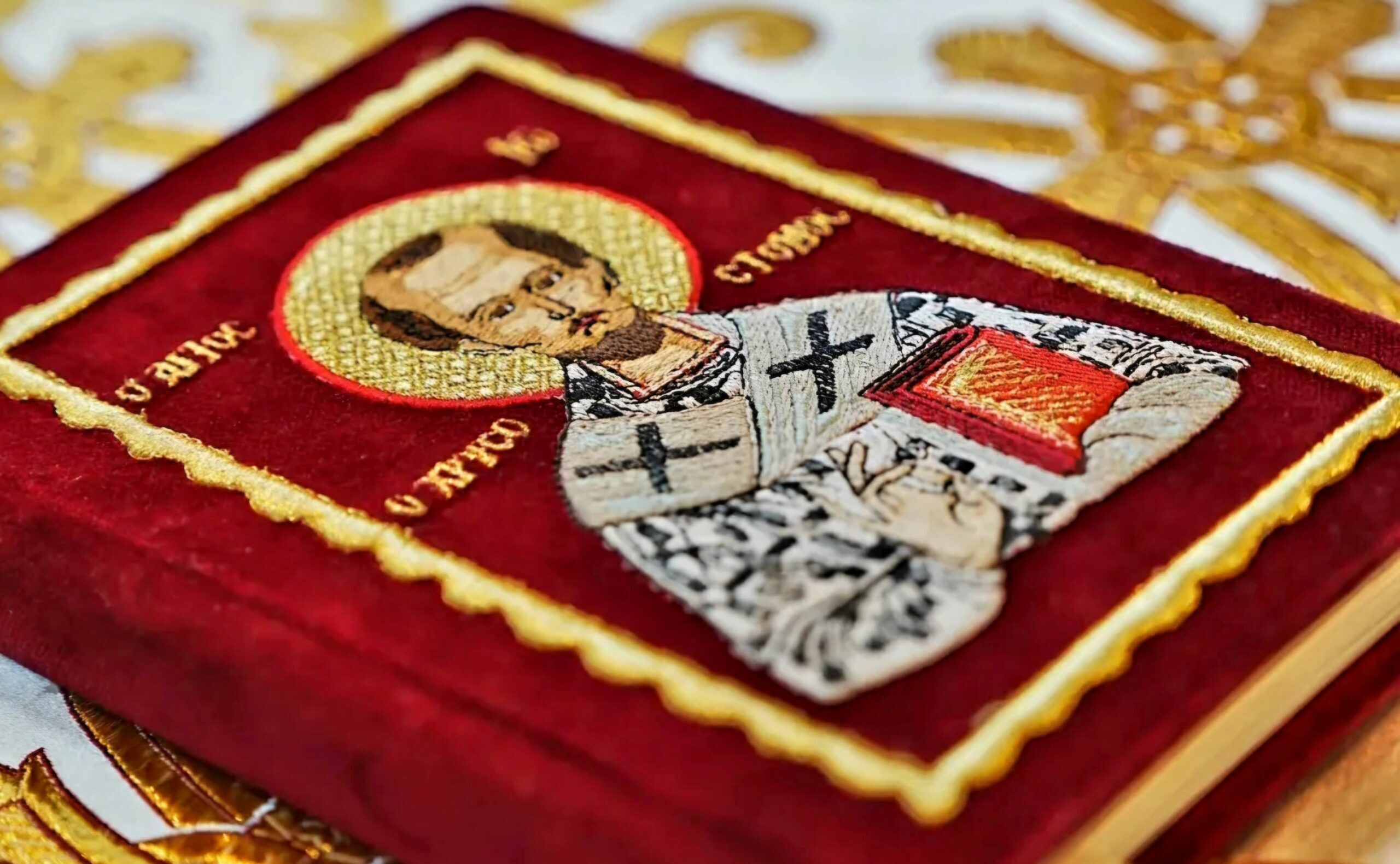
On the first Sunday after the Feast of Holy Pentecost and the commemoration of the Descent of the Holy Spirit upon the Apostles, according to the liturgical order, the Church celebrates the prayerful remembrance of All Saints. The first mention of this feast dates back to the fourth century. It is no coincidence that we liturgically commemorate all saints one week after Trinity Sunday, when the Church was founded. The Day of All Saints is linked to the first Sunday after Pentecost, showing that holiness is the fruit of the Holy Spirit. This fruit did not ripen in demigods, giants, or people endowed with supernatural powers, but in ordinary human beings made of the same substance as ourselves. A saint is not born, but made. All this shows that the saints are the result of the Church’s action in this world. The Church and holiness are inseparably connected: without the Church there can be no holiness, yet the Church itself is inconceivable without saints. Were there no saints in the Church, it would be a sign that the Holy Spirit does not act within her. If there are no saints in the Church, it means she is not the Church of Christ.
This universal feast of all saints reminds us that we do not venerate the “sinlessness” of the saints, for only God is sinless; nor do we glorify the miracles they perform, for saints cannot perform miracles and signs by themselves, but only through the grace of God. What, then, do we glorify when we celebrate the saints of God? We glorify and praise God and the divine grace that shone in them, making them, in the words of St. John of Damascus, “a pure dwelling place of God.” The holy Apostle Paul instructs the Corinthians that “to one is given by the Spirit the word of wisdom; to another, the word of knowledge by the same Spirit; to another, faith by the same Spirit; to another, the gifts of healing by the same Spirit; to another, the working of miracles; to another, prophecy; to another, discerning of spirits; to another, divers kinds of tongues; to another, the interpretation of tongues” (1 Cor. 12:8–11). From these apostolic words we see that the Church honours a wide range of people who, through their lives or their deaths, have received the priceless gift of the Holy Spirit. Addressing the recipients of his epistles, the Apostle Paul calls them saints, for man was created in the image and likeness of God, and the purpose of the Christian life is to move from the image which is in each of us towards the likeness of God: “Be holy, for I am holy” (1 Pet. 1:15–16). Therefore, everyone is called to holiness.
History has known many paradoxes: often those who seemed completely lost to society became saints. The first to enter Paradise was the repentant thief—the very one who hung on the cross to the right of our Lord and Saviour Jesus Christ. He was crucified for his own “deeds” and admitted it himself. Yet, sincere repentance at the final moment of his life and the words addressed to the crucified Christ, “Remember me, Lord, when You come into Your Kingdom,” were enough for him to enter Paradise. St. Mary of Egypt is another paradoxical example. From her early youth she gave herself over to debauchery, drowning in sin and seducing every man around her. Then, suddenly, she desired to enter a church, but the power of God prevented her. It was then that Mary realized the horror of her life and repented of her sins, remaining in the spirit of repentance until the end of her earthly life.
By celebrating the sacred memory of all saints, the Church reminds us that the Lord has sent the Holy Spirit into the hearts of the faithful. A saint is a person who has believed in God and entrusted his or her life to Him; saints allow the Lord to act in their hearts and lives. In the Gospel pericope read on the day of All Saints, we hear Christ’s words: “He who loves father or mother more than Me is not worthy of Me; and he who loves son or daughter more than Me is not worthy of Me; and he who does not take up his cross and follow after Me is not worthy of Me…” (Mt. 10:37–38). The Lord does not demand of us, as He did of His apostles, that we abandon our families and homes. Love for God in no way negates love for our family and friends; rather, it purifies and refines it of all admixtures of sin, vice, flaw, and imperfection. If we truly love God, then we understand that there is something greater than human love. If all crimes arise from a misunderstanding of love, then divine love is the only thing that will never allow us to violate the love of others. In loving God, we can never harm our neighbour, for Christ Himself says: “If you love Me, keep My commandments” (Jn. 14:15).
None of us today faces persecution or suffering for the sake of faith, as the holy martyrs of Christ did in the early centuries. Yet each of us, in the 21st century, is called to live with Christ and in Christ in order to attain holiness and eternal salvation. We were united with Christ in the Holy Mystery of Baptism, which means that we must dedicate to the Lord our soul, body, life, and freedom. This is the power of our Christian baptism; this is the meaning of our Christian calling; this is the essence of our entire life in Christ—and it is also the path of holiness to which we are called. The humble prayer of the martyrs rose to God as they begged Him to forgive the sins of their tormentors, who in their spiritual blindness knew not what they were doing. Their witness was the highest manifestation of love for one’s neighbour, through which love for God is revealed. By forgiveness and goodness, the holy martyrs conquered evil with good, for evil cannot be destroyed by evil, but only by good.
Holiness cannot be reduced to a mere abstention from doing evil. There are many people around us, and most of them are neither thieves, nor murderers, nor deceivers — but that does not make them saints. After all, if we commit no grave sins, that is not yet a sign of holiness; even doing good, by itself, is no guarantee of sanctity. A saint is not someone who has never done any evil or even thought of evil. A saint is one who lives entirely for Christ, in Christ, and with Christ — one whose life, every second of it, is devoted to the fulfillment of the will of God, for the will of God is the beginning, the foundation, and the completion of holiness. Only the person who strives towards the source of holiness — God Himself — can become a saint.
The saints were people who loved everyone and everything, yet their hearts were not bound to anyone or anything, for their hearts were wholly surrendered to the Lord God. Among the saints, there were those who were gentle and merciful, and there were those who were moderately austere. For instance, St. Seraphim of Sarov greeted everyone who came to him throughout the entire year with the words: “My joy, Christ is risen!”; whereas the greatest born of woman, St. John the Baptist, called some of those who came to him “a brood of vipers.” Yet both of these saints served God and loved people, and both were glorified as saints. This is possible because holiness can never be confined within the limits of human reasoning or the logic of this world.
Through this feast, the Church tells us that holiness cannot be understood theoretically; one can only participate in it — to become a partaker of it. The Church reveals to all the greatest mystery of her existence: that every person, even the most notorious sinner, can become a saint of Christ’s Church. There is no sinner who cannot repent and become holy. There is no sin that the Lord cannot forgive. There is no person whom the Church would reject — and the thousand-year experience of holiness confirms this truth through the multitude of saints who glorify God.
Written by: Catechist Branislav Ilić, Editor of the Kinonia Portal