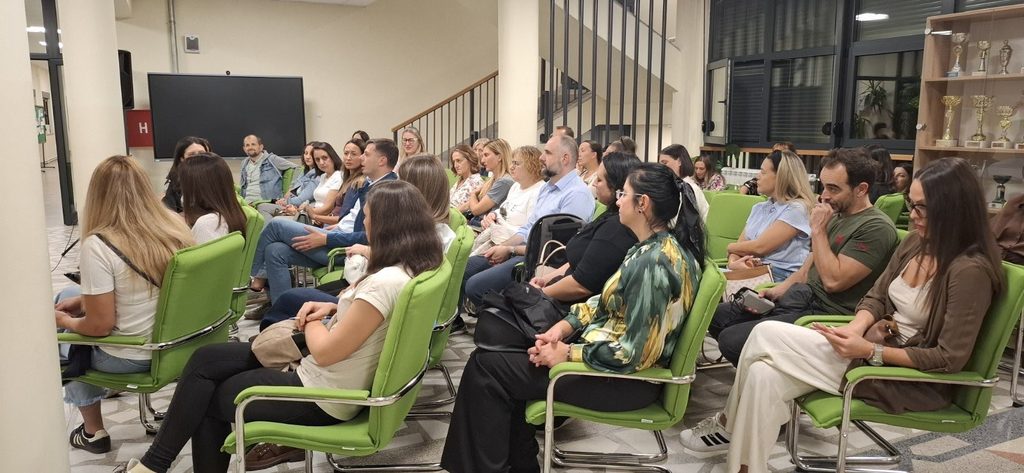

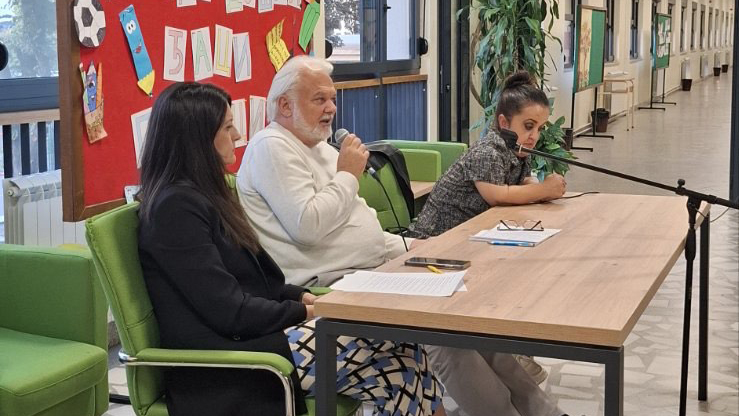
As part of the School of Parenting project, organised by the Missionary Department of the Archdiocese of Belgrade and Karlovci and the Religious Education Board, psychologist Viktor Vicanović delivered a lecture for teachers and parents on student success on Thursday, 8 October 2026, at the “Liberators of Belgrade” Primary School.
The lecture began with a discussion of the very concept of success. It was noted that excellent grades are not always an indicator of success, particularly when they are not supported by a student’s independent work and a healthy, sustained motivation to learn well and persevere. Parental pressure and the pursuit of high grades as the primary goal are not sound sources of motivation.
The criteria for success include not only grades, but also independence in one’s work, intellectual progress, and the overall development of the child’s personality.
Several key messages were addressed to parents and teachers.
The first piece of advice was: Do not demand perfection—encourage progress. Perfectionism can become an emotional and obsessive burden. Rather than fostering the attitude “I am the best,” it is far better to encourage the thought, “I am getting better.” A mistake should not be a reason for criticism or punishment, but an opportunity to learn.
The second piece of advice was to help children develop good work habits and a sense of duty and responsibility, as well as to establish a sound daily routine through effective time management.
The third piece of advice to parents was to take an interest in the learning process, rather than focusing solely on grades. Instead of asking, “What grade did you get?”, it is better to ask, “What did you learn today?” or “What did you find interesting?” Parents can also share their own knowledge with their child.
Fourth, parents were advised to avoid comparing their child with other children. It is better for students to monitor their own progress and compare their achievements with their earlier performance. Comparing children with others can lead to a loss of self-confidence, feelings of inferiority, and an unhealthy spirit of competition.
The fifth piece of advice was that parents should not instil in their children a fear of failure. A poor grade does not define a child’s worth, abilities, or future. Nevertheless, it is not insignificant: it indicates the student’s level of knowledge at a given moment. If a grade is poor, it is important to ask: “Why did I get a poor grade?” The most important thing is to examine the setback and determine what can be improved.
In conclusion, it was emphasised that a successful student is not simply a child who earns excellent grades, but one who is becoming independent and curious, and who is willing and able to keep learning even when things do not go well on the first attempt.
The lecture was followed by questions from teachers and parents. A thoughtful and engaging discussion addressed other issues related to upbringing, learning, and the organisation of school and family life. The school psychologist and a religious education teacher also took part in the discussion.
PHOTOS: Photo Archive of the “Oslobodioci Beograda” Elementary School