
General Remarks on Cultic and Manipulative Activity
1. On the Concept of Cultic and Manipulative Activity
For the purposes of this text, the expression “cultic and manipulative activity” denotes a complex set of processes and phenomena which, although not yet explicitly defined in Serbian legislation, are both terminologically and legally recognized at the international level and have been incorporated into the legal frameworks of numerous democratic states.
The adjective “cultic” is derived from the Latin verb sequi (“to follow”) and refers to the adherence to persons or ideas that, according to both domestic and international practice, have been shown to endanger the dignity, freedom, health, or property of adherents and members of their families. Our interpretation deliberately gives precedence to the verb sequi over the alternative derivation from secare (“to cut off” or “to separate”), since “separation” describes the external form of the phenomenon, whereas “following” captures its essential nature. Significantly, the Croatian rendering of this Latin root—sljedba (“following” or “following community”)—aptly conveys the very essence of the phenomenon under discussion.
The adjective “manipulative” in this context refers to processes and methods characterized by deception, the abuse of trust, and the exploitation of ignorance or human vulnerability for the purpose of imposing the will of another in place of one’s own free and informed judgment.

The present expression is intentionally employed as a clearer alternative to the noun “sect” because it more accurately reflects the essence of the phenomenon examined in this study. In public discourse, terms such as “cult” or “sect” carry strongly pejorative connotations, while lacking a precise legal foundation both in Serbian law and in the legal systems of many other countries. Experience has consistently shown that attempts to define specific “cult organizations,” rather than criminalizing harmful patterns of conduct, invariably reach a dead end—particularly because such organizations routinely change both their names and their legal forms of registration. Consequently, contemporary legal approaches—following the recommendations of the Council of Europe and drawing upon the legislative models of France, Belgium, Germany, and other countries—do not define a “sect” as a label attached to a particular organization or group. Instead, they regulate cultic activity itself, irrespective of the group’s professed system of belief.
This constitutes a particularly significant insight for the Church. The focus of the Church’s apologetic mission is not directed exclusively towards evaluating a group’s doctrinal system or ideological claims; it must also take into account the tangible consequences of that group’s activity. At the same time, the traditional task of apologetics has always included—and continues to include—the exposure of doctrinal and ideological error, such as the mistaken identification of prayer with meditation.
However, even within the context of the Church’s mission, the phenomenon of cultic and manipulative activity is by no means confined exclusively to the religious or spiritual sphere. The same underlying patterns—information control, the induction of dependency, the exploitation of vulnerability, and the systematic undermining of individual autonomy—are likewise encountered in certain alternative therapeutic practices, pyramid business schemes, self-discovery and self-improvement programmes, as well as fraudulent humanitarian organizations, no less than in destructive pseudo-spiritual communities.
Unlike state institutions, the Church possesses the capacity to recognize and expose manipulation and the usurpation of free will as a problem extending far beyond legal or criminological considerations—as a form of spiritual aggression, an assault upon the very God-given likeness (imago Dei) in the human person. Such insights do not replace legal mechanisms; rather, they complement them by uncovering the deeper nature of particular ideas and practices. In doing so, they demonstrate considerable potential in preventive work and in processes of deradicalization.
2. Criteria for Assessing the Level of Social Risk
Particularly vulnerable groups with respect to the consequences of cultic and manipulative activity include children and minors, persons with developmental disabilities, the elderly and infirm, persons with disabilities, as well as anyone experiencing a period of crisis—whether medical, financial, familial, or existential. Human weakness, vulnerability, and lack of knowledge constitute the primary targets of cultic manipulation: wherever an unmet need exists, an offer inevitably follows.
A particularly significant and rapidly expanding source of risk is presented by contemporary digital communication platforms. Through social media, video-sharing services, and private messaging applications—and without any meaningful guarantees regarding the quality of information or the authenticity of those presenting it—countless offers of every imaginable kind are disseminated. By misrepresenting facts and exploiting moments of personal vulnerability, individuals become susceptible to deception and may be induced to endanger their own lives, health, or property.

Criminal offences in this field are not always readily identifiable because they arise within the sphere of individual choice and personal values—categories that are, as a rule, protected by constitutional and other legal guarantees. Detecting and proving such offences therefore requires a comprehensive societal response, including the strengthening of public awareness, the education of clergy and religious educators, and the cooperation of all relevant social institutions. The present text should be understood precisely as a contribution to preventive and pastoral work, as well as to fostering cooperation among the relevant sectors of society. It represents a modest attempt to present the contemporary challenges in this field to the broadest possible audience in a methodologically sound and carefully reasoned manner.
Particular vigilance is imperative whenever there exists even the slightest possibility that children or persons with developmental disabilities may be placed at risk. In such cases, parents, guardians, and all those entrusted with their care should exercise heightened caution with regard to every form of content, programme, or offer to which potential victims may be exposed.
Before accepting any seemingly “attractive” offer—whether a new therapeutic method, an opportunity for “quick and effortless” financial gain, or the promise of “attaining bliss through an alternative form of spirituality”—it is prudent to consider a number of essential questions. These questions are presented in the sections that follow and are organized into five principal areas in which cultic and manipulative activity most frequently manifests itself today.
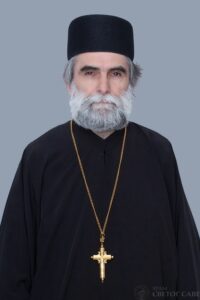
Andrej Protić