We continue with verses 47–50:
“Again, the kingdom of heaven is like a net that was cast into the sea and gathered fish of every kind. When it was full, men drew it ashore and sat down and sorted the good into containers but threw away the bad. So it will be at the close of the age. The angels will come out and separate the evil from the righteous and throw them into the fiery furnace. In that place there will be weeping and gnashing of teeth.”
St. John Chrysostom observes here that the Lord Jesus Christ places particular emphasis on the punishments awaiting the unrepentant:
“Jesus explains this parable not at the request of His disciples, but of His own accord. Moreover, He interprets only one part of it, thereby increasing their fear. Lest, upon hearing that the wicked are merely cast out, you should think that such destruction is not dangerous, Christ, in His explanation, points to the manner of punishment, saying that they will be cast into the furnace, where there is gnashing of teeth and indescribable torment. Do you see how many roads lead to destruction? The rocky ground, the thorns, the wayside, the tares, the net. Therefore, it was not without reason that it is written: ‘Wide is the gate and broad is the way that leads to destruction, and many enter through it’ (Matt. 7:13).”
When we hear such an interpretation, we cannot help but notice the contrast between the contemporary, sentimentalized image of Jesus—who almost pleads with people to believe in Him, forgives everyone indiscriminately, and punishes no one—and the Orthodox teaching concerning the Lord Jesus Christ, the Pantocrator, the One who holds the keys of Hades and Paradise, and before whom all the angels bow in worship.
Blessed Theophylact continues:
“This parable is fearful, for it shows that we shall be cast into the fire of hell if we merely believe yet fail to live a virtuous life. The net is the teaching of the fisherman-apostles, woven from miracles and prophetic testimonies; for what the apostles taught was confirmed by miracles and by the words of the prophets. Into this net were gathered people of every kind: barbarians, Greeks, Jews, prostitutes, tax collectors, and robbers. When it is filled—that is, when the end of the world comes—those within the net will be separated. Even if we have believed, if we are found wicked, we shall be cast out. Those who are not such are placed into vessels, that is, into the eternal dwellings. Every deed, whether good or evil, is called food for the soul. The soul also possesses spiritual teeth. Then the sinful soul will gnash them, wearing away its active powers because it committed sin.”
The next two verses read:
“Then Jesus said to them, ‘Have you understood all these things?’ They said to Him, ‘Yes, Lord.’ And He said to them, ‘Therefore every scribe who has been trained for the kingdom of heaven is like a master of a house, who brings out of his treasure what is new and what is old.’”
Blessed Augustine demonstrates here that a person who believes in Christ must also know the mysteries of the Old Testament, for it continually proclaims Christ. Augustine writes:
“Perhaps, by this comparison with the head of a household who brings forth from his treasury things both old and new, Jesus wishes to show that by a learned man in the Church one should understand a person who has comprehended the Old Testament as presented in parables and who also embraces the rule of faith found in the New Testament. For the Lord Himself set forth these things in parables, even though Christ Himself was their fulfillment; that is, in Him all those ancient realities reached their completion. Although Jesus Himself, in whom all things are fulfilled and revealed, still speaks through parables, this continues only until His Passion tears the veil apart, so that nothing remains hidden that shall not be disclosed.”
St. John Chrysostom further emphasizes the unity of the two Testaments, noting that their harmonious interpretation belongs uniquely to Orthodox Christians and that neither Testament can be properly understood apart from the other:
“Do you see that Christ does not abolish the Old Testament, but rather praises and exalts it, calling it a treasure? Therefore, those who do not know the divine Scriptures cannot be called householders, for they possess nothing of their own, nor do they borrow from others; instead, they suffer from hunger and sloth. Yet not only they, but heretics as well are deprived of this blessedness, for they bring forth from their treasury neither the old nor the new. They do not even possess the old; therefore, neither do they possess the new. Likewise, those who do not possess the new do not possess the old either, but are deprived of both, for the new and the old are united and bound together.”
St. Gregory the Dialogist offers an insightful interpretation of this passage:
“Jesus first compared the Kingdom of Heaven to a hidden treasure and to a pearl of great price, and only afterwards did He speak of the torments of hell and the suffering of the wicked. Finally, He adds: ‘Therefore every scribe who has been trained for the kingdom of heaven is like a master of a house, who brings out of his treasure what is new and what is old.’ It is as though He were saying plainly: ‘Within the holy Church there is a learned preacher who knows how to proclaim both the new—that is, the joys of the Kingdom—and the old, speaking of the fear of punishment, so that those who are not moved by the promise of reward may at least be restrained by the fear of judgment.’”
From this final observation, we clearly see that one should speak not only of the rewards awaiting those who live righteously in this life, but also of the punishments awaiting stubborn and unrepentant sinners. Quite simply, some people are in such a spiritual condition that, at least initially, only such a truth can reach their hearts.
We now come to the concluding verses of the thirteenth chapter:
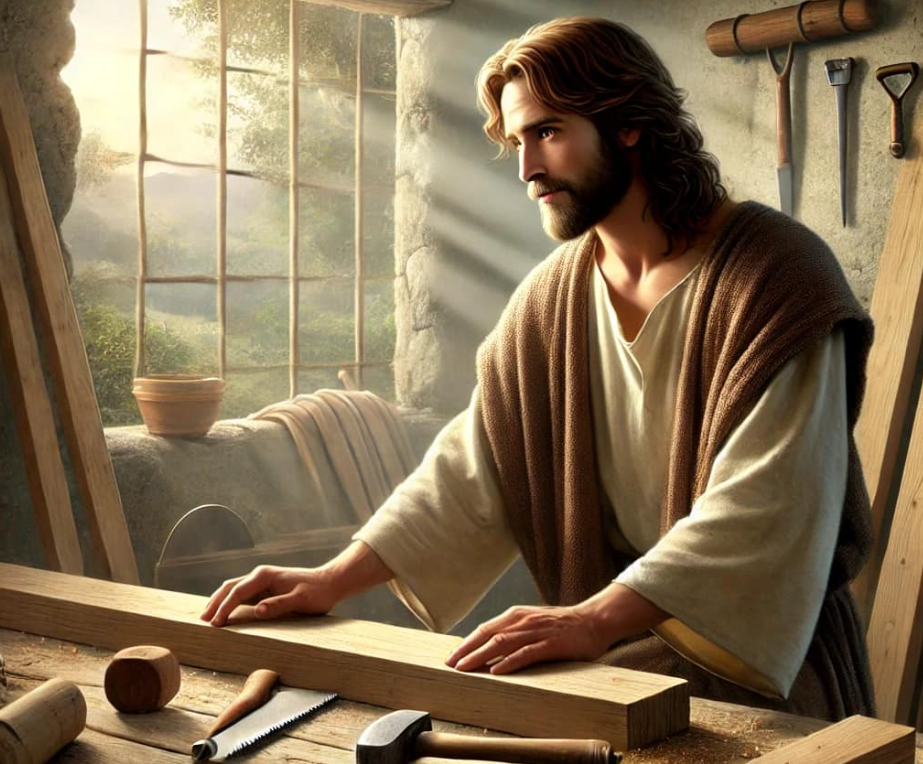
“And when Jesus had finished these parables, He departed from there. And coming to His own country, He taught them in their synagogue, so that they were astonished and said, ‘Where did this man get this wisdom and these mighty works? Is this not the carpenter’s son? Is not His mother called Mary? And are not His brothers James and Joseph and Simon and Judas? And are not all His sisters with us? Where then did this man get all these things?’ And they took offense at Him. But Jesus said to them, ‘A prophet is not without honour except in his own country and in his own house.’ And He did not do many mighty works there because of their unbelief.”
St. John Chrysostom provides a detailed explanation of the circumstances surrounding this Gospel event:
“Why does the Evangelist write, ‘when Jesus had finished these parables’? Because the Lord intended to deliver other parables as well. And why does He move on to another place? Because He desired to sow the word everywhere. ‘And coming to His own country, He taught them in their synagogue.’ Which homeland of Christ does the Evangelist mean here? I believe it is Nazareth, for it is said that ‘He did not do many mighty works there.’ In Capernaum, however, the Lord performed miracles, and therefore He said: ‘And you, Capernaum, who are exalted unto heaven, shall be brought down to Hades; for if the mighty works which were done in you had been done in Sodom, it would have remained until this day’ (Matt. 11:23).
Yet upon coming to Nazareth, Christ refrained from performing miracles, lest He kindle even greater envy among the Jews and subject them to a more severe condemnation for their increasing unbelief. Instead, He offered them His teaching, which was no less wondrous than miracles themselves. But the people were exceedingly foolish. For when they ought to have marvelled and stood in awe at the power of Christ’s words, they instead demeaned Him because of His supposed father—even though they had many examples from earlier times of illustrious children born to obscure parents. Thus David was the son of the humble farmer Jesse; Amos was the son of a goat-herdsman and was himself a shepherd; and even the father of Moses the Lawgiver was far less renowned than his son.
Consequently, they should have honoured Christ and been all the more astonished precisely because, having such parents, He spoke with extraordinary wisdom. This clearly demonstrated that His doctrine was not of human origin but revealed divine grace. Yet the very thing that should have inspired wonder became the object of their contempt. Nevertheless, the Lord continually went into the synagogues so that, because of His dwelling in the wilderness, they might not accuse Him of being a schismatic and an enemy of the community.
Therefore, while marvelling and being astonished, the Jews said, ‘Where did this man get this wisdom and these mighty works?’ calling either the miracles themselves ‘mighty works’ or referring to His wisdom as such. ‘Is this not the carpenter’s son? Is not His mother called Mary, and His brothers James and Joseph and Simon and Judas?’ And they took offense at Him. But Jesus said to them, ‘A prophet is not without honour except in his own country and in his own house.’ And He did not do many mighty works there because of their unbelief.
Do you notice that the Lord was speaking in Nazareth? ‘Are not His brothers so-and-so?’ they were saying there. And what of it? This very fact ought to have led them to faith. Yet envy is cunning and often contradicts itself. The very thing that was extraordinary and unfamiliar—enough to attract them—became the cause of their offense.
What did Christ say to them? ‘A prophet is not without honour except in his own country and in his own house.’ And the Evangelist adds: ‘And He did not do many mighty works there because of their unbelief.’ … For if admiration for Christ was growing, why did He not perform miracles? Because His purpose was not to display Himself but to benefit them. Since no benefit would result, the Saviour set aside even what concerned His own honour, lest He increase their punishment.
Consider this carefully: although Jesus came to them after a long absence and displayed numerous miracles, they still could not tolerate Him and once again burned with hatred. But why did He perform only a few miracles there? So that the Jews could not say, ‘Physician, heal yourself’ (Luke 4:23); so that they could not accuse Him of being hostile to His own people and showing them contempt; so that they could not claim, ‘Had there been miracles, we would have believed.’
For this reason the Lord both performed miracles and refrained from performing them. He performed miracles in order to fulfill His mission, yet He restrained Himself so as not to subject them to a greater judgment. Reflect on the force of what is written: the very people who were consumed by hatred nevertheless marvelled. Yet just as, when judging Christ’s works, they did not condemn the works themselves but fabricated false accusations, so here, when judging His teaching, they do not condemn the teaching but appeal to His humble origin.
And observe here the condescension of the Teacher, Jesus. He does not rebuke them but speaks with great meekness: ‘A prophet is not without honour except in his own country.’ Nor does He stop there, but adds, ‘and in his own house.’ In my opinion, He added this with His own brothers in mind.”
At this point, Blessed Theophylact explains who the brethren of the Lord were:
“The Lord had brothers and sisters, namely Joseph’s children, who were born to Joseph and the wife of his brother Cleopas. Since Cleopas died childless, Joseph took his wife in accordance with the Mosaic Law and fathered six children with her: four sons and two daughters, namely Mary, who according to the Law was called the daughter of Cleopas, and Salome. They say, ‘Are not all His sisters with us?’ meaning, ‘Do they not live here among us?’
Understand also that the words, ‘A prophet is not without honour except in his own country and in his own house,’ signify that even to this day Jesus remains without honour in His own country—that is, among the Jews—whereas we, the Gentiles, honour Him.”
To conclude this chapter, we may cite the reflection of Blessed Peter Chrysologus on the impossibility of any objective accusation against the power of Christ. He writes that if one looks impartially and objectively at the nature of Christ’s miracles, every accusation becomes meaningless:
“Where did this man get this wisdom and these mighty works? The power that restores sight which nature had taken away; the power that returns hearing locked away by human infirmity; the power that removes the bonds from the mute and restores speech; the power that enables the lame to run; the power that commands souls to return to bodies already conquered by death—such power is from God. Only a man who envies the salvation of mankind can deny this.”
Adapted for the contemporary reader based on the interpretations of the Holy Fathers by Stanoje Stanković.