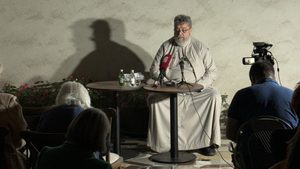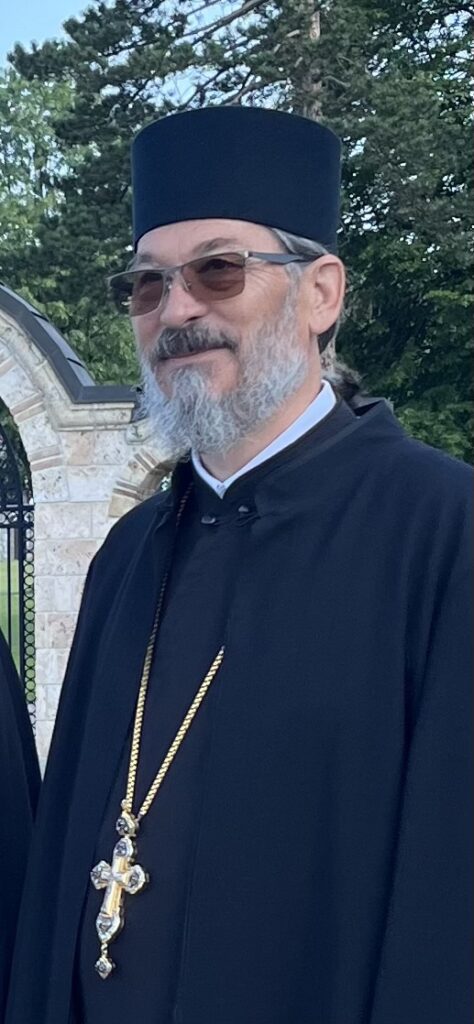

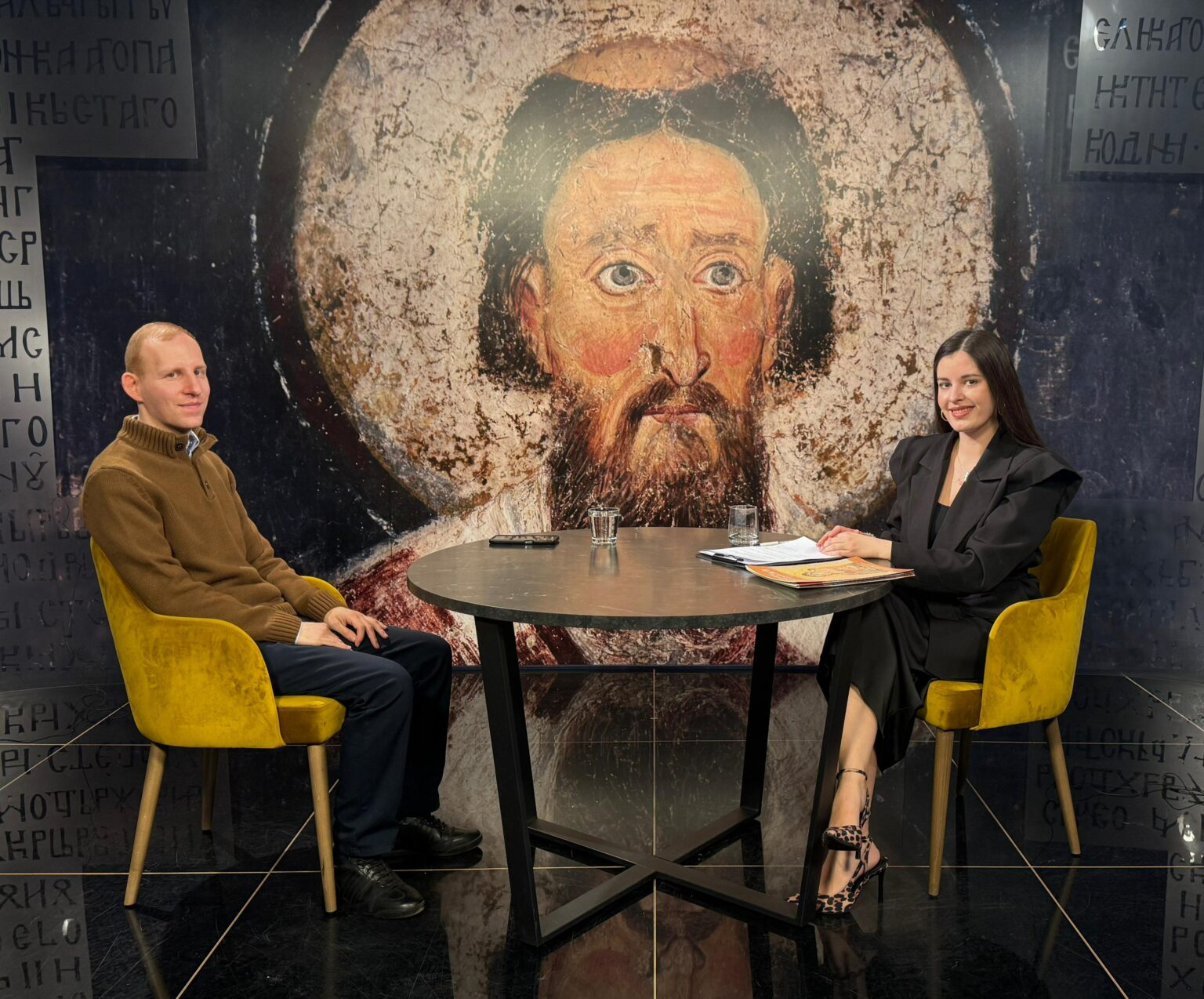
On Friday, February 27, 2026, the guest of the Morning Programme of Television Hram was Catechist Branislav Ilić, editor of the portal Kinonia of the Missionary Department of the Archbishopric of Belgrade–Karlovci. The topic of the conversation, hosted by journalist Marija Petrović, was the Lenten liturgical services and the attitude of young people towards fasting.
In the introductory part of the conversation, Catechist Branislav spoke with inspiration about the significance and meaning of the Liturgy of the Presanctified Gifts, which is served exclusively on weekdays during the Holy and Great Forty Days. Branislav explained the structure of this Lenten service, which is essentially Vespers with Holy Communion, during which the faithful receive Communion from the Presanctified (previously consecrated) Gifts that were prepared and sanctified at the full Sunday Divine Liturgy. The guest of the Morning Program clearly emphasized that the Liturgy of the Presanctified Gifts emerged in order to intensify active liturgical life in the days when, because of the penitential atmosphere, the offering of the Holy Eucharist is disallowed.
Branislav also introduced the viewers of Television Hram to the significance of the Great Penitential Canon of St. Andrew of Crete, which represents the summit of Lenten hymnographic poetry. The catechist from Novi Sad vividly explained that this Lenten canon, which contains 250 troparia, through numerous examples from the Old and New Testaments, represents a kind of spiritual balm that heals and restores all our spiritual wounds. He concluded by reminding the audience that the text of the Lenten canon encourages us to look into the depths of our own souls, striving to even out every rough edge that sin has created within our being.
The guest of Marija Petrović also spoke in detail about the significance of the great prostrations—metanias—which have been present in the liturgical life of the Church since the earliest times. In addition, he spoke about the Lenten prayer of St. Ephrem the Syrian, which, Branislav asserts, is the prayer of fasting that awakens us through earnestness and admonition. In this segment of the conversation, Catechist Branislav also spoke about the importance of comprehensive inner repentance, without which our fasting loses its meaning.
Since during the days of the Holy Forty Days the colour purple predominates in churches, Branislav also offered the viewers of Television Hram an explanation of its symbolism. According to him, the colour purple carries within itself a joyful sorrow: it is dark and in harmony with the penitential atmosphere, yet when illuminated by light it acquires a joyful tone, thus symbolizing the joy that always comes as the fruit of sincere repentance.
In the concluding part of the conversation, Catechist Branislav Ilić spoke about the nobility of the ministry of religious education and the beauty of working with secondary school students, who are genuine seekers of God. Speaking about the most common questions that young people ask during classes of Religious Education, Branislav emphasized that all these questions testify to their desire to live a true Christian life. The viewers also had the opportunity to hear several practical teachings that are applicable not only to the lives of secondary school students, but to the lives of all who wish, by walking the path of faith, to reach the ultimate goal—communion with the Lord and with all the saints.
Source: Kinonia Portal