The text was published on the Kinonia portal, in the column “From the Editor’s Pen,” on February 8, 2026.
“Remembrance of the great figures of the past and of their merits represents not only an expression of gratitude on the part of one generation for the inherited material and spiritual goods, but also proof of its sound spiritual strength, sound discernment, and proper evaluation of past events and the personalities who shaped them.”
With these words of the late Serbian Patriarch German, spoken on the occasion of the great jubilee—the 800th anniversary of the birth of Saint Sava—three important moments for the life of every generation were emphasized: remembrance, discernment, and the continuation of the work of the great figures of previous generations. And the greatest of all the great figures of our people, whom we continually remember, about whom we constantly reflect, and whose works we follow, is undoubtedly Saint Sava.
We celebrate Saint Sava because he glorified God through true faith and a holy life lived according to that faith, and therefore he himself has been glorified with unfading glory. We celebrate Saint Sava because he became a dwelling place of the Holy Spirit, through whose mouth Divine Wisdom spoke, whose heart was filled with understanding, with eternal and imperishable knowledge, with knowledge of the mysteries of this world, with knowledge of the meaning of human life, with knowledge of how a person ought to live here on earth, and with knowledge of the living and eternal God. This knowledge of God was not merely intellectual, but knowledge that is the fruit of communion with God. In other words, Saint Sava knew God, and as a man of God he was known by God.
We celebrate Saint Sava so that his faith and life, embodied and fulfilled in the acceptance of the two New Testament commandments—love for God and love for one’s neighbour (Matt. 22:37–39)—may serve as signposts towards the meaning of our life and the path by which that goal can be attained.
In what, then, is Saint Sava great and glorious?
In the Lord Christ. For through faith in the Lord Christ and through life in Christ, Rastko transformed himself into Saint Sava, becoming the greatest saint and enlightener of the Serbian people and the unconquerable spiritual commander of our nation on all its battlefields. Clothed in the full armour of God—in evangelical truth and righteousness, love and humility, prayer, fasting and mercy, faith and patience—he has, from age to age, led our people from victory to victory. He continues to lead, from victory to victory, every Serb, as well as every other person who truly lives according to God.
Just as the Old Testament prophet and God-seer Moses was appointed by God to lead the Jewish people out of Egyptian bondage, to go before his people and care for them for forty years, so too Saint Sava was and remains to be the guide of the Serbian people towards eternal life. He established his people, planting them like olive trees in the spiritual paradise, that is, in the Orthodox Church. Hence, the Orthodox faith became a fundamental and inseparable element of the very identity of the Serbian people, and “a Serb without his Orthodox faith would be like a sheep without pasture,” as Saint Bishop Nikolaj said.
“My beloved children, we who have received from the Lord the immortal faith, such a great gift—that we may never die—are obliged always to perform immortal works in Christ.”
These words were left to us as a testament by our holy father Sava at the great ecclesial and national Council in Žiča, knowing that heaven and earth will pass away, but that the truth and fulfillment of faith remain unto the ages. Throughout the history of humankind, empires have risen and fallen, conquerors have advanced and vanished without trace, yet only the Saint-Sava Church of Christ has, throughout all this time, borne dignified and courageous witness to its unwavering adherence to the ideals of Heaven, while remaining, through all earthly Golgothas, alongside the lineage of Nemanja and Sava, tirelessly consoling and strengthening it to endure and await the dawn of its own resurrection.
By transmitting to us the experience of true faith, Saint Sava taught us that it is necessary to enter into a process of continual spiritual struggle and spiritual maturation. In the Karyes Typikon, Saint Sava, instructing the faithful, among other things exhorts: “Stand firmly against evil, having the great and indestructible help of God.” Against what evil are we to stand, and to what does Saint Sava call us? We are to struggle against the evil around us, but above all against our own evil, against the evil that each of us carries within. Waging this most difficult battle—the battle with oneself—we will realize that a person has no greater enemy than himself.
In the Body of Christ—the Church—as an icon of the Kingdom of God, there are ministries without which the Church cannot exist: the episcopal, the presbyteral, the diaconal, and the ministry of the people of God. The hierarchical order does not speak of subordination or of the lesser importance of some among them, but of the relationship among the members of the Church. These ministries iconically manifest the eschatological reality of the gathering of the people of God around the throne of God.
It is precisely within the context of the Church as a community that we remember Saint Sava today, as a bishop of the Church of God. The narration of Saint Sava’s life should not lead us to isolate him from the Body of Christ. All the distinctive qualities that adorned the person of Saint Sava should never be viewed as self-sufficient, as if they were merely the product of the genius of his spirit and thus to be celebrated in isolation, without considering the fact that Saint Sava grounded all his activity in communion with the other members of the Body of Christ. The entirety of his work can be reduced to the fulfillment of Christ’s commandments of love for God and love for one’s neighbour, and this is realized only through life in the Church. Outside the Church, we might speak of him as a moral man, a skilled diplomat, a national enlightener, a tactful organizer. But when all these qualities are placed within the Church, we encounter a saint of the Church of God, who does not become such by virtue of those prior attributes, but through communion with God.
All the activity of Saint Sava had as its aim the missionary calling of the people to the Church—not in the sense of a quantitative increase of Christ’s flock, but in the personal participation of each individual in salvation through the Church. Salvation in the Church implies deliverance from death and corruption, and this can be achieved only through communion with Christ the Giver of Life; only in this way can we live eternally. Saint Sava proclaims in his Hilandar Typikon: “All that I heard I have told you, so that you too may have communion, and our communion is with the Father and with His Son Jesus Christ.” All are called into the Church as a community, regardless of belonging to a particular nation, regardless of race, gender, or age. The numerous journeys of Saint Sava across various regions, among both Orthodox peoples and those of other confessions, testify that he was everywhere received with great warmth, for everywhere he preached and bore witness to the Truth—not as an ideology based on human reasoning, but as the Truth who is a concrete Person, the incarnate Christ.
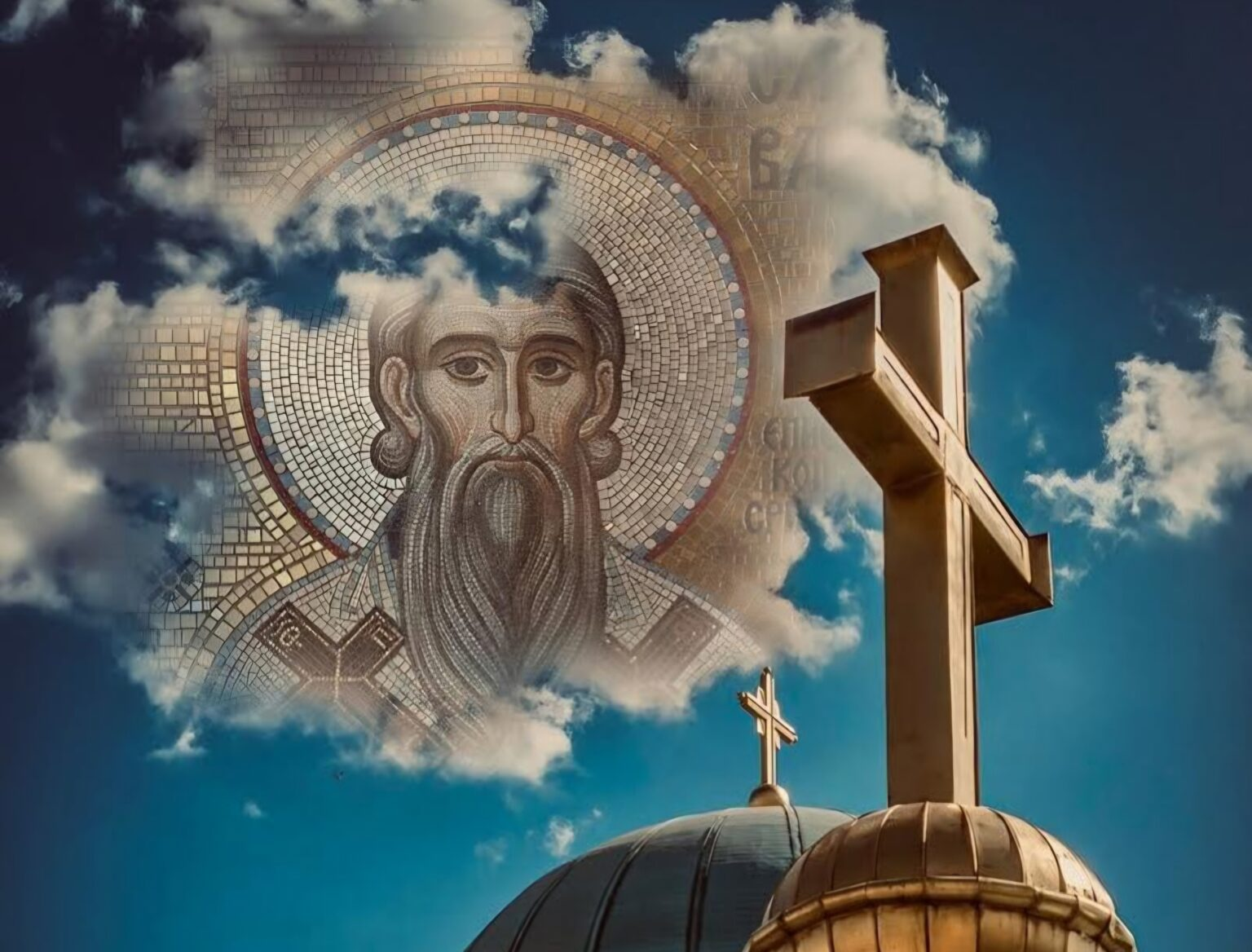
Having before us the image of Saint Sava and following his sacred example, from the depths of our being we lift up a prayerful cry that the intercessory protection of Saint Sava may always overshadow and preserve us, guiding us to walk continually along the right and blessed path, the path paved and traced by the love to which we are all called. Together with the Church poet, we pray to our saint: “Like the sun, the memory of Christ’s saint shines forth and spiritually illumines the hearts of the faithful; therefore we too today, serving with light, cry out to him in supplication: Rejoice, strength of chastity; rejoice, for you have clothed us with the shield of self-restraint; rejoice, first shepherd and teacher of your Christ-named people; rejoice, adornment of the Church, beauty of the hierarchs and praise of monasticism, O most venerable and all-blessed father Sava; pray to Christ God unceasingly, that He may grant peace to the world and salvation to our souls.”
Written by: Catechist Branislav Ilić, Editor of the Kinonia Portal