The Church, at the universal level, is marking the seventeenth-centenary jubilee of the First Ecumenical Council, convened in Nicaea in the year 325—a decisive event in the history of Christianity. At that time, the Church, confronted with fundamental questions concerning the person and nature of Christ and the intelligibility of divine Revelation, articulated a confession of faith that shaped Christian thought and liturgical life for centuries to come. The commemoration of such a heavenly and earthly event, which the Church permanently recognizes as the sacred feast of the Fathers of Nicaea, is not a mere reminiscence, but a living participation.
The Nicene insistence on the full divinity of Christ therefore functions not as a matter of metaphysical curiosity, but as a pastoral safeguard: only the truly divine incarnate Logos can accomplish true salvation; only God can deify the human person; only worship offered to the consubstantial Son reaches the Father. This soteriological realism—the recognition that dogmatic precision serves the truth of salvation—pervades patristic consciousness and deserves to be rediscovered in contemporary theological thought, which is often tempted to dismiss dogmatics as an outdated and superseded intellectualism.
This jubilee has inspired contemporary theological scholarship to re-examine the Nicene legacy, not as an antiquarian engagement with the past, but as a living encounter with Tradition that remains alive and operative: whose questions remain our questions today, whose struggles illuminate our present struggles, and whose answers continue to orient Christian existence towards the mystery of the Holy Trinity.
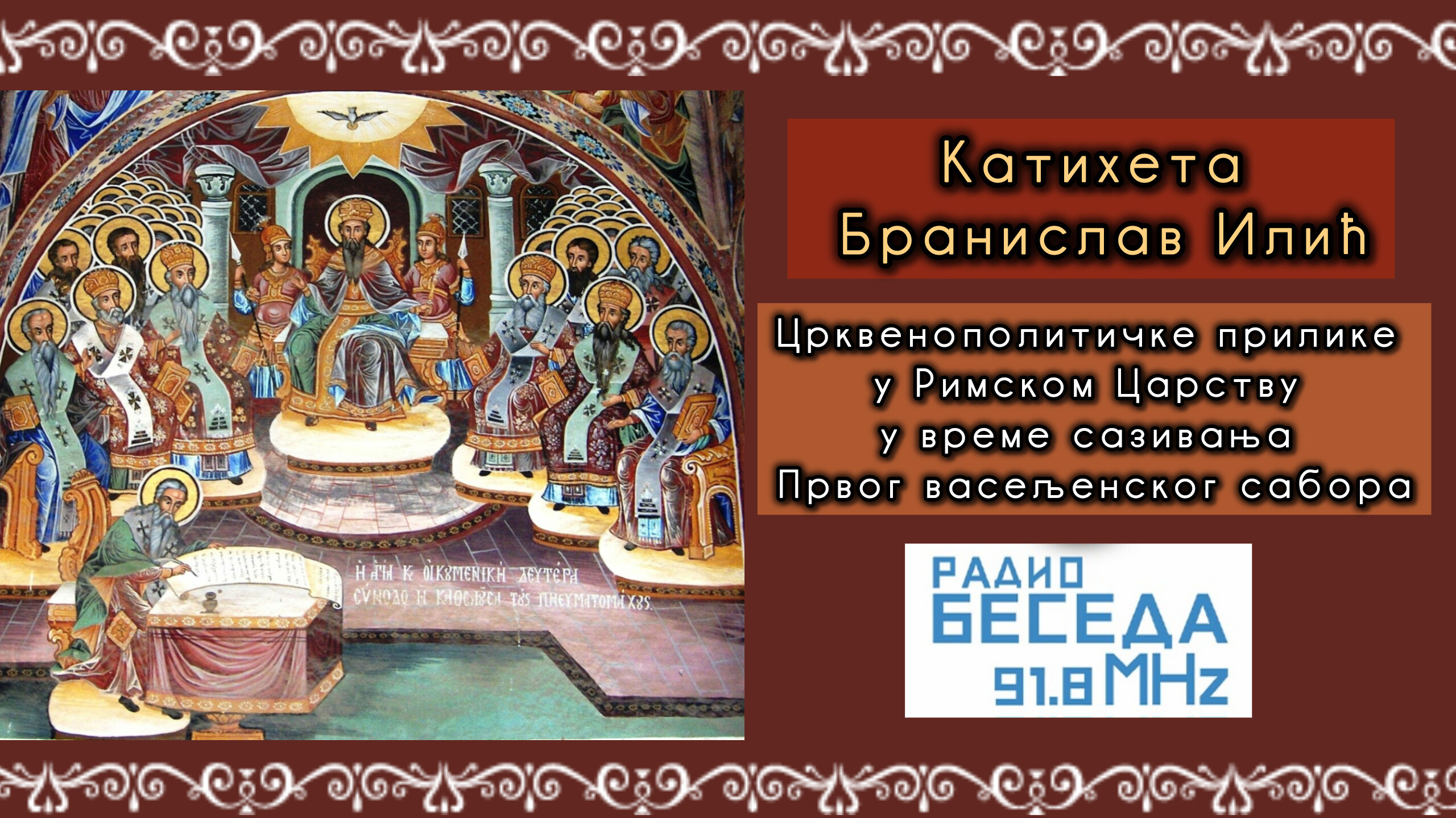
In this spirit, a valuable contribution to the commemoration of this great jubilee was offered by the radio station of the Diocese of Bačka. With the blessing of His Eminence Metropolitan of Bačka, Dr Irinej, a series entitled “One Thousand Seven Hundred Years of the First Ecumenical Council” was produced. This special series of ten broadcasts, authored by journalist Nada Vižlina, was aired on Radio Beseda, the official media outlet of the Diocese of Bačka.
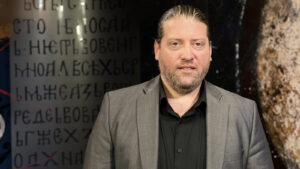
By the Edict of Milan, promulgated in the year 313, Christianity was granted equality with other religions. However, Emperor Constantine the Great nevertheless offered particular support to the Christian faith. Christianity thus became a faith not bound to a single people but, as the edict itself states, belonging to various peoples from different regions. On the question of whether the Christian faith became a unifying factor within the Roman state, the second episode of the series “One Thousand Seven Hundred Years of the First Ecumenical Council” featured an address by the Novi Sad catechist Branislav Ilić.
Catechist Branislav Ilić pointed out that Christianity may have achieved a formal civilizational victory in the year 313, but that the truth of Revelation did not impose itself unconditionally upon the human intellect, nor did it annul the logic of this world, which proudly and firmly adhered to its most exalted ancient wisdom—the search for the logos and the principles of all things. Branislav recalled that the Council of Nicaea, convened by Saint Emperor Constantine the Great and composed of 318 holy Fathers, became a watershed with regard to the formative period of the Church’s theology and its conciliar articulation into integral normative theological systems, vocabulary, and instruments, as well as the expansion of ecclesiological and canonical organization and the Church’s grace-filled liturgical life.
In addition to all of the above, Catechist Branislav spoke about the significance of the free development of sacred worship and of liturgical language, about the life of the first Christian community after the persecutions, about the establishment of places of worship, as well as about the formation of the commemoration of the holy martyrs and saints, the annual celebration of Pascha, and the definition of the period of the holy and Great Forty-Day Fast. Finally, according to the words of the interlocutor in the second episode of the Radio Beseda special series, each Sunday, when faithful Christians proclaim, “I believe in one God,” they do not merely recall ancient conciliar debates, but actively unite themselves with the apostolic witness transmitted through the generations.
Source: Kinonia Portal