The text was published on the Kinonia portal, in the column “From the Editor’s Pen,” on 18 December 2025.
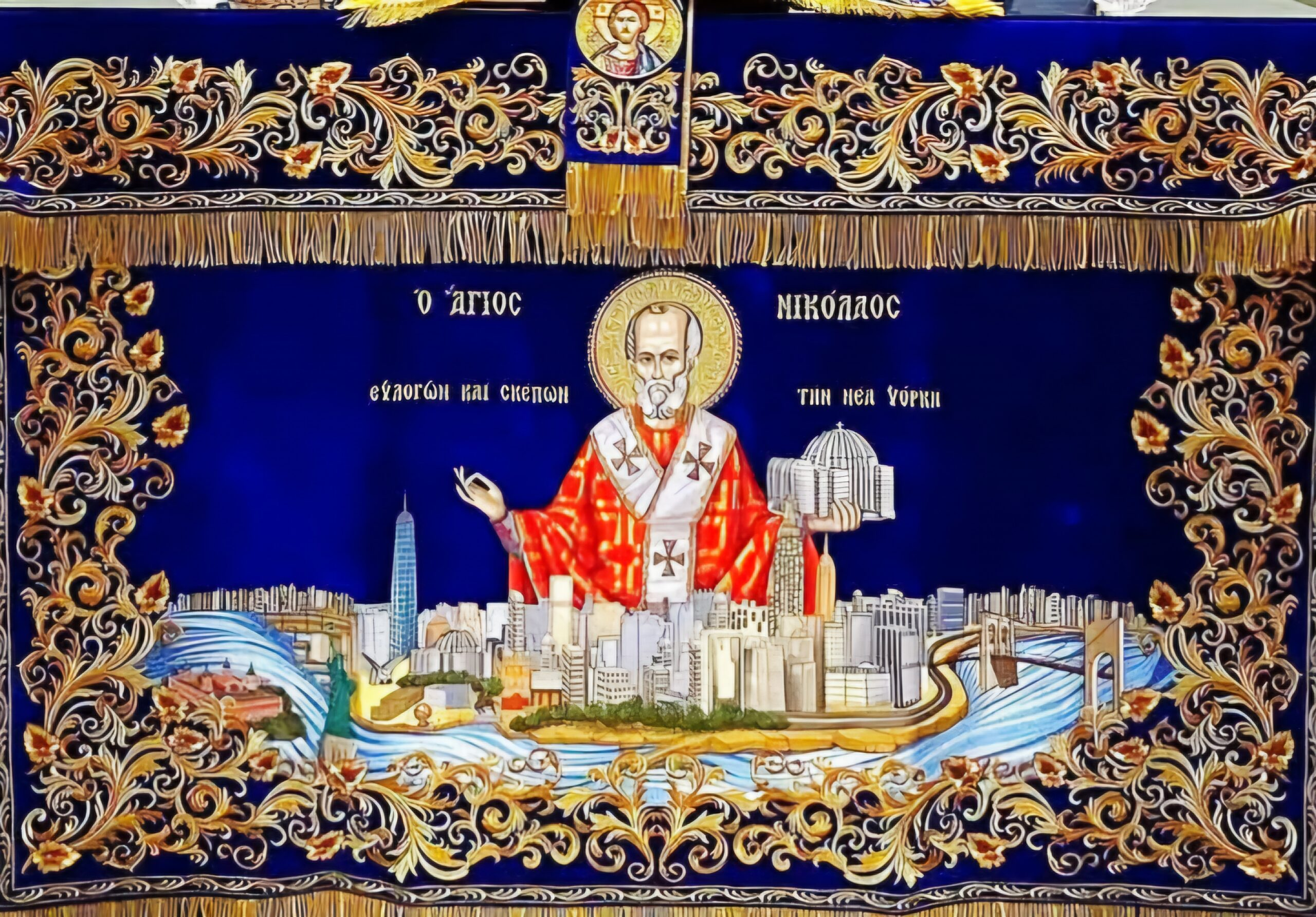
We rejoice in the commemoration of Saint Nicholas, who in his life fully embodied the evangelical virtues. Saint Nicholas lived in a distant time and in a distant land, yet his memory has been transmitted from generation to generation, from century to century, because he was a great man of God, renowned for his ascetic labours, his ministry, his faithful devotion to the Lord, and his sincere love for all. Owing to the great significance of this luminary of Orthodoxy, within the weekly liturgical cycle every Thursday—alongside the holy, glorious, and all-praised Apostles—is also dedicated to him. In the annual liturgical cycle, we celebrate two feasts of our holy father Nicholas: the principal commemoration on 6/19 December, and the feast of the translation of his honourable relics from the city of Myra to Bari on 9/22 May.
Meekness is a special virtue. The Holy Church glorifies Saint Nicholas for this virtue, for he truly manifested meekness toward all, even towards those who persecuted him. This saint did not become angry with his persecutors, following the example of his Teacher, who from the Cross offered prayer for those who persecuted Him. Imitating the Lord’s meekness, he acted in love towards those who persecuted Christians and who personally subjected him to torments and every kind of trial. “Blessed are the meek, for they shall inherit the earth.” This promise of the Lord was fulfilled in the life of Saint Nicholas. This servant of God is also venerated as a teacher of temperance. Temperance manifests itself in many circumstances of our daily life, yet, regrettably, we do not always pay attention to it. It consists in unconditional abstinence from all vices and passions. Moderation was one of the hallmarks of the ascetic life of our holy father Nicholas. He did not desire much for himself and was content with little. His hagiography testifies that all offerings that came to him were always used to help the weak, the needy, and all who were in any kind of distress.
Saint Nicholas is a model of faith. In the festal troparion, the Church, in conciliar voice across the centuries, calls him a “rule of faith.” The God-inspired Apostle Paul says that “faith is the assurance of things hoped for, the conviction of things not seen” (Heb. 11:1). Just as the apostles prayed, “Lord, increase our faith,” and just as the father of the sick child prayed, “Lord, I believe; help my unbelief” (Mark 9:24), so our holy father Nicholas took faith as the guiding principle of his life, leading him through the ravines of this earthly world and of life that lies in evil. Following the words of the Apostle James that “faith without works is dead” (James 2:20), Saint Nicholas expressed his faith in God by living according to it: he lived for the good of others, served all, and remembered the Saviour’s commandment, “Be merciful, just as your Father also is merciful” (Luke 6:36).
Saint Nicholas is the protector of travellers, sailors, merchants, and all who suffer; he is the prayerful patron of those burdened by cares and worldly sorrows, of those who endure misfortunes amid the sea of worldly passions. To this saint the Lord granted a special grace to hasten to the aid of those in great difficulties. He comes to reveal God’s mercy to all, so that through such help they too, with contrition and love, may hasten to the Giver of this help—our Lord Jesus Christ. Contemplating the countenance of this great saint of God, we are instructed and called to be merciful, to come to the aid of every person, offering every form of assistance and care. Saint Nicholas knocks at our hearts, reminding us that our faith requires concrete deeds, for if we show mercy to our neighbours, we ourselves will not remain without an answer when we stand before the Lord.
The feast of the holy and God-bearing father Nicholas the Wonderworker has been solemnly celebrated from the earliest times, while the hymnography composed in his honour represents an inexhaustible treasury. The processional stichera are the work of Emperor Leo the Wise, while the compiler of the canon is Theophanes. The doxastikon at the praises was composed by Germanus, Patriarch of Constantinople. In the service to the saint we find two kontakia: the first is a poetic work of Saint Theodore the Studite, while the second kontakion is the work of Saint Romanos the Melodist. On the basis of this rich hymnography, the servant of God Nicholas may with full justification be called the universal helper and faithful protector of the Christian race, as attested by the following stichera from his service: “You, O Nicholas, are as an unfading lamp, as a universal sun that has shone forth upon the firmament of the Church; through you the dreadful mist has been dispelled and the winter of temptations removed; you have brought about deep tranquility; therefore, as is fitting, we glorify you” (second sticheron at ‘Lord, I Have Cried’). “With what crowns of praise shall I crown this saint? For though he was bodily in the city of Myra, spiritually he reached everyone who loves him purely; he is the protector and intercessor of all, he consoles all who are sorrowful, and in every affliction he is a refuge; he is a tower of Orthodoxy and a defender of the faithful; through him Christ has overcome the uprisings of the adversaries, for he possesses great mercy” (third sticheron at ‘Lord, I Have Cried’). “Your holy life has been proclaimed in every direction, O God-wise and holy father, beauty of the saints and adornment of the venerable; like the sun upon the earth you have spread your rays and illumined the hearts of the faithful; therefore we piously celebrate your radiant memorial, O all-blessed Nicholas” (fourth sticheron at ‘Lord, I Have Cried’). “By the deeds of virtue you made the beauty of the priestly vestment yet more radiant, O God-bearing father; therefore you minister wondrously to us as a priest, for you are a worker of holy miracles; thus deliver us from great afflictions” (fourth sticheron at the praises).
Finally, let us learn from the example of God’s saints, reflect upon them, and compare our paths with theirs. Let us observe with what trust in God they accepted all the hardships and problems of life, how patiently they endured all their external and internal sorrows, and yet did not betray the Lord, nor make compromises with their passions, even in seemingly justified circumstances. With the example of our holy father Nicholas before us, we behold a saint for whom the word of the Gospel was everything. His prayers grant us divine grace poured out upon us, so that, walking upon the turbulent sea of this life, we may prepare ourselves for the encounter with the Lord and for entry into the heavenly harbour of the Kingdom of Heaven.
WRITTEN BY: Catechist Branislav Ilić, Editor of the Kinonia Portal