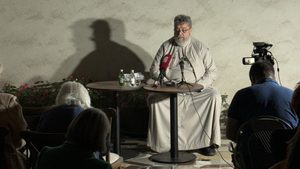


In accordance with the statutorily defined objective of enhancing the electronic mission, the Section for Electronic Mission of the Missionary Department of the Archdiocese of Belgrade–Karlovci has successfully completed the first phase of support for the parish churches of the Archdiocese. The entire project was implemented by Dr Nenad Badovinac, Coordinator of the Section for Electronic Mission of the Missionary Department of the Archdiocese of Belgrade–Karlovci.
Support for the enhancement of the electronic mission of parish churches began in 2025, immediately following the preparation of an initial professional analysis of the churches’ online presentations, which was also conducted by Dr Badovinac. During 2025, the following activities were carried out in this field:
- A detailed study was produced on the quality of the online presentations of parish websites of the Archdiocese of Belgrade–Karlovci, with the aim of identifying technical shortcomings and formulating technical steps for improving the current state.
- In consultation with the rectors of the churches, a total of 23 churches of the Archdiocese of Belgrade–Karlovci were visited. During these visits, professional consultations were held with rectors, clergy, and, where applicable, parishioners responsible for maintaining the parish websites.
- Clear recommendations were provided for improving the quality of the existing state, and the possibility was left open for the Section for Electronic Mission of the Missionary Department of the Archdiocese of Belgrade–Karlovci to assist and provide the necessary support within its professional domain, as previously defined by the statutorily established objectives for the enhancement of the electronic mission.
- A precise and detailed report was prepared for each individual church visit, including information on participants, findings, and recommendations. The comprehensive report serves as a basis for further analysis of the current situation, planning of technical support for churches, monitoring the implementation of agreed activities, and establishing a standardised digital presence of churches. This is an internal document and its contents are not available to the general public. Each parish church may obtain, for its own archive, an excerpt from the Report relating to that particular church.
During the visits and discussions with rectors, clergy, and deacons, the most important elements of the online presentations were analysed:
• structure of menus and sections,
• timeliness of news and announcements,
• mobile responsiveness of the website,
• functionality of sections (service schedules, contacts, events, galleries, etc.),
• visual identity,
• integration with social media and digital channels.
Following each individual visit, minutes were drawn up describing the current state, identified shortcomings, agreed changes, and proposed steps for the forthcoming period, in order to ensure that each church has a clear plan for the enhancement of its electronic mission. The final overview comprises 23 sets of minutes and monitors the situation through an established standardised methodology:
• recording whether the creation of a new website, reactivation of an existing one, or upgrading of an existing website was agreed;
• assessing the willingness of those responsible for implementing website upgrades to engage in the process;
• determining the level of risk that agreed actions will not be implemented, with justification;
• recording the status of the website (e.g. no website, website inactive, outdated technology without mobile support, active but requiring modifications, website under development);
• establishing an “implementation status” indicating the extent to which agreed measures have been carried out in practice.
Through this approach, both a qualitative insight (what the problems are and what has been agreed) and a quantitative measure of progress (what has been implemented, where the greatest risks lie, and how much has been completed) were achieved. Only some of the quantitative indicators are presented here:
• in eight cases, the creation of a new website or the reactivation of an existing one was agreed;
• engagement of those responsible for implementation was assessed as positive in almost all cases (91.3%), indicating a high level of readiness for cooperation and improvement;
• the average implementation status is 2.22 on a standardised scale from 0 to 4, indicating that most activities are “in progress” or partially implemented;
• four websites have been fully completed, while seven websites fall into the “successful” category, indicating that upgrades will be completed shortly;
• approximately one fifth of the websites are in the status of “barely initiated changes”, pointing to the need for additional organisational support;
• 17 churches have an active website, while six do not have a website or require reactivation, making the establishment of at least a basic online presence a priority for the forthcoming period.
The most common problems identified were:
• absence of a website or inactive domain/hosting (expiry, interruption of payment, hacking);
• outdated technology and lack of mobile responsiveness;
• insufficient time and personnel for regular content management;
• non-functional sections and outdated announcements;
• insufficient highlighting of important characteristics of the church (shrines, history, feast day);
• weak integration with digital channels.
Typical outcomes of the visits included:
• agreements on the creation or reactivation of websites;
• simplification of structure with strengthening of key sections;
• preparation of concrete lists of changes (contacts, removal of inactive sections, clear announcements);
• involvement of parishioner volunteers, with the recommendation that there be a single coordinator for publications.
A particular opportunity provided by the Missionary Department of the Archdiocese of Belgrade–Karlovci was short missionary and technical training for editors of parish websites. In this regard, the Section for Electronic Mission of the Missionary Department of the Archdiocese of Belgrade–Karlovci remains available to all parish churches of the Archdiocese for continuous professional support in the field of electronic mission.