This text was published on the “Kinonia” portal, in the section “From the Editor’s Pen,” on 28 September 2025.
The beginning of our life in the body, taken from the dust of the earth (Genesis 2:7), allows us to experience our dependence on the natural forces and cosmic energies that are inherently linked to necessity and determinism. “Only through Christ do we come to know the Kingdom of the freedom of the Spirit of God” (2 Corinthians 3:17), and, consequently, of the human spirit as well (John 8:31–32).
God created us “in His image” for life “according to His likeness,” that is, for our ultimate deification—when the Divine Life is imparted to us in its fullness. The relationship between God and man rests upon the principles of freedom: in our final self-determination before God, we are persons endowed with our own agency and capacity for choice.
For Christians, Christ is the living ideal, the example we are called to follow. It is no coincidence that saints are venerated in the Orthodox Church. We express prayerful veneration towards the saints, not because they are some special beings fashioned from a different substance, but because they are the same as we are—human in every respect. Yet they are those who have gone much further than we on the path of conformity to Christ. They have attained God within themselves; they have so naturally and inseparably united with Him that God feels at home in each of the saints, and the saints, in turn, become instruments in His hands, for through them God acts upon other people. Herein lies the sacredness of our prayerful veneration of the saints: it is a striving to trace our own lives along the same path they walked. The saints bear witness in the most wonderful way that without Christ we can do nothing, for everything that is good and beneficial, and all that serves the salvation of humankind, finds its meaning in Christ.
Everyone who has become a Christian through the Holy Mysteries of Christian initiation (Baptism, Chrismation, and the Eucharist) embarks upon the path that leads to Christ. Each person has his or her own way, one’s own route. Every person draws near to the goal from a particular side, and the closer one comes to Christ, the more fully one penetrates the mystery of God, becoming capable of containing God within oneself. Christ is our Teacher and our Guide through this life; in Him and through Him everything becomes imbued with meaning, whereas everything done apart from Him—or in opposition to His eternal teaching—is doomed to ruin and futility. Christ says: “Do not lay up for yourselves treasures on earth, where moth and rust destroy and where thieves break in and steal; but lay up for yourselves treasures in heaven” (Matthew 6:19–20). With these words, Christ reminds us that the Christian spiritual life is the storing up of heavenly treasures—the accumulation of spiritual wealth. It is no coincidence that our people have coined those wondrous words: that one is not rich who possesses an abundance of material goods, but the one who bears God in his heart.
Whether everything will fit into a suitcase depends not only on the quantity or size of the items but also on the manner in which we pack them. Similarly, it is with our lives: if we live them in vanity, haste, and aimless wandering, we will find that we accomplish nothing and grow weary in everything. The busyness—or rather the lostness—of modern man is the result of the fact that he prays little or not at all. When we begin our day with prayer, we lay a strong foundation upon which everything throughout that day will be built in perfect order. Thus, Scripture says of the pious man that “whatever he does shall prosper” (Psalm 1:3).
Therefore, the spiritual life cannot be a hobby or pastime for which we may or may not have time. It is the foundation upon which everything else must rest. To recognize Christ in the one who is hungry, sick, imprisoned, or rejected—that is what matters most. It is not enough merely to give money to such a person; rather, we must treat them as we would treat Christ hanging upon the Cross. To see the face of Christ, whom you love, in every human being is the only way truly to love that person.
The foundation of the Christian life is the will of the most gracious God, who alone is the source of perfect love. This truth is constantly recalled in the many prayers and hymns we hear at the divine services. “O Lord, unto Thee have I fled; teach me to do Thy will, for Thou art my God” (Great Doxology). Teach me to fulfill Thy will, O Lord… Such prayer and such a state of complete trust in God are what the Church of Christ teaches every person throughout his or her life. And we pray that we may persevere in this spiritual struggle, so that, walking along the path that Christ has opened for us, we may already here and now taste the joy of eternal life which is proclaimed to us at every Divine Liturgy.
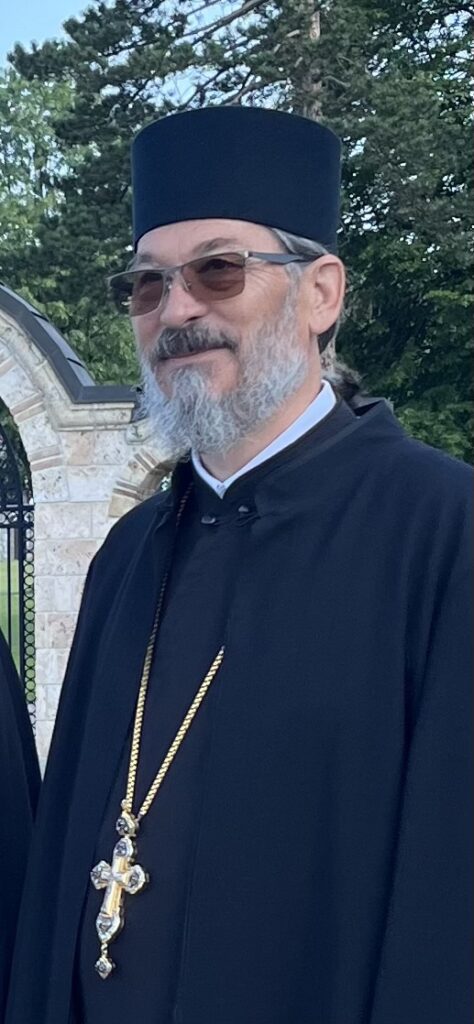
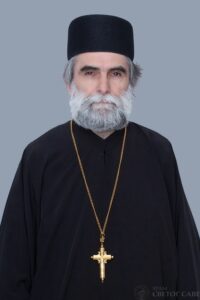
Written by: Catechist Branislav Ilić, Editor of the “Kinonia” Portal