The primary task entrusted to each of us is the proclamation of Christ the Saviour. “You are the salt of the earth; but if the salt loses its flavour, with what shall it be salted? It is then good for nothing but to be cast out and trampled underfoot by men. You are the light of the world. A city that is set on a hill cannot be hidden” (Matt. 5:13–14). Just as salt must not lose its flavour, so too must the Christian never lose Christ, nor become bland and lukewarm in faith. It is well known in patristic teaching that angels are a light to monks, while monks are a light to those of us in the world. Monasticism was historically born in the mid-fourth century in the Egyptian desert. The founders of monasticism are considered to be Saints Anthony the Great and Pachomius the Great, while other great ascetics honoured by the Church include Theodosius the Great, Hilarion of Palestine, Basil of Caesarea, Ambrose of Milan, Benedict of Nursia, Sabbas the Sanctified, and many others. A kind of prehistory of monasticism may also be found in the Old Testament, in the lives of the prophets—Daniel, Elijah, Isaiah, and the Forerunner and Baptist John—as well as in the God-man, our Lord Jesus Christ, who is the very foundation of monastic service.
The ideal of the monk—whether in the early Church, the Middle Ages, or today—has remained virtually unchanged, flowing from the desire to abide eternally in the truth of the Lord, in His love, and in communion with the saints. Monasticism is a spiritual marathon that includes obstacles, but never permits cessation; with Christ, the monk runs towards the goal. With Pauline hope, every monk or person aspiring to such a life must strive to fulfill the words: “I have fought the good fight, I have finished the race, I have kept the faith. Finally, there is laid up for me the crown of righteousness” (2 Tim. 4:7–8). In the holy monasteries throughout our local Church, monks are engaged in a noble struggle, having lovingly received the angelic habit, ever ready to witness to the glad tidings of Christ’s Gospel—by word, but most of all by deed. Monasteries are like spiritual hives in which the praise of the Lord is ceaselessly offered. It is no coincidence, therefore, that throughout sacred history they have served—and still serve—as enduring strongholds.
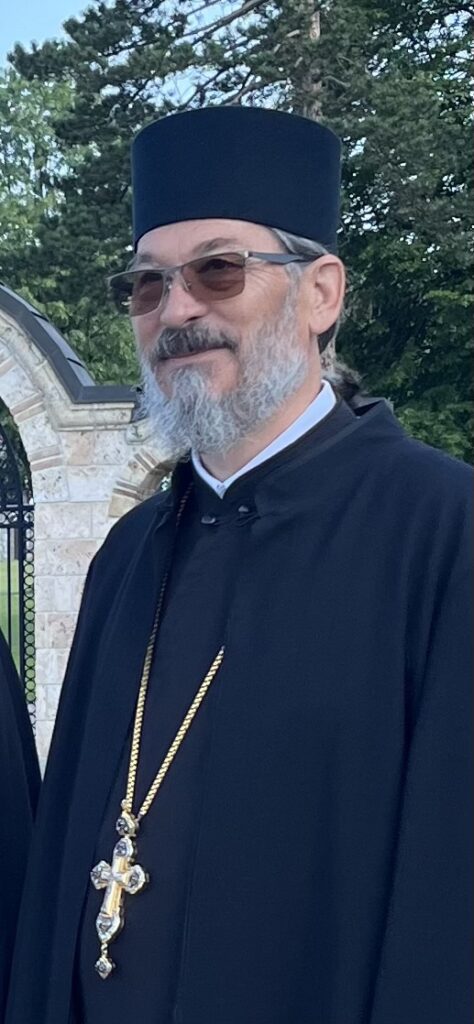
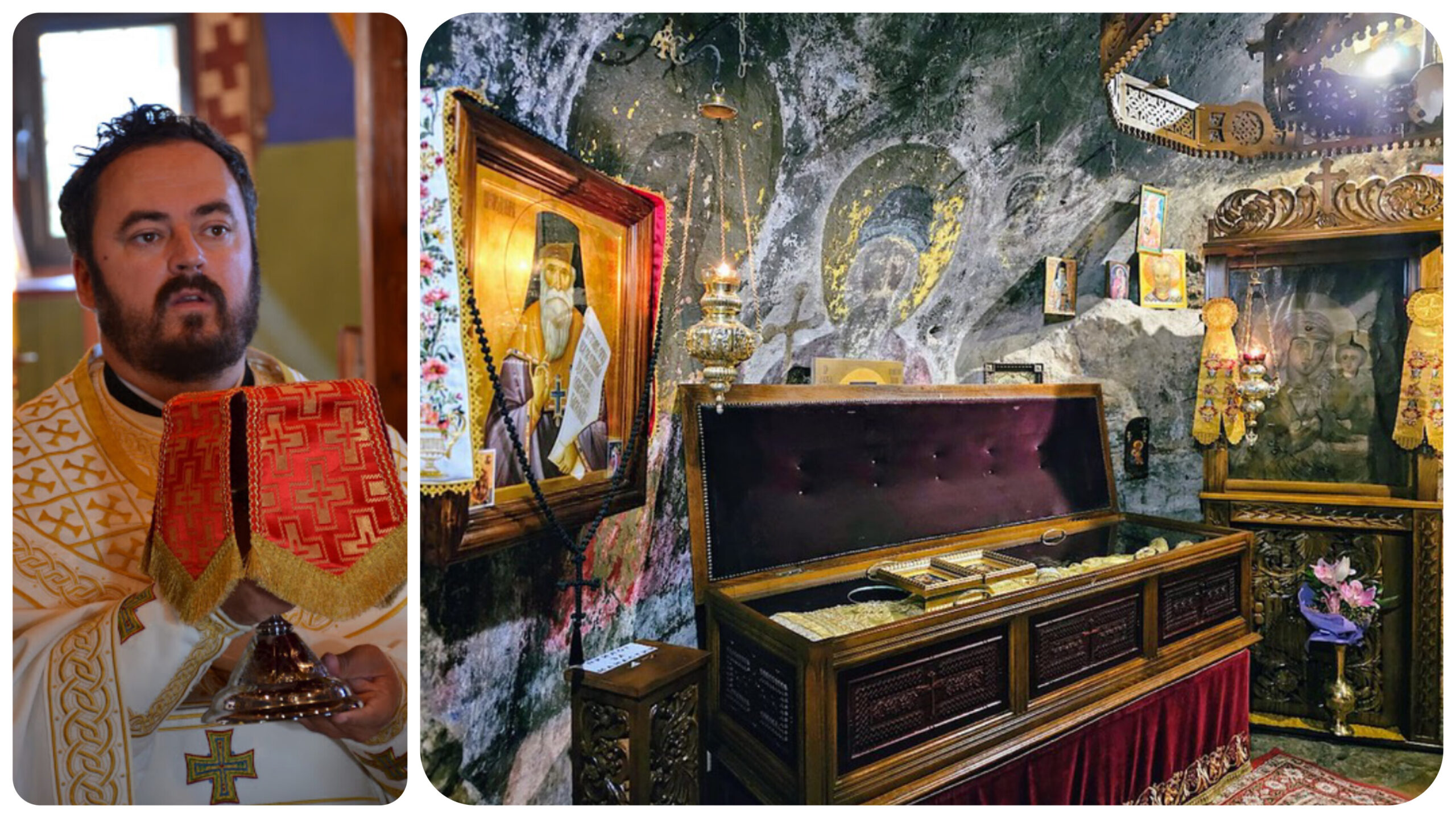
The role of monasticism and sacred monasteries in the mission of the Church is both great and precious. Only a few days ago, we were gladdened by the news that, by decision of His Eminence Joanikije, Archbishop of Cetinje and Metropolitan of Montenegro and the Littoral, the governance of Dajbabe Monastery near Podgorica has been entrusted to the long-time brother of the Ostrog Monastery and regular contributor to the missionary portal Kinonia of the Missionary Department of the Archdiocese of Belgrade and Karlovci, the Reverend Protosyncellus Dr Vladimir (Palibrk). With the arrival of Fr Vladimir at the head of the sacred monastery of Dajbabe, a new golden page is being written in the chronicle of this monastic community, which for centuries has played a vital role in the mission of our Holy Church. Bearing within himself the teaching of love and the profound monastic experience acquired beneath the reliquary of Saint Basil of Ostrog, Protosyncellus Vladimir now continues his ministry beside the relics of Saint Simeon of Dajbabe, initiating a new form of missionary engagement. That nothing in life occurs by chance but rather through divine providence is confirmed by the fact that Saint Simeon of Dajbabe himself spent six full years as a brother of the Ostrog community before continuing his ascetic struggle on Mount Dajbabe.
Saint Simeon of Dajbabe is a wondrous figure; he stands alongside the greatest theologians of our people—such as Saint Nikolaj of Ohrid, Žiča, and Ćelije, Saint Justin of Ćelije, and many others. The elder of Dajbabe represents a rare example of the synthesis between theoretical theology expressed in written form and its active influence on the everyday life of the faithful.
The life and work of Saint Simeon of Dajbabe are woven from the interpenetration of theological theory and practice, for this modern saint translated the deepest mysteries of theology into the praxis of monastic life and implanted them into the ethos of life in Christ as a whole. Having received a broad and high-level education in Kyiv, Paris, and Geneva—and having ennobled it through ascetic striving within the sacred space of monastic labour and liturgical life—he began to speak the traditional language of the Church. In a similar way to Saint Simeon, at whose sacred reliquary he now continues his monastic path, Protosyncellus Dr Vladimir (Palibrk) has acquired advanced theological education, multiplied the talents given to him by God many times over, and, with great fervour, has delved into the profound depths of theology with the desire to emulate the great luminaries of the Church, among whom Saint Simeon of Dajbabe undoubtedly belongs. In the person of the new abbot of the sacred monastery on Mount Dajbabe, we now have the first Serbian monk, since the blessed repose of Serbian Patriarch Varnava (Rosić), to be ordained to the priesthood at the St. Petersburg Theological Academy—a sign of divine providence.
Fr Vladimir took his first monastic steps on Mount Ostrog, and now he continues them on Mount Dajbabe. Sacred elevations or mountains play a significant role and symbolise the human need for drawing near to God and ascending to spiritual heights. The Lord uttered His Beatitudes from a mountain; and for centuries, monastic settlements have been established on God-given mountains, with the aim of awakening within us the need for constant spiritual growth. Dajbabe Monastery is a witness to this: since the time of its founder and heavenly intercessor, under the prayerful protection of the Most Holy Theotokos, to whom it is dedicated in her Dormition, it has represented a spiritual healing spring, where many souls have found restoration, comfort, and divine help.
Protosyncellus Vladimir has been a permanent contributor to the portal Kinonia of the Missionary Department of the Archdiocese of Belgrade and Karlovci since its founding. Alongside his obediences and numerous responsibilities placed before him by the Church, he also devotes attention to the missionary vocation of our Church, actively participating in the work of our portal. His contributions are diverse and valuable; in the person of Fr Vladimir, we have a charismatic and inspired co-labourer. We do not forget his missionary activity during the baptisms of those whom God called into His communion—those who had previously been far removed from the light of divine knowledge.
This new editorial article for the weekly column From the Editor’s Pen is dedicated to the mission of our sacred monasteries and the role of monasticism in the Church’s mission. We take this opportunity to extend our sincere love and heartfelt congratulations to our tireless co-worker, Protosyncellus Dr Vladimir (Palibrk), on his new obedience, wishing him many blessed years to glorify God as he continues his missionary service.
This text was published on the Kinonia portal in the column “From the Editor’s Pen,” on 23 June 2025.
WRITTEN BY: Catechist Branislav Ilić, editor of the portal Kinonia