
Hospitality is one of the oldest virtues, always honoured in our people, following the example of the patriarch Abraham in the Old Testament. Abraham would go out to the road to meet passing travellers and extend hospitality to them. On one such occasion, he received three travellers, not knowing that he was welcoming the Holy Trinity itself. This Old Testament event, known as the Hospitality of Abraham, became not only a symbol of expectation and reception of the Lord but also a calling to each of us to act likewise.
The hospitality shown by Abraham bore fruit in the outpouring of God’s mercy upon the childless and aged Abraham and Sarah, for one of the angels said: “At this time next year I will return to you, and Sarah your wife shall have a son” (Gen. 18:10). God’s blessing was abundantly poured out on Abraham and Sarah because of their hospitality, for “Abraham shall surely become a great and mighty nation, and all the nations of the earth shall be blessed in him” (Gen. 18:18).
This year, I had the joy of taking part in the liturgical celebration of the patronal feast of the Church of Saint Nicholas in Stanišić. After several years, God’s love once again led me beneath the sacred vaults of the temple, which is the very soul of this gentle place in Bačka. Every time we participate in the mystery of the Divine Liturgy, we take part in the most perfect form of communion. The ecclesial experience teaches us that each Liturgy is new and unrepeatable, a unique ascent toward the blessed Kingdom proclaimed by the celebrant at the beginning of the Mystery of mysteries. Since I had not been able to visit the liturgical community in Stanišić for a number of years, taking part in the festal gathering was filled with great joy, and there were many reasons for this joy.
“I was glad when they said to me, Let us go into the house of the Lord” (Ps. 122). This spiritual exultation, witnessed by the divinely inspired Psalmist, became my own reality. The very fact that I found myself in the sacred space of Stanišić was a source of great joy, for it is a church in which I have on many occasions experienced active love and hospitality. Such was also the case during this gathering, in which we, with one mouth and one heart, offered glory to the Lord and His faithful servant, Saint Nicholas.
According to Jewish tradition, the entire book of Psalms bears the name “The Book of Praises.” “Praise Him with the sound of the trumpet; praise Him with the psaltery and harp. Praise Him with timbrel and dance; praise Him with stringed instruments and organs. Praise Him upon the loud cymbals; praise Him upon the high sounding cymbals. Let everything that has breath praise the Lord. Alleluia” (Ps. 150). All the aforementioned forms or types of musical instruments are also present in man. Man has strings—these are his vocal cords. The simplest percussion instrument is the tongue, which strikes against the palate, the teeth, and the inner surface of the cheek, allowing the air from the lungs to produce articulate sound. The lungs are the bellows of the organ, compressing the air to create meaningful sounds. Thus, the human being who sings to the glory of God is the most complex musical instrument. The Holy Spirit is the experienced Musician, and man, as has been said, is a delicate instrument. Man is called to praise the Lord of heaven and earth in song, just as the sisters who have for many years served as chanters in the Church of Saint Nicholas in Stanišić.
I was blessed to raise a hymn to the Lord together with them. Their chanting and attentive following of the sacred order of the Liturgy moved me to reflect anew—despite my own twenty years of experience—on the mystery of the chanter’s ministry. The zeal of these sisters is the fruit of decades of pastoral care by their priest, Protopresbyter Slavoljub. In his interpretation of the Liturgy, Saint Nicholas Cabasilas reminds us of the importance of participating with our whole being in the mystery of the Divine Liturgy, especially when we are entrusted with a sacred duty such as that of the chanters.
In the chanting of the sisters from Stanišić, not every intonation is always precise, nor is every tone flawless, but one thing is certain: every word of their hymn is imbued with prayer and arises from the heart—a sign that they participate with their whole being in the sacred journey we call the Liturgy. With love and conscientiousness, I mention this detail from the Eucharistic gathering in the church at Stanišić, and I pray that this blessed treasure may, for many years to come, remain an integral part of the liturgical life of the community in Stanišić.
In the parable of the Good Shepherd, the Lord Jesus Christ teaches each of us about the nature of priestly ministry and the role of the flock in which the shepherd serves. The shepherd who cares for and watches over his flock is honoured. The Good Shepherd keeps vigil over his flock, seeks pasture for them, and, unlike a hireling, cares even for sheep that are not yet of his fold—ready to lay down his life for them. The life of the shepherd belongs entirely to his flock; he knows each sheep by name, and they, in turn, know him. Because of this intimate relationship, the shepherd does not use force to gather his sheep—they follow him willingly. When he leads them out, he goes ahead of them, and they follow because they recognize his voice (cf. Jn. 10:10–18).
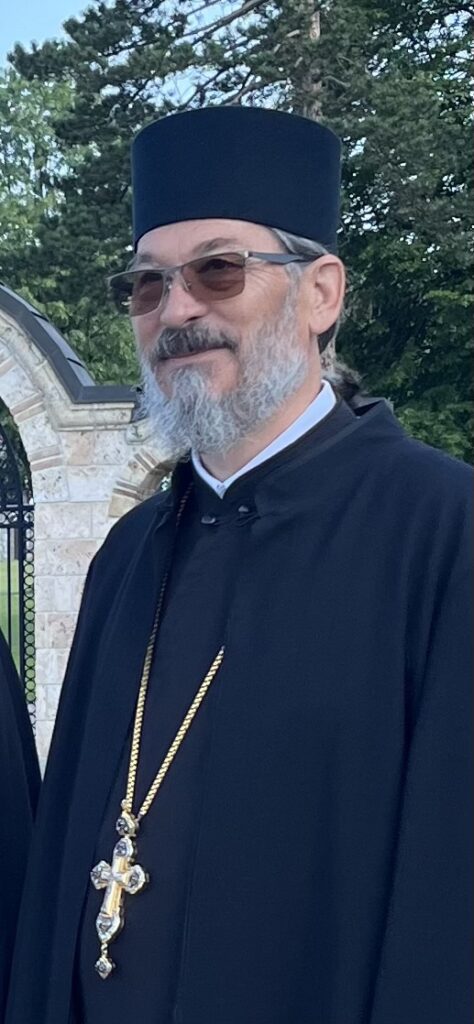
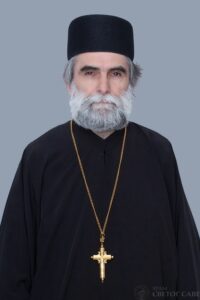
What brings harmony to a parish is the love that exists between the spiritual shepherd and his flock—an image of the love and self-sacrifice described in the Saviour’s parable of the Good Shepherd. This love, which acts as a unifying thread of harmony in parish life, was described by the holy Apostle Paul in his Epistle to the Thessalonians: “We ought always to give thanks to God for you, brethren, as is fitting, because your faith is growing abundantly, and the love of every one of you for one another is increasing” (2 Thess. 1:3). The Apostle also recommends how a priest may be successful in his parish: “To the weak I became as weak, that I might win the weak. I have become all things to all men, that I might by all means save some” (1 Cor. 9:22). He gives further advice to his beloved disciple and co-worker Timothy, saying: “Preach the word; be ready in season and out of season; reprove, rebuke, and exhort, with complete patience and teaching” (2 Tim. 4:2). Just as the shepherd opens the gate for the sheep to enter, so too must the priest labour upon the human heart, that he may open it and allow Christ to enter. The Holy Gospel teaches us that the good flock is the one that has a good shepherd. The fruits of labour are not reaped overnight. What is needed is much work and patience—sometimes even twenty years—for a parish to yield a good harvest. Protopresbyter Slavoljub has ploughed a deep pastoral furrow in the parish entrusted to him; the fruits of his ministry are visible, and his care for the house of God and the spiritual flock entrusted to him does not diminish with time, but becomes ever more earnest and concrete.
Giving thanks to the Lord for this gift and blessing, I wish the parish community of the Church of Saint Nicholas in Stanišić to persevere on the path upon which they walk quietly, prayerfully, and with love. I dedicate these prayerful words to them and to their spiritual shepherd, with the hope that, with faith, hope, and love, we shall continue to gather in this beautiful sanctuary in the time ahead—meeting face to face and bearing witness to the truth of the saying from the Sayings of the Desert Fathers: “You have seen the face of your brother—you have seen the face of God.”
This text was published on the Kinonia portal in the column “From the Editor’s Pen” on 7 June 2025.
WRITTEN BY: Catechist Branislav Ilić, Editor of the portal Koinonia