The report
Last year, 2024, marked the thirtieth anniversary of FECRIS—the European Federation of Centres of Research and Information on Cults and Sects (FECRIS – Fédération Européenne des Centres de Recherche et d’Information sur le Sectarisme, https://www.fecris.org).
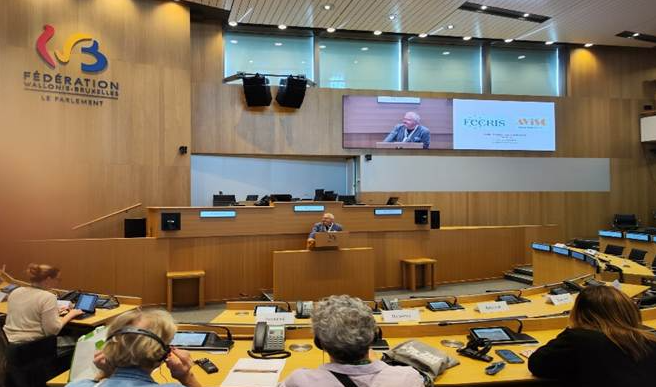
This year, on 19 and 20 June 2025, the general assembly and an expert conference were held in Brussels on the topic “Undue Influence: A Multisectoral Approach.” Participating in the event as representatives of the CAS were Andrej Protić and Slobodan Spasić, who are also permanent expert associates of the Apologetics Section of the Missionary Department of the Archdiocese of Belgrade and Karlovci of the Serbian Orthodox Church.
A total of eleven papers and presentations were delivered.
The opening remarks were given by André Frédéric, President of FECRIS and AVISO.
Janja Lalich, USA (Emeritus Professor of Sociology, Founder & CEO of the Lalich Center on Cults and Coercion, author, USA), delivered the first presentation: “Thirty-Eight Years in the SECTIVERSE – What Have We Learned?” In her paper, she provided an overview of the development of approaches to the problems of sectarian and manipulative practices over the course of thirty-eight years. She highlighted changes in terminology, the modes of operation of organisations promoting cults and sects, and key events that created the need for more adequate responses. She also emphasised some of the major research contributions that have improved the understanding of this phenomenon and influenced shifts in the study of the subject (Margaret Singer, Alexandra Stein, Philip Zimbardo). Furthermore, she clearly outlined the periods and characteristics of approaches and the selection of topics in each phase. The audience witnessed a rich, systematic, and informative presentation on the evolution of scholarly engagement with cults.
Etienne Jacob, France (Etienne Jacob, journalist at Le Figaro and author, France), a journalist for Le Figaro, spent a period of time within several organisations such as the Raelian Movement and Scientology while working on a documentary programme about sects. From this investigative journalistic endeavour arose the paper: “A Disturbing Report After a Year of Infiltration in France’s Alternative Landscape: Fluctuating, Insidious, and Affecting Everyone!” He underscored the significance of such personal experience in understanding the mechanisms of manipulation and the pressures to which members are subjected. His was a particularly engaging presentation which, alongside the author’s insights, also pointed to the importance of operational fieldwork. We invite you to watch several available interviews with Etienne: https://www.youtube.com/watch?v=dl9EMehBFlw&ab_channel=Cdansl%27airFranceT%C3%A9l%C3%A9visions
This was followed by a presentation of MIVILUDES, the Interministerial Mission of the French Government. An overview was given of its formation, aims, mission, structure, and modes of operation (https://www.miviludes.interieur.gouv.fr/). The Mission’s website was examined, offering numerous documents that may be of use in understanding the role of the state and its political and professional institutions and organisations. The importance of cooperation with civil associations was particularly emphasised. MIVILUDES coordinates collaboration among the various government bodies within its remit. As a result, information and support are made practically instantly available to citizens or state institutions (there is no waiting several days for a response; reactions are immediate). The most significant dimension of the struggle remains prevention, which is based on direct information exchange and education.
MIVILUDES allocates funding for specific professional research projects, amounting to approximately one million euros annually, including support for several doctoral theses, particularly in psychology. Another significant dimension of its work is assistance to individuals who have had experiences within sects, providing them with support. Special importance is attributed to intelligence work. This sector has been highly effective in detecting and identifying various sectarian and manipulative activities that are not immediately visible, as well as organisations within which concealed sectarian or criminal activities take place (sexual exploitation, illicit trade, extremism, and radicalism). Investment in an information and communication system enabling rapid exchange of information has yielded excellent results, and its operation has been very well received and evaluated both within state bodies and by the public.
Dr Caroline Depuydt, Belgium (psychiatrist and specialist at Epsylon Clinics), focuses in her work on undue influence within sects and on methods of therapeutic intervention and resocialisation. At the Conference, she presented her paper entitled: “What Role Can Loved Ones Play When Someone Is Caught in a Process of Undue Influence: Helping Them Escape and Rebuilding Afterward?” Describing the techniques of manipulation, Depuydt pointed to the various forms of undue influence on behaviour, thinking, information, and emotions. She also noted the limited effectiveness of therapists working with sect members, given that they often lack knowledge of the effects of manipulative methods and techniques. This leads to the necessity of additional training for therapists, aimed at familiarising them with the specificities of working with individuals who have been subjected to undue and manipulative influence. Her paper outlined the process and time required for leaving a sect and undergoing resocialisation, as well as the range of problems encountered, such as PTSD, panic attacks, depression, chronic anxiety, suicidal ideation, and identity crises.
Lorita Tinelli, Italy (psychologist and criminologist, member of FECRIS, founder and president of CeSAP – Centro Studi Abusi Psicologici), presented the results of research she conducted among psychologists and psychotherapists in the region of Apulia, where she lives and works. The title of her paper was: “Results of Research Conducted by Psychologists on the Phenomenon of Undue Influence: How to Help Followers Rebuild?” The aim of the research was to establish to what extent psychologists and psychotherapists are familiar with the methods of sectarian and manipulative practices, undue influence, and the particularities of therapeutic work with former sect members.
Ricardo Mendez, Portugal, a former member of the pseudo-Buddhist organisation OKC (Ogyen Kunzang Chöling, founded by Robert Spatz), shared his personal experience as someone who was born and raised within the sect. He now leads an association founded by victims of the aforementioned pseudo-Buddhist sect and of Robert Spatz himself (https://chardonsbleus.org/association/). OKC faced over 170 criminal complaints and investigations. In 1997, during Operation “Sun,” searches were conducted in Belgium, France, and Portugal. These led to the arrest of Robert Spatz, who spent six months in detention, and to the questioning of hundreds of followers. In France, an investigation was subsequently initiated, based especially on the testimonies of minor children belonging to the OKC community. From 2020 to 2022, a second trial was held in Belgium, resulting in Robert Spatz’s conviction by the Court in Liège to a five-year suspended prison sentence for sexual and physical abuse of minors, as well as for the exploitation of weakness against members of the OKC community.
Similar was the testimony of Raechel Reign, United Kingdom, a former member of the Universal Church of the Kingdom of God (Raechel Reign, Founder of Surviving Universal UKS – United Kingdom). She presented the paper: “My Fight Against Spiritual and Ritual Abuse Through My Personal Experience.” As a former member of the Universal Church of the Kingdom of God, Reign shared her experiences of life and work within the sect, her process of leaving, and her current efforts to combat sectarian and manipulative practices. (https://www.dailymotion.com/video/x8rojf1)
Sister Véronique Margron, O.P., theologian, Dominican prioress, and President of the Conference of Religious Men and Women of France (CORREF), in her paper “The Catholic Church in France Grapples with Abuse and Sexual Violence in Its Midst,” presented data on the Catholic Church’s confrontation with the problems of abuse and sexual violence against children within its ranks.
Chloé Andries, France, journalist and filmmaker specialising in religious topics, presented her work entitled “Undue Influence Abuse and Catholic Institutions: A Journey into the Heart of Shadowy Areas – From Investigative Journalism to Personal Engagement.” This was yet another presentation dealing with abuses within the Roman Catholic Church.
Jean-Pierre Jougla, President of the Scientific Committee of FECRIS (France), provided an overview of the development of legal efforts to combat sectarian practices, citing historical facts related to the Solar Temple cult and the changes that have occurred in legal approaches (“The Solar Temple Cult Case – 30 Years On”). This was another reminder of the evolution of perspectives and methods in addressing the phenomenon of sectarian and manipulative behaviour.
Conclusion
It is of great importance that state bodies exist to address sectarian and manipulative activities, although their existence does not preclude challenges.
Undeniably, certain sects possess significant political, financial, and corporate power, and they can only be countered through united action—not merely through the association of organisations but through the cooperation of states themselves.
The greatest transformations and influences are occurring in the fields of education, healthcare, and security. The impact achieved through various information technologies and activities in virtual reality is especially significant.
It is necessary for member organisations to propose amendments to the legislation of their own countries in order to enable international support.
Given the considerable significance of both the use and misuse of psychological and psycho-manipulative methods and techniques, it is essential to accredit programmes for specialised, master’s, and doctoral studies, and to increase the number of scientific publications in the field of sectarian and manipulative practices.
For greater effectiveness, it is necessary to reclassify sectarian and manipulative practices from the domain of human rights (religious and others) into the domain of extremism, radicalism, and terrorism. This would reduce opportunities for abuse and enhance the capacities of states and professional organisations to act.
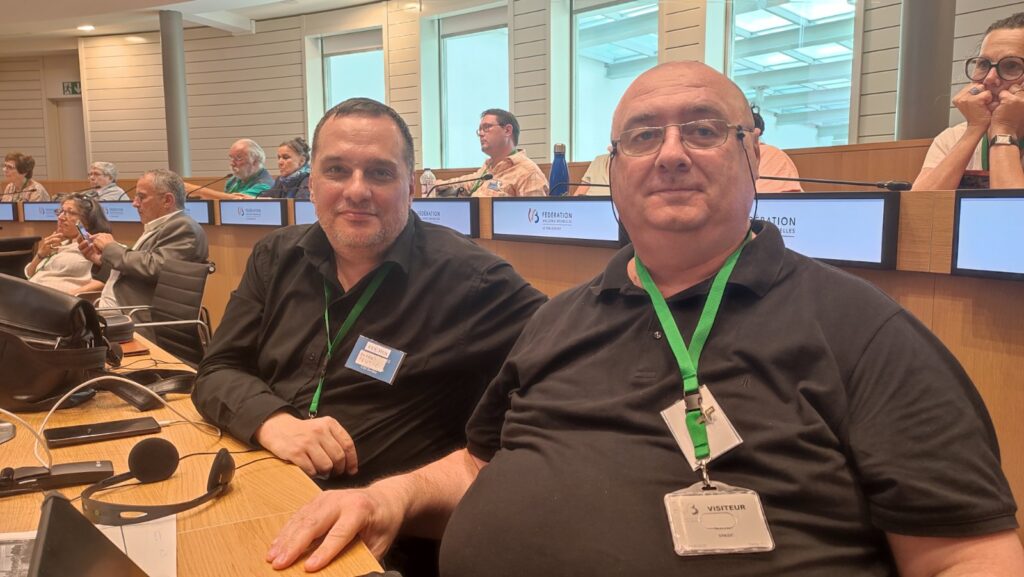
Photograph Supplement
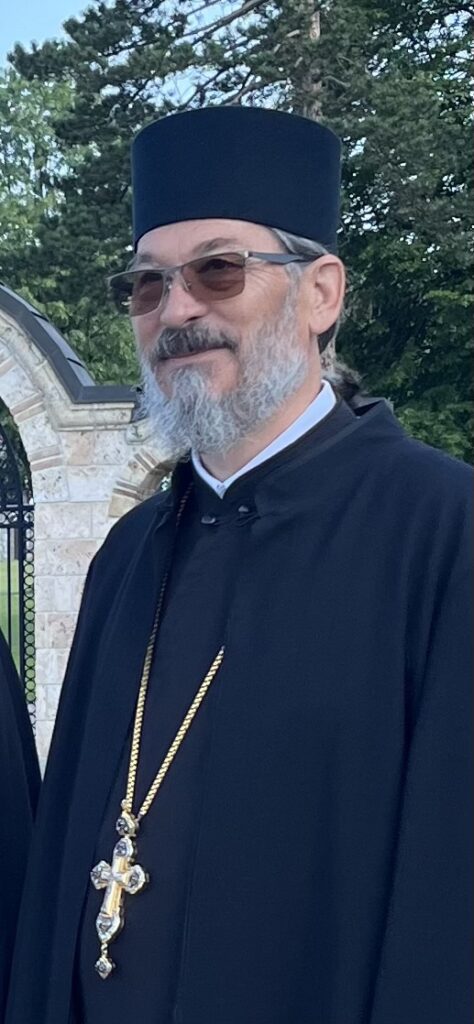
Andrej Protić and Slobodan Spasić, permanent expert associates of the Section for Apologetic Mission within the Missionary Department of the Archdiocese of Belgrade and Karlovci.
Report prepared by Slobodan Spasić