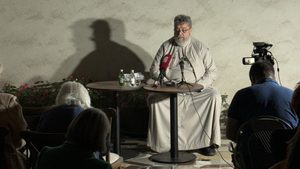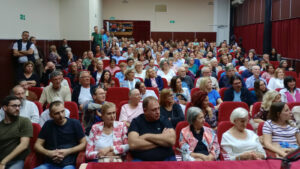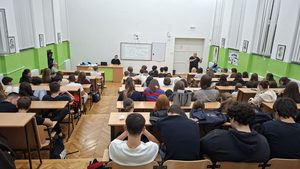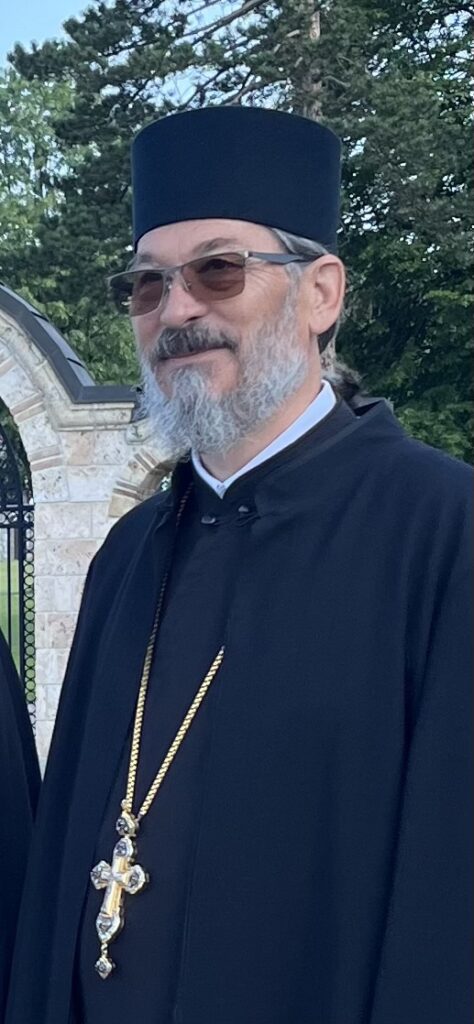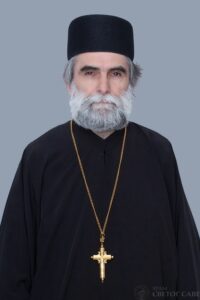
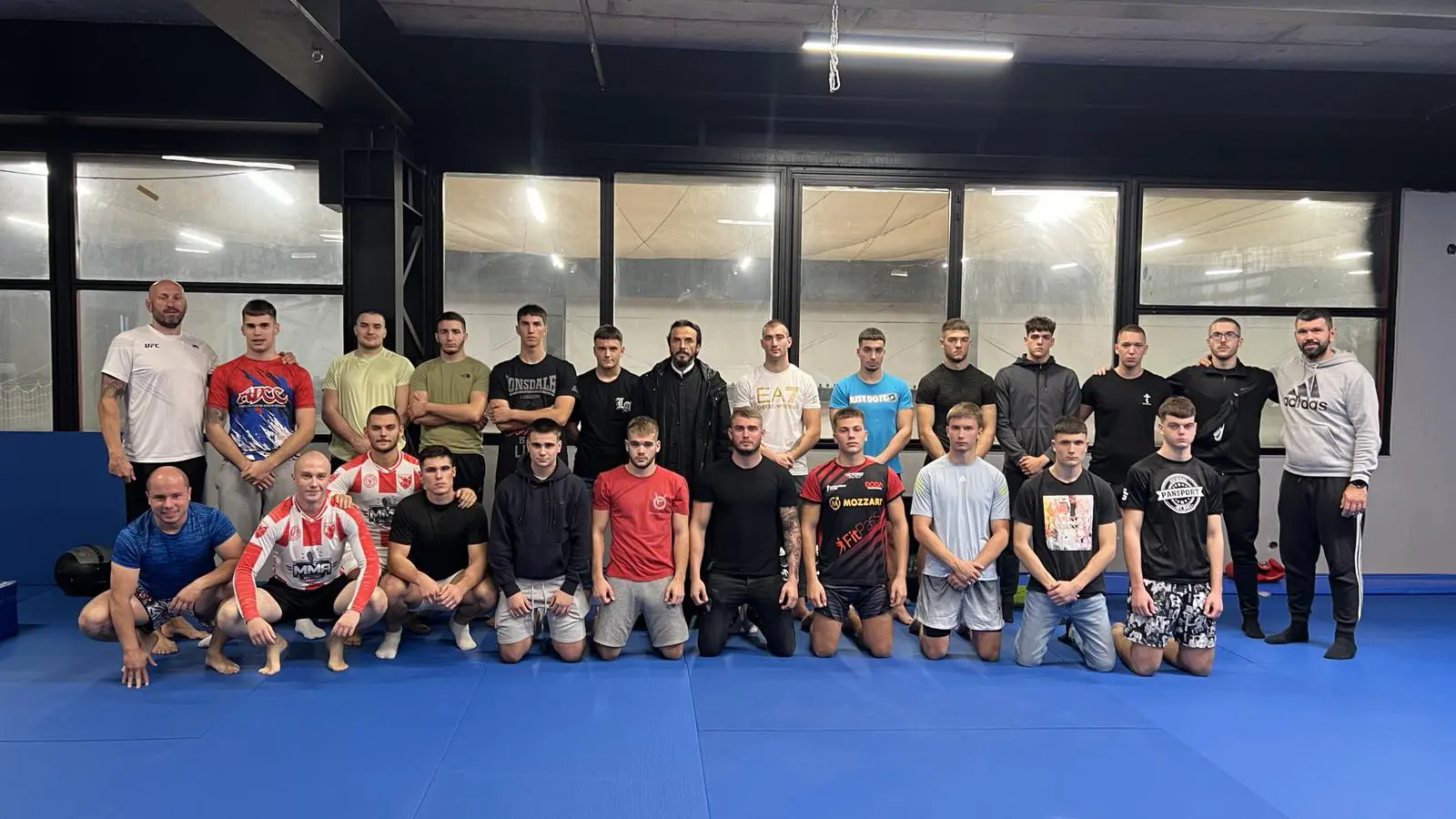
At the invitation of Alexander Radosavljević and Dragan Tešanović, the chief martial arts instructors of the MMA Club Red Star, the Director of the Missionary Department of the Archdiocese of Belgrade and Karlovci, Presbyter Dr. Oliver Subotić, visited the club and delivered a tailored lecture for its practitioners. The lecture was organized in line with the Synodal Missionary Programme for the Spiritual Guidance of Martial Arts Coaches, coordinated by Fr. Oliver. Red Star MMA Club is the fourth martial arts club in Belgrade to establish active cooperation in promoting the virtues that used to characterize Christian knights and delivering lectures on eradicating passions that plague martial arts practitioners.
Fr. Oliver began his presentation by discussing the common motivations for training in martial arts, emphasising that while most practitioners focus on achieving physical fitness and self-defence skills, few consider the need to master themselves, despite the frequent reality that one’s greatest opponent is oneself. With this in mind, he centered his lecture on the passion of anger and strategies for mastering it, highlighting that this passion inevitably affects martial arts practitioners and is frequently the trigger for serious physical altercations that could be avoided with the use of wisdom.
Fr. Oliver briefly outlined some manifestations of this passion, and provided four practical and straightforward recommendations for practitioners to follow as a starting point for controlling potential conflict situations.
- Control of Speech: Practitioners must master their speech, as controlling one’s words resolves much of the conflict that can often escalate due to harsh or thoughtless remarks.
- Calm Response: Practitioners should train themselves not to respond or engage in arguments while agitated. Instead, they should take a moment to pray silently, calm their spirit, and only then engage in communication. Often, a few seconds of inner prayer can lead to a composed response that diffuses tension.
- Tone Management in Conflict: In cases where another person initiates conflict, responding with a calm and steady tone can de-escalate the situation. Fr. Oliver pointed out that raising one’s voice often stems from fear, whereas capable and confident fighters maintain a calm and measured tone.
- Proactive Behaviour: Practitioners should aim to act proactively rather than reactively to prevent anger outbursts and minimize conflict risk. Fr. Oliver shared an example of a skilled Serbian martial arts master who avoided street conflicts through preemptive friendly gestures that eased tensions.
Additionally, Fr. Oliver offered guidance for managing conflicts in the training hall, where emotional states during practice can sometimes lead to injuries if practitioners lack self-control. These recommendations served as a prelude to a deeper exploration of the root cause of anger, namely, pride – a subtle yet potent passion that affects martial arts practitioners. This topic is scheduled for future lectures in the series.
Fr. Oliver emphasised the importance of having proper role models for martial arts practitioners, highlighting the example of Despot Stefan Lazarević, honoured as a saint by the Church. He introduced the practitioners to the life of this Orthodox knight, who was one of the most skilled warriors in Europe during his time, demonstrating courage and martial prowess in several historical battles. He recounted the story of the Battle of Ankara, where Despot Stefan led his “fierce armoured men,” earning admiration even from Tamerlane on the battlefield.
Apart from his martial skills, Despot Stefan was also noted for his virtues, including wisdom and diplomatic acumen. Fr. Oliver recounted how Stefan responded to his brother Vuk, not with the sword, but with a message of reconciliation encapsulated in the poetic masterpiece “Slovo Ljubve” (“The Word of Love”). He emphasised that chivalry is superior to bravery, urging practitioners to use their strength to protect the weak and train in chivalry, ensuring they safeguard others from themselves.
Following the lecture, the participants posed many questions, engaging in enlightening discussions. Fr. Oliver invited the practitioners and their coaches to visit the Church of St. Alexander Nevsky , for continued dialogue on these topics, an invitation they enthusiastically accepted.
PHOTO: Photo archive of the “Red Star” MMA Club