[…] The Lord has given me everything, both in my private life and in my career. He is the number 1 for me, of which I am extremely proud. And that will not change under any circumstances. I praise Him and thank Him for everything.
Nemanja Majdov, addressing the ban imposed on him by the International Judo Federation
The events surrounding this year’s Olympic Games in Paris continue to attract the attention of the Serbian public more than a month after their conclusion. The latest news that that has “set our media ablaze” is the draconian punishment imposed by the International Judo Federation on the Serbian champion Nemanja Majdov – for no other reason than the fact that he crossed himself before a match! To be honest (regardless of how much we may love and respect our brother Nemanja), few would have been surprised if the Federation had reprimanded or punished him for the inappropriate language he used in a message sent after the match, in which he was wronged by the referee’s decision. He himself later admitted that he went too far in using inappropriate language, regardless of the fact that it was an emotional reaction due to the injustice done to him. However, the reason for Majdov’s punishment was not only unexpected, but shocking too, as he was sanctioned for making a sign before the match, which has been an integral part of the historical identity of Orthodox Christians. An entirely decent gesture which offends no one. Consequently, this punishment is bound to enter the dark annals of judo history, as a classic example of flagrant religious discrimination against a top athlete.
The Majdov incident inspired Žikica Simić, a writer and sociologist from Niš, to write an article titled “Why Do Athletes Pray to God so Theatrically During Matches?”. However, Simić’s article contains no value judgments regarding the punishment imposed by the International Judo Federation, which is highly unusual given his motive for writing. He only briefly mentions Majdov’s punishment for crossing himself before the match, with the remark that he will not comment on it. He was obviously not as perturbed by the excessive punishment, as he was by Majdov and other Serbian athletes crossing themselves during sports matches. To such an extent that he felt compelled to dedicate an entire article to this, as he says, negative phenomenon, viewing it as incompatible with the true Christian ethos. How accurate are the views and theories that Mr. Žikica Simić presents in his article, published by the Danas daily newspaper on September 18, 2024, and featured prominently on his website?
Before I react to Simić’s article, I would like to explain why I’ve decided to respond at all. Firstly, I have been dealing with the relationship between Orthodox spirituality and sports for years, in terms of engaging in periodic consultations with coaches and athletes. The second reason lies in the fact that Žikica Simić claims that he was initially motivated to write the article after watching video clips on social media showing “our basketball players crossing themselves before the game” and another video in which “one of our priests emphasizes that Holyfield insisted in an interview that he defeated Tyson with God’s help, and not owing to his training and discipline.” Since “the priest” in question probably refers to myself, (specifically, to an excerpt from an interview I gave to the MMA Institute podcast), I feel compelled to respond. In this review of Simić’s article, I will also share some of my thoughts on the relationship between Orthodox Christianity and sports.
At the outset, I would like to acknowledge that Simić’s article undoubtedly has some good points, and I will start by addressing them. A particularly commendable part of the article is Simić’s proposal for an authentic Christian prayer when it comes to Christian athletes. He formulates it as follows: “God, may the better competitor win, or at least the one who needs the victory more.” Simić adds that the main point is that God’s will, not ours, should prevail, which would prevent the prayer from being either “narrow-minded, or selfish,” and would also avoid magical ritualism. I wholeheartedly agree with this observation! Moreover, I believe that the formulation that Simić proposes, and its subsequent conclusions, would be supported by every Orthodox Christian. In fact, I have faithfully followed this practice for years while working with Orthodox Christian athletes, recommending that they pray a simple prayer before the match: may the better athlete win, because that is just. At the same time, I advise them to always seek God’s will in life (not just in sports), since that will preserve their inner peace (even when they lose in sports), and will prevent them from falling into self-glorification (especially when they are winning).
This message – that it is just for the better competitor to win – is very important, due to the broader societal influence of sports. Related to this, a parent once mentioned to me that his talented athlete son sometimes “takes pity” on his opponent and concedes points to him in matches. The father reacted by reprimanding his son, telling him that he should show no mercy to his opponents. However, this was deeply wrong, because the “no mercy” attitude on the field can very easily spill over into everyday life. A far better message would be: “you do your best, and may the better competitor win”, since, when applied to real-life situations, it brings the principle of justice into school, university, and work environments. The love of justice is a virtue that, although lacking the depth of the Christian ethos of compassion, is very important for society because, if nurtured from an early age, it can later have a beneficial effect in terms of reducing unfair competition, nepotism, and corruption… Therefore, we should start working today on instilling the right sports mentality in the younger generation. If they accept the principle of justice in sports, it will be reflected in the positions they will one day occupy in society. In this regard, I would like to mention a case from about ten years ago, when a young tennis player refused to let her school friend, a volleyball player, whisper the correct answer to her during a school test. She declined this offer of help, with the comment: “I know this much.” In other words, she did not want to appropriate something that was not hers, even if it was a test answer a friend next to her so generously offered to give her. Therefore, sport today should regain the educational role it undoubtedly once had, before the influx of large amounts of money into the field.
Another valuable point in Simić’s article is the emphasis on inner prayer, rather than outward rituals. The Jesus Prayer, let us remind ourselves has, through the hesychast tradition, remained at the very core of prayer life in the Orthodox Church to this day. Simić is absolutely right when he states that the inner, outwardly invisible prayer is something we should strive for in our spiritual life. This is the age-old experience of the Orthodox Church, and is entirely natural for every Orthodox Christian who knows where true spiritual riches reside (cf. Mt 13:44; Lk 17:21). Otherwise, if a person remains focused only on external acts and rituals, whether related to liturgical life or personal prayer, there is a great danger of falling into Pharisaic piety (cf. Lk 18:11). Working with Orthodox Christian athletes should focus primarily on this area, to help them activate the noetic sphere, which, unfortunately, is all but atrophied in most Christians today. In this sense, any outward sign of religiosity for an Orthodox Christian is only valid if accompanied by an appropriate inner prayerful disposition. Just as our athletes can teach us a lot about athletic skill, so we, as clergy, must first teach them the art of noetic (mental) prayer. This is especially important in view of the fact that some of them, out of ignorance, turn to Far Eastern meditative techniques for training and match preparation (which, let us remind ourselves, are incompatible with Orthodox Christianity), instead of using the centuries-old hesychast method of noetic prayer. To what extent we reveal that method to them, is a separate issue – I believe that, as clergy, we need to be self-critical in this regard, because we often raise other, far less important topics in conversations with athletes, rather than discussing these pressing spiritual matters with them.
At one point, Simić points out the example of the Lord’s Prayer (“Our Father”), and notes that here the Christian prays for “ the daily bread”, highlighting the need for frugality, where human needs are concerned. This is the usual interpretation of this passage, though we must not overlook another, deeper interpretation, stemming from the literal translation of the Greek word epiousios, which would translate as supersubstantial [or above-essential], pointing to the Eucharist. Whichever interpretation we adopt, Simić’s statement that the believer “prays for the most basic needs” can be taken as correct, if we confine it merely to the earthly needs, covered by that prayer. Similarly, Simić correctly notes that in the Lord’s Prayer, the Christian prays for protection from severe temptations, which also belongs to the aforementioned basic earthly needs. Taking that into account, we can accept the idea behind Simić’s words, which is that a Christian athlete should observe modesty and humility in everything, including prayer. On the other hand, we must emphasize that this alone is not enough to ensure the appropriate prayerful disposition. Specifically, in the Lord’s Prayer, our first request is not for the modest earthly needs, but for the glorification of God (through the holiness of our lives) and the coming of His Kingdom (which is within us (cf. Lk 17:21), which we experience through the arrival of grace of the Holy Spirit filling our being, when we are ready for it). This means that our prayer must first and foremost be directed towards glorifying God and achieving communion with Him. In that sense, athletes are no exception – whether they win or lose, they ought to glorify God, and they should view their struggle in sports competitions merely as a reflection of the main “battle,” the one taking place on the spiritual battlefield, so that through the spiritual struggle which follows established ecclesiastical guidelines they may, instead of the temporal and perishable crown, obtain the eternal and imperishable crown of glory in communion with God (cf. 1Cor 9:24-26).
One of Simić’s observations requires a broader analysis, which goes beyond the scope of this text. This is the part where he states that “sport as such does not feature prominently, if at all, in the Christian value system.” We can answer this complaint in different ways, depending on whether we consider the practical aspects of Christian life, or not. For instance, it has long been noted that young people can learn a lot from sports, which can greatly prepare them for the ascetic life in Christ – the renunciation of vices, exertion, perseverance, overcoming laziness, strengthening the will, respecting teammates, coaches, other competitors… All this can be very useful when an athlete enters the liturgical fold of the Church, which is why they usually quickly progress in spiritual life, once they decide to start following Christ. In this sense, Orthodoxy is foreign to the artificial or, ( more accurately, sectarian) separation of everyday life from spiritual life – on the contrary, the entire existence needs to be transformed and directed towards Christ. This is a very broad topic, and for a more detailed insight, I recommend the book titled The Human Body, Asceticism, and Sport by Metropolitan Hierotheos Vlachos, published about twenty years ago by the Diocese of Zahumlje and Herzegovina. In this book, certain key postulates concerning the Orthodox Christian’s attitude towards sports are clearly outlined. The book also addresses a very significant issue related to the shift of focus from oneself to the coach, in sports, which is a good preparation for social (and partly ecclesiastical) life, in a purely psychological sense.
Metropolitan Hierotheos Vlachos, in this regard, notes: “In sports, as well as in various games, we become aware of the great importance that the so-called centre of gravity has for our life. The centre of gravity is not within us but outside of us; it is not within our family, but outside of it […]. Their [children’s] centre of gravity should be outside of themselves; they should not be anthropocentric. The centre of gravity for the family should be the Church, which is our spiritual guide. And the centre of gravity for the Church is the eschaton […] The indirect influence of sports on those who later enter church life is quite clear, as it is much easier for them to shift the centre of gravity from themselves, than for those who lack that experience. I would like to highlight just one more sentence from the concluding part of the book of this esteemed Greek metropolitan, which is very important for us in this context. It reads: “The Church accepts sports, and all types of games and exercise, as long as they are not an end in themselves, but if they serve instead for the spiritual centering and perfecting of man, as well as the improvement of social conditions”. This sentence could easily be part of the social doctrine of the Orthodox Church regarding its stance on sports, and it concludes the first part of our review.
Had the rest of Simić’s article maintained the same quality of ideas and proposals, as in the previous few paragraphs, it would have earned universal acclaim. Unfortunately, the reality is quite different, as the remainder of this article (or, most of it), suffers from extreme methodological reductionism and a pronounced arbitrariness that should not characterize the work of a serious sociologist. Let’s start at the very beginning of the text, where Mr. Simić fixates on an excerpt where I mention how Holyfield glorified God after defeating Tyson. Simić views the story exclusively from a utilitarian perspective, stating that the priest’s mentioning of the event was aimed at “steering the conversation in his favour” with the desire “to score points with his flock .” Simić, of course, is free to propose such a hypothesis – the problem is that, as a sociologist, he should have adhered to the prevailing methodology within sociology when making such a sweeping statement. In this particular case, that means he should have watched the entire podcast in which the statement was made, in order to understand what precedes and follows that particular excerpt, which would have made the context clear to him. The context was related to the famous Russian MMA fighter and a friend to the Serbian people, Fedor Emelianenko, and his interviews, in which he glorifies God as an Orthodox Christian, with Evander Holyfield mentioned as an example of a professional athlete from the world of martial arts who had been doing the same long before Fedor. To spare Žikica Simić from being scandalized, I will note that I have a negative view of professional boxing (which I also respect in terms of the skill that helps build a chivalrous character, as it forbids punches below the belt, from behind, and while the opponent is kneeling or lying) and the competitive MMA (which lacks the chivalric qualities of boxing, but is undoubtedly a highly effective combat system, very applicable for the training of special forces, bodyguards, and the like). However, Evander Holyfield and Fedor Emelianenko, viewed as representatives of the “professional boxing world,” are quite exceptional and deserve great respect for their virtues. Regarding Holyfield himself, the issue is not whether (as Simić simplistically concluded) he defeated Tyson due to training or not (it is evident that he couldn’t have won without being in excellent physical shape). It is about something else: his need to give thanks to the Triune God for his victory, and to publicly confess That God as the One True God (the latter probably being a reaction to the shouts from Tyson’s entourage as they entered the ring). Holyfield, therefore, did not want to glorify his muscles and reflexes, which are gifts from God, regardless of how much personal effort he put into training, without which he would have no hope of victory.
Incidentally, I am not the first priest from the Balkan region to react to this incident (which is quite well-known among Western Christians, but less so among us) in a very public way. A year or two ago, a Croatian Roman Catholic priest mentioned it in a church sermon, no less! As far as I know, Simić’s fellow sociologists from Croatia did not comment on it, or see it in terms of “point scoring”, which Žikica Simić somehow detects, using some hitherto unknown sociological method.
At this point, an important question arises: is the desire to glorify God after a sports triumph a genuine, authentic need for a Christian athlete? Personally, I believe it is, and the Apostle Paul himself indirectly points to this when he says, “Therefore, whether you eat or drink, or whatever you do, do all to the glory of God” (1 Cor 10:31). If Simić had watched the entire podcast where I was a guest (instead of casually glancing at the subsequently edited TikTok clips), he would have noticed that I particularly emphasize the harmfulness of the trend of “idolising” athletes (which, to be fair, he rightfully criticizes, calling it pagan, on which we fully agree). What Simić missed, and which was indeed discussed in the programme, is the effect of many athletes thanking God and glorifying Him after a match – by doing this, they (consciously or unconsciously) send a message to that group of fans who idolize them, clearly stating that glory belongs only to the Lord God and that athletes should not be made into idols, which is increasingly the case. By praising God for their victories, top athletes confess that they are merely flesh and blood humans, not worthy of any form of worship, and that glory, honour and worship belong only to Lord God. Let us recall, in this context, the case of our basketball champion, Dejan Bodiroga, who once responded to a song composed by his fans, praising him as the “god” of basketball. Bodiroga was outraged by this blasphemous and spiritually harmful occurrence and unequivocally condemned it. This is how every Christian athlete should react when fans exalt him in a similar way, whether they directly call them their “idol” or worship them in another way.
Mr. Simić further claims that Serbian athletes “frantically cross themselves as if possessed” on the sporting field during competitions. Let us, for a moment, notice a terminological contradiction in this statement, because the phrase “frantically cross oneself as if possessed” is completely nonsensical – a possessed person can do many things, but he cannot cross himself, as the sign of the cross drives away demons. That is one of the signs of the power of the Holy Cross, which our people have expressed in the saying that someone “runs like the devil from the Cross.” But let’s not quibble over terms, it’s clear what Simić meant by his awkward phrasing: he wanted to say that Serbian athletes crossed themselves too often at the Olympic Games in Paris. Yet it remains unclear how he arrived at such a conclusion since they crossed themselves before and after matches, and some during medal ceremonies, and that’s it. Had Majdov, Djokovic, Perišić, the basketball players, water polo players…made the sign of the cross every time they scored, that could indeed be seen as excessive, maybe even extreme. But as things stand, it’s unclear in what way they overdid it. Admittedly, it all depends on one’s attitude towards making the sign of the cross itself– atheists will have one “yardstick”, while believers will have a completely different one.
Interestingly, Simić characterizes Serbian athletes crossing themselves, not only as “frantic,” but also as “theatrical.” He poses the question of whether “theatrical crossings are a vain attempt by the athletes to get the audience on their side because, after all, they are pious (and thus, supposedly good) individuals?”. Here we again encounter a generalization unworthy of a reputable sociologist like Žikica Simić, since nowhere is it explained what makes this act theatrical. Following this logic, it would seem that Serbian athletes were practically jumping in front of the cameras, like film extras eager for fame, wanting to be filmed while crossing themselves. Wouldn’t it be more realistic to assume that the cameras closely followed them throughout the match, regardless of what they were doing, capturing them at every moment before, during, and after the match, including when they crossed themselves? Of course, I am not denying the possibility that some indeed do it theatrically and with a hidden motive. Similarly, I do not deny that some do it out of superstition, approaching the act in a magic-like and utilitarian way. However, by pointing the finger at all athletes indiscriminately, Simić has fallen into the methodological error of generalization, based on individual cases.
Notice also that Simić sees the need for athletes to cross themselves solely for the purposes of winning a match. Undoubtedly, some athletes do so, but why would that be their only need? And, again, why would this apply to all athletes? It is well known that Christians use the sign of the cross as a powerful protection in all situations where help is needed. How is it then possible that Simić failed to notice the athlete’s need, for example, to be protected from injuries, in line with the famous Serbian bogomoljac (belonging to the Serbian religious revival movement between the two wars) song, composed by St. Bishop Nikolaj Velimirović, which says: “The Cross saved the faithful from all injuries; the Cross is power, the Cross is glory, the Cross is victory!” Similarly, one of Simić’s suppositions is that the athlete inevitably prays to become a champion. This is yet another typical generalization, that has nothing to do with a scientific method . Or perhaps, there is something we don’t know and may be this conclusion was reached through some unknown research method? Who knows, maybe Simić conducted an anonymous survey with several dozen religious athletes, but failed to mention it to us? But if he did, he should have said it, so we could see the results of his sociological research – otherwise, everything boils down to arbitrary interpretations and guesses, suitable for filling the space of a certain left-wing liberal media outlet, ever-ready to publish something against the Church. Equally problematic is Simić’s claim that a Christian’s prayer before a match fuels vanity and pride (since, as noted, Simić believes that a professional athlete prays only to become a champion). On the contrary, Mr. Simić, it is precisely the assumption that he can do anything without God’s help that drives a Christian directly into vanity and pride, and not prayer to God. After all, what is it that an Orthodox Christian can do without God’s help? Did not the Lord Himself say: “Without Me, you can do nothing” (John 15.5)? When a Christian sincerely prays to God for help, he shows his weakness, and his humility (as the opposite of pride) is nothing other than a deep awareness of God’s omnipotence and our own powerlessness, as St. Maximus the Confessor teaches. Here, Simić indirectly overlooks the apostolic command which says: “Pray without ceasing” (1 Thessalonians 5:17), which means that all aspects of a Christian’s life should be leavened with prayer, as he is called to constantly stand before God in prayer. As for how and what to pray for, that has already been discussed.
Unfortunately, there are also arguments in Simić’s article that are offensive and unworthy of a scholarly figure. Thus, he states that “it is well-known that piety is valued in our society, because it is naively equated with morality and honesty, so there is a desire to send a message that the individual is a good person or one who patriotically preserves national identity.” This implicitly accuses our athletes of being hypocrites who cross themselves publicly, so that people will exalt them for some imagined honesty. In passing, Simić also criticizes the symbiosis of Serbian identity (patriotism) and Orthodoxy in this case, overlooking the fact that the crossing of the Serbian athletes was most celebrated by Western Christians (Catholics and Protestants). The reason – they saw this act as a confession of Christianity in the atmosphere of a completely anti-Christian (and anti-civilizational) environment of this year’s Olympic Games and the general apostasy of post-Christian Western society. Here we come to a very important point regarding the use of the sign of the cross by our athletes, and it is of a confessional nature, which Western Christians have certainly perceived as Christian support.
Simić poses a very offensive question, when he asks whether this kind of ritualistic behavior by the athletes reflects a phenomenon “compatible” with the obsessive-compulsive disorder (!?). Although Simić is neither a specialist, nor qualified in the field of clinical psychology, he nonetheless puts forward this theory like some expert, even citing Sigmund Freud. Will Simić also see “compatibility” with the obsessive-compulsive disorder in the fact that all Christians regularly cross themselves before and after meals, and even bless the food itself? Will he also reduce this to a “mania for crossing oneself”, as he labels the behavior of Orthodox Serbian athletes? Simić’s arguments of this type strongly remind us of the views of Soviet ideologues, who reduced the religious needs of the Russian population of their time to neurotic disorders and filled lunatic asylums with completely sane people. I do not accuse Simić of similar intentions, but I want to point out to him the kind of people that previously used similar arguments, and the kinds of consequences it had on a broader social level. But as with most of his previous statements, this flimsy argument ultimately turns against Simić’s initial theory. Namely, as previously noted, Orthodox Christians cross themselves several times a day: whether they are eating, travelling, going to bed… which leads to a diametrically opposed argument, regarding athletes (Simić believes they do it merely to “release tension” before a match). Because, if an Orthodox Christian makes the sign of the cross multiple times a day in different situations, seeking God’s protection and blessing, then it stands to reason that they can do so in a sports competition. On the other hand, avoiding the sign of the cross, for any reason, could lead to a form of spiritual schizophrenia, suggesting a split personality, that is one thing during a match, and something entirely different in private life. The Orthodox Christian, by nature, strives to become an integral person, whose soul’s forces are balanced and united, striving with his entire being towards the true God and aiming to be the same in every social role he takes. Anything else is a mask-wearing approach as needed, leading directly to psychological disorders characterized by split personality. This, of course, does not mean that Orthodox Christian athletes must cross themselves before or after a match – no one demands that of them, nor is it necessary to affirm their Orthodox faith. But it certainly means that they should not be ashamed to make the sign of the Holy Cross whenever they feel the need – including before or after a match – because, as the Apostle says, “we are not ashamed of the gospel of Christ” (Romans 1:16).
The sociologist from Niš, at one point, completely veers off the main topic and offers a highly arbitrary theological interpretation that “some Orthodox Christians believe that grace is greater in Orthodoxy than in Catholicism [Roman Catholicism Fr. O.S.], even though no one knows how much in percentages.” Here, a clear lack of knowledge of Orthodox theology is revealed, as well as a complete lack of experience in the grace-filled (church) life. The matter is simple – Orthodox Christians believe and confess that Orthodox Christianity is the faith that carries both the fullness of truth and the fullness of grace of the Holy Spirit. So, it’s not about where grace is “greater”, but where its fullness is – the deified persons that the Orthodox Church continues to produce to this day, clearly point to where that fullness resides, that is, where the true Church is, which represents the fount of uncreated grace. And Simić’s question of “percentages” of grace relative to other confessions could only be posed by someone who does not understand the difference between the created and the uncreated divine energies, since uncreated grace, by its very nature, cannot be quantified – that kind of measurement, dear colleague Simić (if I may address you this way, as I also hold an academic degree in sociology), is possible in physics, electrical engineering, computer science (and sociology, in some cases), but not in the domain of grace, which is part of theology. As for Simić’s remark that “our Christ can beat the Catholic or Protestant Christ, as well as the gods of other religions,” it shouldn’t even be dignified with an answer, since a wise person chooses who and what they respond to.
It is a great pity that Žikica Simić did not develop the arguments and ideas from the beginning of this review further, as there is indeed much room for a fruitful discussion. I suggest he rectify the mistake by addressing a challenging topic next time and applying the scientific method of his area of expertise to it. That topic could be the widely known internet video showing an Arab Muslim commentator rejoicing at Djoković’s triumph over Alcaraz. Indeed, it is a fascinating sociological phenomenon that a Middle Eastern Muslim is not bothered at all as he rejoices like a child over Djoković’s victory, while the latter kneels and crosses himself, thanking his God, while it clearly bothers a Serbian sociologist, living and working in a Serbian society with a centuries-old Christian tradition. I would personally love to read such a sociological analysis.
In any case, the response to Simić’s article, instead of this somewhat long review, could have been summed up in just one sentence – the one with which Patrijarh Porfirije congratulated Novak Djoković on his victory at this year’s Olympic Games. And that sentence reads: “The Cross is a powerful sign!”
And it truly is – whether someone one likes it or not…
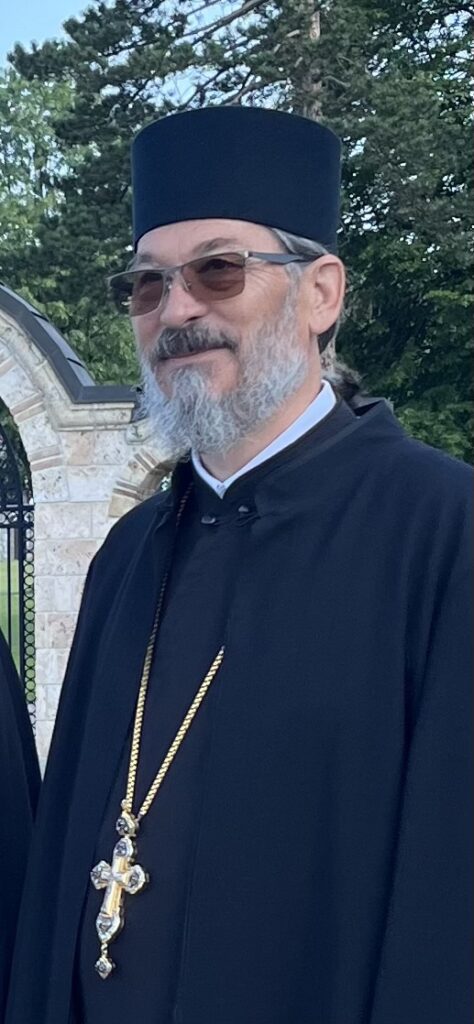
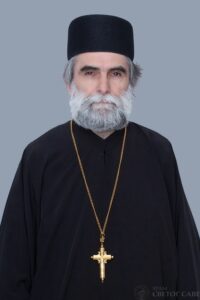
Fr. Oliver Subotić, Director of the Missionary Department of the Archdiocese of Belgrade and Karlovci, On the eve of the Exaltation of the Holy Cross, AD 2024
Cover photo: Pexels