
While in charge of the Centre for the Study and Use of Modern Technologies in our local Church, I proposed to the expert community, based on many years of studying the impact of technology on humans and society, the use of a triple key methodology for “unlocking” the complex technological dilemmas of the 21. century. The basic idea of this approach was to examine modern technological challenges using three successive stages – the critical, the contextual and the conceptual – in order for the response to be comprehensive and adequate. In the text, I will use this methodology in order to make a modest contribution to the ongoing public debate, regarding the proposal for the lithium mining project (or, more accurately, the extraction of the mineral jadarite, which contains lithium) in the Jadar Valley.
The first stage of the triple key methodology requires an impartial critical analysis of the practical application of a particular technology. This analysis is conducted in a pro et contra format, and it relates to the through weighing of the established advantages and disadvantages of a specific technological solution. In the ongoing debate about lithium mining, clear “for” and “against” positions have emerged. The former emphasizes the revenue that lithium mining in the Jadar Vallry would generate, as well as the resulting accelerated industrial development of our country. The latter highlights the high likelihood of serious environmental damage, given the location of the proposed mine, and the bitter experiences of some other countries. We can expect an increasingly intense debate among the Serbian experts from the opposing camps, in the coming months, especially those in the fields of hydrogeology, biology, ecology and economics.
Generally speaking, this initial, critical stage of observation is necessary, but not sufficient. We also need to bear in mind that the issue of lithium mining in Serbia is very specific. Namely, it could easily happen that the critical stage of observation turns out to be the final one, should the expert community remain as deeply divided as it is now. The reason is simple: the cost-benefit analysis provides us with no financial gain, no matter how great, which can compensate for the potential damage to the environment. And a divided expert community also signifies uncertainty, which is inadvisable when it comes to the field of environmental protection.
In the coming period, much of the focus of the debate will likely move to the possibility of providing full guarantees for the environmental preservation, which will indirectly raise the issue of personal responsibility. Let us recall that, in the past, the possibility of a global ecological crisis was not envisaged, while today nobody is held accountable for it, despite the obvious repercussions, felt by all. This is the reason why, even at the initial stage of critical examination, two relevant questions present themselves. The first is: who can possibly provide consistent and responsible guarantees for the use of technology, that has already shown to have a negative impact on the ecosystem? The second is: how can anyone be held personally responsible for the possible damage which could arise decades later, because of the cumulative effect of the use of that technology?
The second stage of examination within the triple key methodology is contextual. It accentuates the importance of studying the social framework in which a certain technology is applied. This is a crucial topic, as it has been observed that the use of identical technologies in different social contexts, frequently does not give comparable results. Thus, it is necessary to engage the legal experts, political scientists and sociologists in this debate. At this stage of examination, it becomes obvious that the lithium mining project proposal in Serbia has, from the very outset, been a par excellence political issue, which exists within a broader geopolitical context, that we have willy nilly been drawn into, by the powerful global corporations and world powers. The pressure (some would call it support) of the two leading Western European countries, with regards to lithium mining in the Jadar Valley, is merely an obvious reflection of their pragmatic geostrategic interests, and not an expression of concern for our country. All this implies the need for establishing precise mechanisms to protect us from turning Serbia into a mining colony. This, however, is neither the only, nor the main topic we need to consider in terms of contextual observation. The main challenge is the sharp polarization within the Serbian society, that could even lead to civil unrest, which would only make the Serbian enemies rejoice. That is why trying to solve the lithium riddle without taking into account the complex social context would be sheer folly, with unpredictable consequences.
Finally, we need to consider the conceptual stage of examining this technological project, which involves studying the conceptual depth and technological convergence. The lithium-ion battery making technology has replaced the previous nickel-cadmium one relatively quickly, and there are already indications of further technological convergence, which will result in the emergence of new technological generations, superseding the previous ones. However, these are only estimates based on a certain degree of probability. There is, however, a topic that we can discuss with complete certainty at this level of analysis. It concerns the compatibility of the concept of the lithium mining project with the strategic documents, previously adopted by the Serbian government, related to the societal interests concerning the essential resources – clean air, clean water, fertile land, and high-quality food. I leave the issue of the degree to which these concepts collide for the experts in these fields to examine.
The personal opinion of the author of this text is that the current proposal for lithium mining in the Jadar Valley cannot withstand thorough scrutiny. In simple terms, based on everything we have heard in the public debate so far, common sense suggests that the risk is too great for a small country like ours, especially since the potential consequences would practically be irreversible. In big, industrially advanced countries (such as those suggesting that we mine jadarite), the situation is, it seems, drastically different because, due to their size, they can exploit lithium ore at locations which carry far less risk of an ecological catastrophe. It would, therefore, be wise to let the bigger countries take the lead in the field of lithium mining technology on their own territory, while we, as a much smaller country, observe closely the process and learn from their experience.
What’s the hurry, after all? The lithium will not disappear from the Jadar Valley and will patiently wait beneath the Cer Mountain, until its extraction technology becomes completely safe. That is, if it ever does.
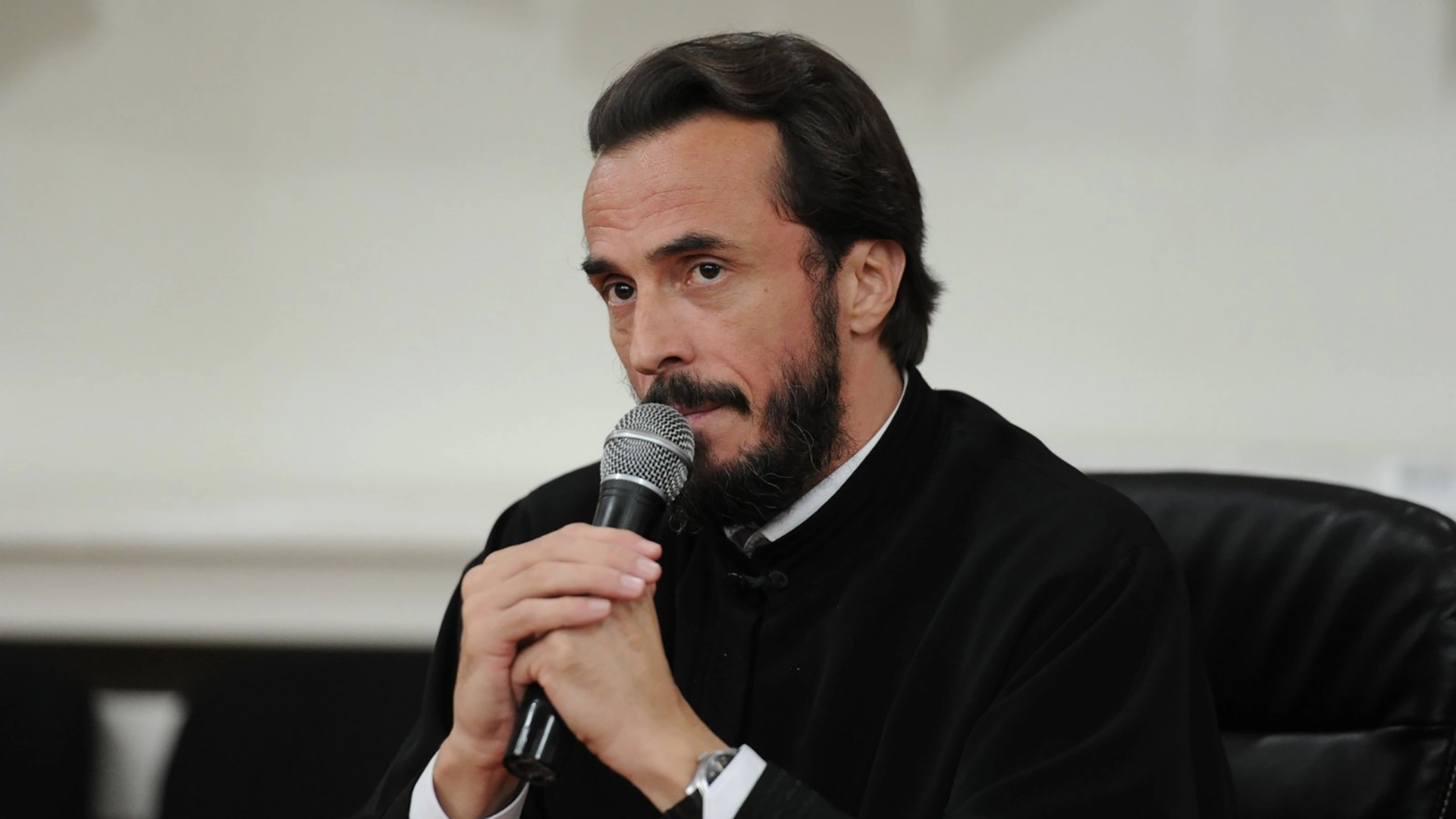
Presbyter Dr. Oliver Subotić, Director of the Missionary Department of the Archdiocese of Belgrade and Karlovci.
*The text was published in the “Politika” newspaper section, Pogledi, on July 25, 2024 (submitted for publication on July 19, 2024).
PHOTOS: Hram Television Photo Archive